Window cleaning drones: safety, speed, and 80% savings
- Glenn Brosnick
- 5 days ago
- 7 min read
TL;DR:
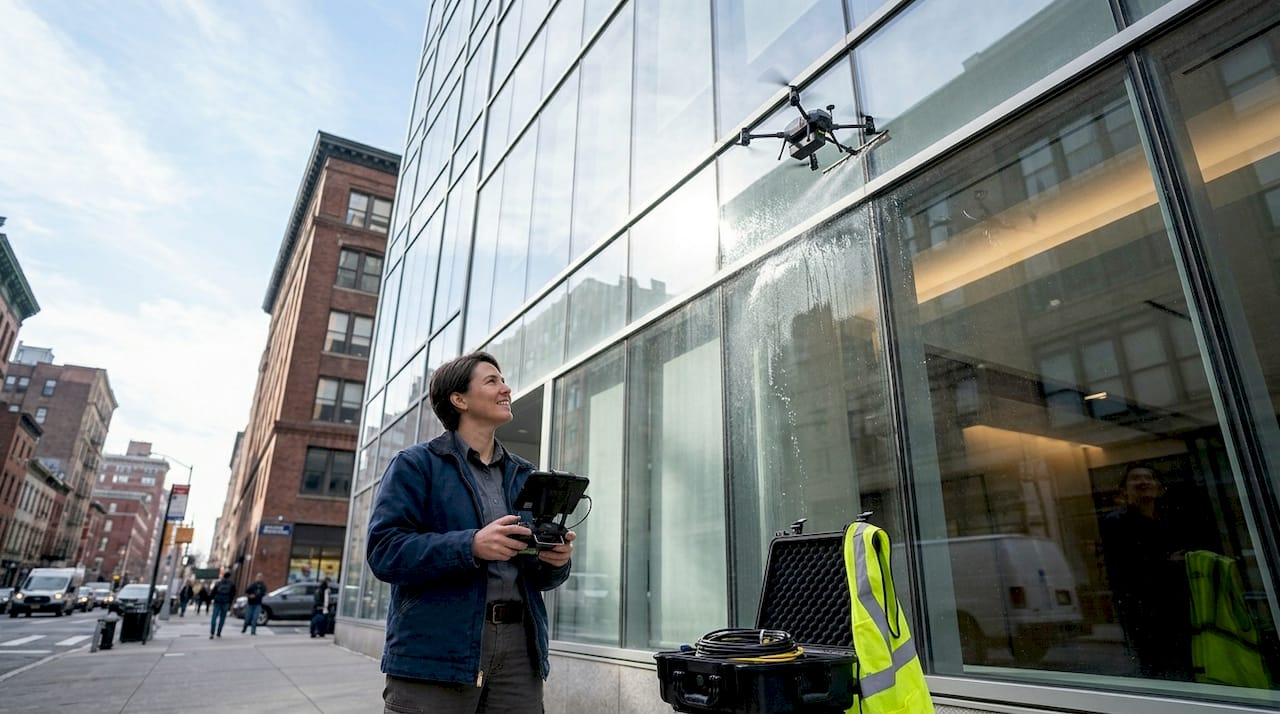
Drone window cleaning offers faster, contactless, and environmentally friendly results for large or difficult windows.
It reduces costs, labor, and safety risks compared to traditional scaffolding or manual cleaning methods.
Regulations require FAA certification, insurance, and compliance, but drones are ideal for high, coastal, or irregular buildings.
If you own a multi-story home or manage a large property in St. Augustine or Ponte Vedra, you know how frustrating window cleaning can be. Ladders, scaffolding, and rope access are slow, expensive, and carry real safety risks. Many property owners assume there is no better way. But drone window cleaning is changing that assumption fast. This article walks you through how the technology works, what it costs, what the regulations require, and whether it is the right fit for your property.
Table of Contents
Key Takeaways
Point | Details |
Safer window cleaning | Drones eliminate the risks of ladders or ropes for tall or awkward windows. |
Proven cost savings | Drone cleaning delivers up to 80% lower operational costs compared to manual methods. |
Faster, eco-friendly results | Drones clean up to five times faster and use over 60% less water than traditional approaches. |
Works for most properties | Drones thrive on high, coastal, or humid structures but may need tweaks for special glass types. |
How window cleaning drones actually work
Drone window cleaning is not just a flying squeegee. The systems are purpose-built with high-pressure pumps, precision nozzles, heating elements, and safety sensors working together to deliver a thorough, contactless clean.
The most effective systems use purified, pressurized water that is reverse osmosis filtered and heated to 70°C at up to 100 bar. This combination removes grime, salt residue, and organic buildup without any physical contact with the glass. That matters because contact is where most scratching and damage happens.
You can explore the types of window cleaning available today to understand how drones compare to traditional brush, squeegee, or rope-access methods. The difference is significant, especially for large glass surfaces or buildings with irregular architecture.
Here is a quick breakdown of what modern drone cleaning systems typically include:
High-pressure water pump (up to 100 bar)
Reverse osmosis water filtration to prevent spotting
Heating system for improved cleaning power
Precision spray nozzles for even coverage
Anti-collision sensors and auto-shutdown protocols
Optional soft-wash mode with chemical mix
Systems like the Lucid Bots Sherpa use a soft-wash approach at 300 PSI with an optional chemical mix, making them flexible for different surface types. KTV Working Drone uses a similar clean-water method optimized for large glass facades.
Feature | Drone system | Traditional brush/cloth |
Contact with glass | None | Direct |
Water type | Purified, filtered | Tap water |
Scratch risk | Very low | Moderate |
Coverage speed | High | Low to moderate |
Chemical use | Minimal | Variable |
Pro Tip: Always confirm that the drone service uses purified, reverse osmosis filtered water. Tap water leaves mineral deposits and streaks, which defeats the purpose of a professional clean.
For coastal properties in St. Augustine and Ponte Vedra, where salt air accelerates buildup on glass, the purified water system is especially important. Multiple passes per pane are standard, and the contactless method means your glass stays in better condition over time.
Efficiency and cost savings: What the data shows
This is where drone cleaning gets genuinely impressive. The numbers are not marketing claims. They come from real operational data.
A KTV drone system cleaned 2,500 square meters in just three hours at Bergen Airport. A multi-drone setup covered 10,000 square meters in 18 hours, averaging 500 square meters per hour per drone. Manual labor typically manages around 100 square meters per hour. That is up to five times faster.
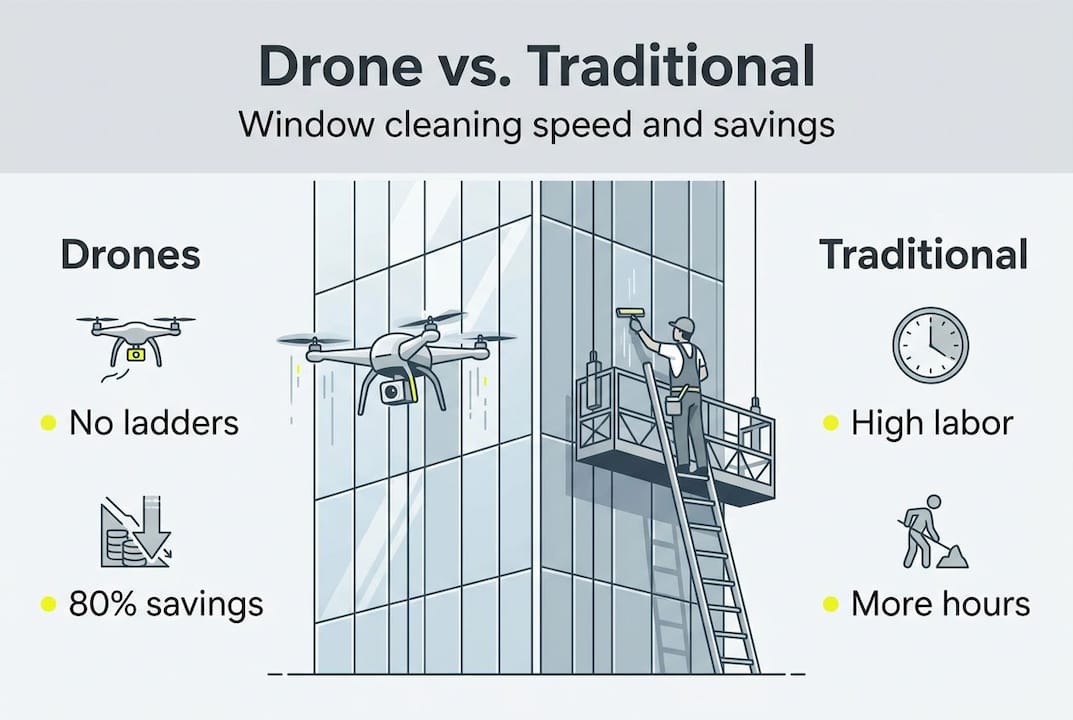
The Lucid Sherpa cleans 300 square feet per minute and covers up to 5,700 square feet per flight. It also uses 60% less water than traditional methods and cuts overall costs by up to 80% compared to scaffolding or rope access.
Here is how the cost factors break down:
Labor reduction. Fewer workers are needed on site, which directly cuts hourly costs.
No scaffolding or lifts. Equipment rental for multi-story access is eliminated entirely.
Lower insurance exposure. Fewer workers at height means lower liability risk and potentially lower insurance premiums.
Faster turnaround. Less time on site means less disruption to tenants, guests, or daily operations.
Water savings. Using 60% less water reduces utility costs and supports sustainability goals.
Cost factor | Traditional method | Drone method |
Labor hours | High | Significantly reduced |
Equipment rental | Scaffolding/lifts required | None |
Water usage | Standard | 60% less |
Overall cost | Baseline | Up to 80% lower |
Speed | 100 m²/hr (manual) | Up to 500 m²/hr |
For property managers overseeing vacation rentals, commercial buildings, or multi-unit residential properties, these window cleaning benefits translate directly into better margins and fewer scheduling headaches.
Safety, regulations, and real-world suitability
The financial case is strong, but safety and compliance are what most property owners care about first. Drones address both.
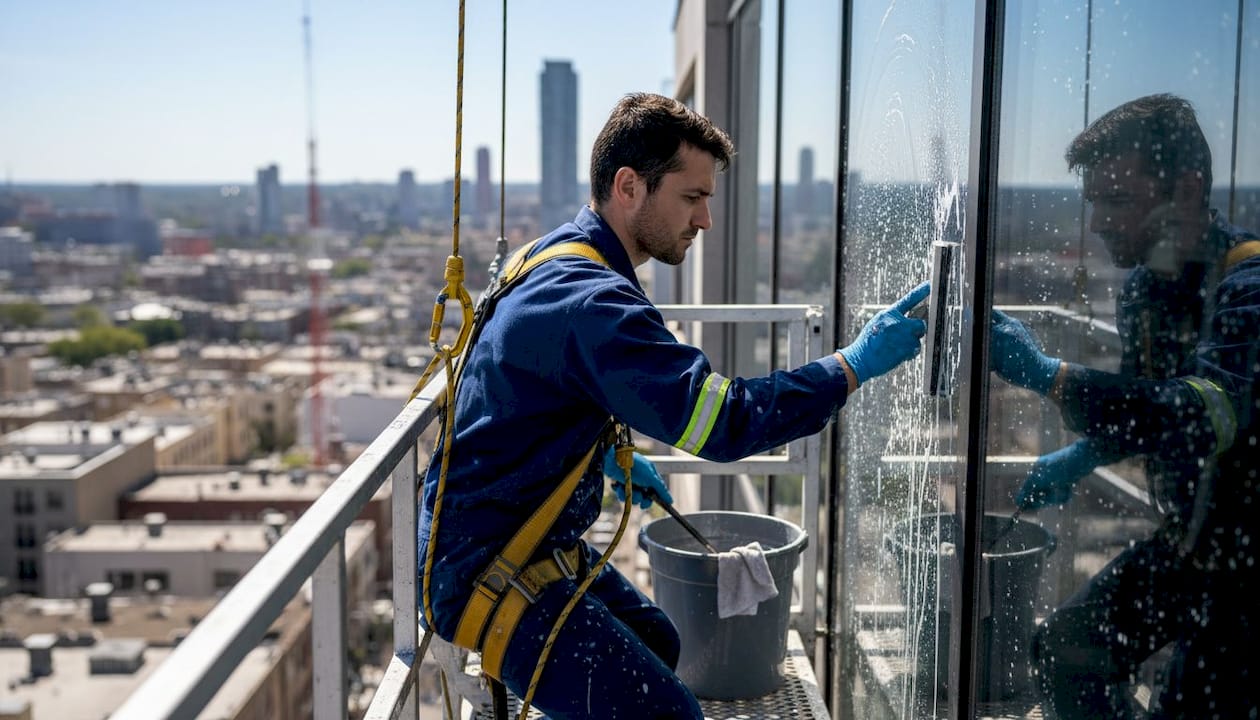
Traditional window cleaning at height puts workers in genuine danger. Falls from ladders and scaffolding are among the leading causes of serious injury in the cleaning industry. Drones remove workers from that risk entirely. Anti-collision sensors and fall-prevention systems are standard on professional-grade equipment, and tethered operation adds an extra layer of security for urban or constrained environments.
On the regulatory side, operating a commercial drone in the US requires FAA Part 107 certification. Violations can carry fines up to $75,000 per incident. There are also visual line-of-sight requirements, altitude limits, and additional rules for flying near airports or public spaces. In St. Augustine, with its historic district and proximity to regional airspace, these rules matter.
Here is what to confirm before hiring any drone cleaning provider:
Valid FAA Part 107 certification for the operator
Proof of commercial liability insurance
Compliance with local airspace restrictions
Experience with tethered drone operation if required
Familiarity with Florida-specific weather and wind conditions
Pro Tip: Always request a copy of the provider’s FAA Part 107 certificate before work begins. A reputable company will provide it without hesitation.
For more on staying safe during window cleaning, see these window cleaning safety tips and our guide to high-rise window cleaning in St. Augustine.
Drone window cleaning does not just protect your glass. It protects the people doing the work, and it protects you from liability.
Where drones shine—and their limits
Drones are not the right solution for every window on every property. Knowing where they excel and where they fall short helps you make a smarter decision.
Drones perform best in these situations:
Multi-story homes and commercial buildings with high or hard-to-reach windows
Coastal properties where salt, humidity, and organic buildup accumulate quickly
Buildings with irregular or curved glass facades
Properties where scaffolding would be disruptive or cost-prohibitive
Night or off-hours cleaning where minimal disruption is a priority
Drones excel in high-wind areas and humidity-prone environments, which makes them a strong fit for Florida’s coastal climate. The contactless method also prevents micro-scratches that accumulate over time with traditional brush cleaning, extending the lifespan of your glass.
That said, there are real limitations:
Hydrophobic glass coatings may require lower pressure or special detergents
Complex latticework or divided-light windows can be difficult to clean evenly
Airspace restrictions near airports or densely populated areas may limit operation
Privacy concerns in residential neighborhoods can require additional planning
For ground-level windows, detailed interior frames, or specialty glass, traditional methods still do the job better. We recommend pairing drone cleaning for upper-level glass with a residential window cleaning workflow that covers the details at ground level. For rental properties, check out the window cleaning basics guide for a complete maintenance approach.
Pro Tip: For the best overall result, combine drone cleaning for upper floors with manual detail finishing at ground level. Also consider cleaning blinds naturally as part of your full window care routine.
Why drone window cleaning is a must-watch trend for Florida properties
Most property managers look at drone cleaning and see a premium upgrade. We see something different: a practical shift in how responsible property care gets done.
The focus on immediate cleaning costs misses the bigger picture. Liability reduction, water conservation, and consistent results in unpredictable weather are long-term wins that add up fast, especially in Florida’s coastal environment where salt air, humidity, and storm season create ongoing maintenance challenges.
Over the next few years, drone window cleaning will likely move from a specialty service to a regulatory-backed standard practice for commercial and multi-story residential properties. The technology is already mature enough to deliver reliable results, and the cost curve is dropping.
Property owners who adopt early build a reputation for safety and sustainability. In St. Augustine and Ponte Vedra, where property values and guest expectations are high, that reputation has real financial value. Keep an eye on high-rise window cleaning trends as this space continues to evolve. The question is not whether drone cleaning will become standard. It is whether you will be ahead of it or catching up.
Safe, spotless windows—backed by local expertise
Ready to make spotless, worry-free windows the new normal for your property? Whether you are managing a vacation rental, a commercial building, or a multi-story home in St. Augustine or Ponte Vedra, you deserve a cleaning partner who understands the local environment and delivers consistent results.
At Lemon Maids, we offer professional window cleaning services tailored to residential and commercial properties across the area. We also provide pressure washing expertise for exterior surfaces and commercial cleaning solutions for offices and larger facilities. Our team stays current on the latest methods, including drone-compatible approaches, so your property always looks its best. Get in touch today to schedule a consultation or request a quote.
Frequently asked questions
Are window cleaning drones safe for all types of glass?
Drones are safe for most standard glass, but hydrophobic coatings or specialty surfaces may require lower pressure or special detergents. Always confirm your glass type with the provider before scheduling.
Do I need to get a permit for drone window cleaning on my property?
In most cases, your provider handles FAA Part 107 certification and any required local permits. Always ask for documentation before work begins to protect yourself.
How do drones handle wind or bad weather during cleaning?
The Sherpa drone withstands winds up to 18 mph, but most providers will reschedule during extreme weather to maintain safety and cleaning quality.
Is drone window cleaning more environmentally friendly?
Yes. Drones use 60% less water than traditional methods and minimize chemical use, making them a more sustainable option for eco-conscious property owners.
How does the cost of drone cleaning compare to traditional options?
Drone window cleaning delivers an 80% cost reduction compared to scaffolding or rope access, primarily by cutting labor and eliminating heavy equipment rental.
Recommended
Comments