How to Clean Doctor Offices: A Safe Step-by-Step Guide
- Glenn Brosnick
- 7 hours ago
- 8 min read
TL;DR:
Medical office cleaning must follow stricter standards set by OSHA, CDC, and local authorities.
Proper supplies, detailed procedures, and documentation are essential to ensure compliance and safety.
Thorough, systematic cleaning reduces infection risks, complaints, and avoids costly regulatory penalties.
One overlooked surface in an exam room, one missed disinfection step in a waiting area, and suddenly you’re facing a patient complaint or a compliance flag from a state inspector. Medical office managers in St. Augustine, Ponte Vedra, and Nocatee know this pressure well. The stakes are real: patient safety, regulatory compliance, and your practice’s reputation all depend on consistent, thorough cleaning. Strict adherence to cleaning and disinfection standards is non-negotiable in any clinical setting. This guide walks you through everything you need to know, from understanding the rules to executing a room-by-room cleaning plan that keeps your office safe and inspection-ready.
Table of Contents
Key Takeaways
Point | Details |
Follow strict standards | Regulatory guidelines require cleaning methods unique to medical offices. |
Use proper supplies | Select EPA-approved disinfectants and tools made for healthcare environments. |
Systematic workflow matters | A structured, step-by-step cleaning routine reduces risks and saves time. |
Quality checks are essential | Verification steps like checklists ensure consistent safety and compliance. |
Understanding cleaning standards and compliance
Medical office cleaning is not the same as standard commercial cleaning. The rules are stricter, the products must meet specific requirements, and the documentation matters just as much as the actual cleaning work. If you manage a doctor’s office, you need to understand the framework before you can build a reliable cleaning program.
Three main bodies set the standards you need to follow:
OSHA requires healthcare facilities to protect workers from bloodborne pathogens and hazardous chemicals, including proper cleaning protocols.
CDC publishes CDC environmental guidelines covering surface disinfection, contact times, and product selection for clinical environments.
State and local health departments in Florida may add facility-specific requirements, especially for patient-facing areas.
Here is a quick breakdown of how medical office cleaning differs from standard commercial cleaning:
Factor | Standard commercial cleaning | Medical office cleaning |
Products required | General-purpose cleaners | EPA-approved disinfectants |
Documentation | Optional | Required (cleaning logs) |
Cleaning frequency | Daily or weekly | Daily, between patients for high-touch areas |
PPE requirements | Minimal | Gloves, masks, gowns as needed |
Waste disposal | Standard trash | Regulated medical waste protocols |
Thorough, specialized cleaning helps safeguard patient health by reducing the risk of healthcare-associated infections. These infections affect millions of patients each year in the United States, making prevention a top priority in any clinical space.
“The goal of environmental cleaning in healthcare settings is to reduce the risk of infection transmission by removing or reducing the burden of pathogens on surfaces.”
Pay special attention to these areas in your office:
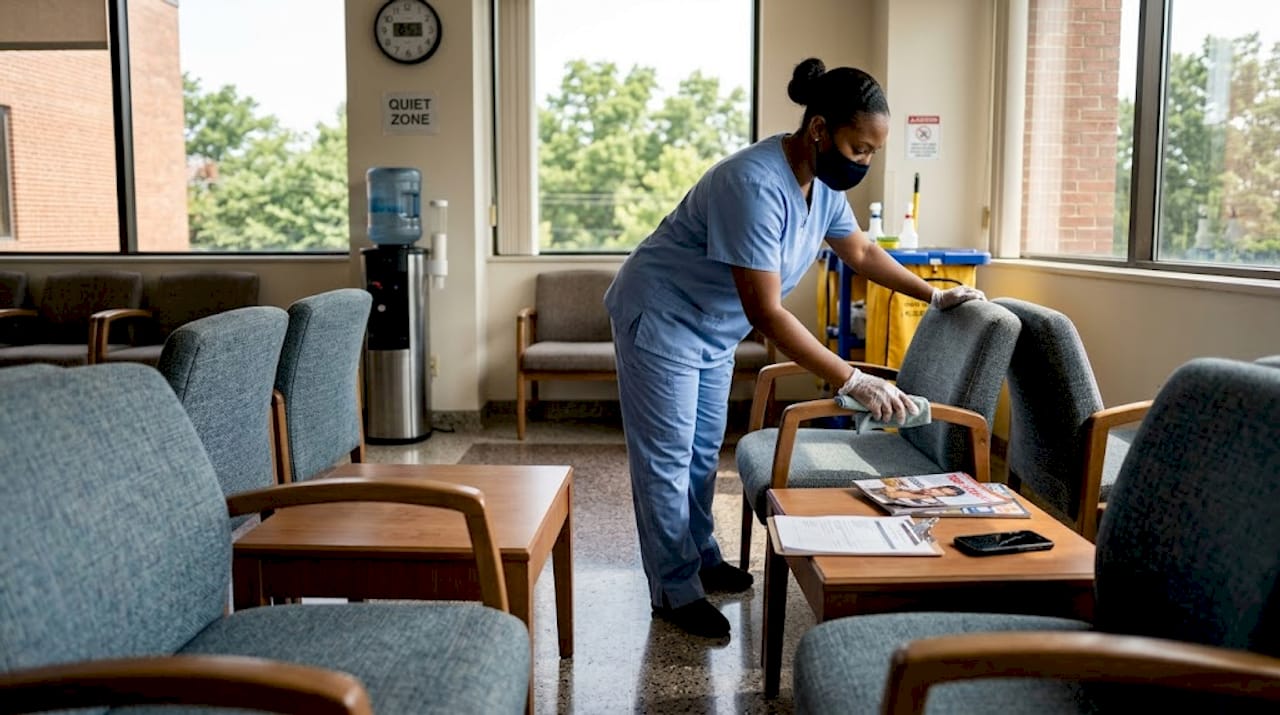
Exam rooms: tables, chairs, counters, and any equipment patients touch
Reception and waiting areas: check-in surfaces, door handles, pens, chairs, and tablets
Restrooms: toilets, sinks, faucet handles, and dispensers
Staff areas: break room surfaces, shared keyboards, and phones
Review your cleaning compliance guide regularly to stay current with any regulatory updates. A printed medical office cleaning checklist posted in each room also helps keep your team accountable during every shift.
Gathering the right tools and supplies
Before your team starts cleaning, you need the right supplies on hand. Using the wrong products in a medical office is not just ineffective, it can create liability. Using suitable cleaning products and tools is essential in healthcare environments because not every disinfectant kills the pathogens found in clinical spaces.
Here is what every medical office cleaning kit should include:
EPA-registered disinfectants listed on EPA-approved disinfectants for healthcare use
Color-coded microfiber cloths (separate colors for restrooms, exam rooms, and common areas)
HEPA filter vacuum cleaner for carpeted areas and upholstered furniture
Disposable gloves, masks, and gowns for staff handling potentially contaminated surfaces
Mop system with single-use or washable heads to prevent cross-contamination
Sharps disposal containers and labeled medical waste bags
Spray bottles, scrub brushes, and toilet brushes kept separate per zone
When choosing between product types, this comparison helps:
Product type | Best use case | Contact time | Notes |
Disinfectant wipes | High-touch surfaces, quick turns | 2 to 4 minutes | Confirm EPA registration |
Disinfectant sprays | Large flat surfaces, exam tables | 3 to 10 minutes | Check label for required dwell time |
HEPA vacuum | Carpets, fabric chairs | N/A | Traps fine particles and allergens |
Standard vacuum | Hard floors only | N/A | Not suitable for medical-grade air filtration |
For local sourcing in the St. Augustine and Nocatee areas, consider these options:
Medical supply distributors like Henry Schein or Medline offer bulk EPA-registered products with next-day delivery
Restaurant supply stores often carry commercial-grade cleaning tools at competitive prices
Janitorial supply companies in Jacksonville provide full product lines and staff training resources
Online procurement through your group purchasing organization (GPO) can reduce costs significantly
Check out additional manager cleaning tips and product guidance designed for clinical offices, including specifics on dentist office cleaning products that apply to many general practice settings.
Pro Tip: Buy disinfectants in concentrate form and dilute them on-site. You will cut supply costs by up to 40% while maintaining the same EPA-approved formulation.
Step-by-step cleaning process for doctor offices
With your supplies ready, it is time to move through your office systematically. Following detailed instructions improves cleaning outcomes in medical offices because random or rushed cleaning misses critical surfaces. Use this room-by-room workflow every day.
Start with the reception area. Remove trash, wipe the check-in desk, disinfect the keyboard and mouse, clean door handles and light switches, and wipe down all chairs and armrests. Vacuum or mop the floor last.
Move to waiting areas. Wipe all seating surfaces, disinfect side tables and magazine racks, clean windows and glass partitions at patient eye level, and sanitize any shared devices like tablets or pens.
Clean exam rooms between every patient. Disinfect the exam table (including the paper roll holder), countertops, sink handles, cabinet pulls, and any equipment the patient touched. Replace the paper table cover with every new patient.
Clean restrooms. Scrub and disinfect toilets, sinks, faucet handles, soap dispensers, door handles, and floors. Restock paper products and check that handwashing supplies are full.
Address staff areas. Wipe break room surfaces, shared equipment, and phones. Disinfect the coffee maker handle, microwave buttons, and refrigerator handle.
Mop all hard floors. Work from the farthest room toward the exit. Use a fresh mop head or pad for each zone.
Remove and bag all waste. Follow your facility’s medical waste disposal protocols for any regulated materials.
Important: Never handle sharps or medical waste without proper PPE. Always follow OSHA healthcare standards for bloodborne pathogen protection.
Review the full medical office workflow for additional detail on each step, and keep a copy of the spotless office steps guide in your supply closet for new staff training.
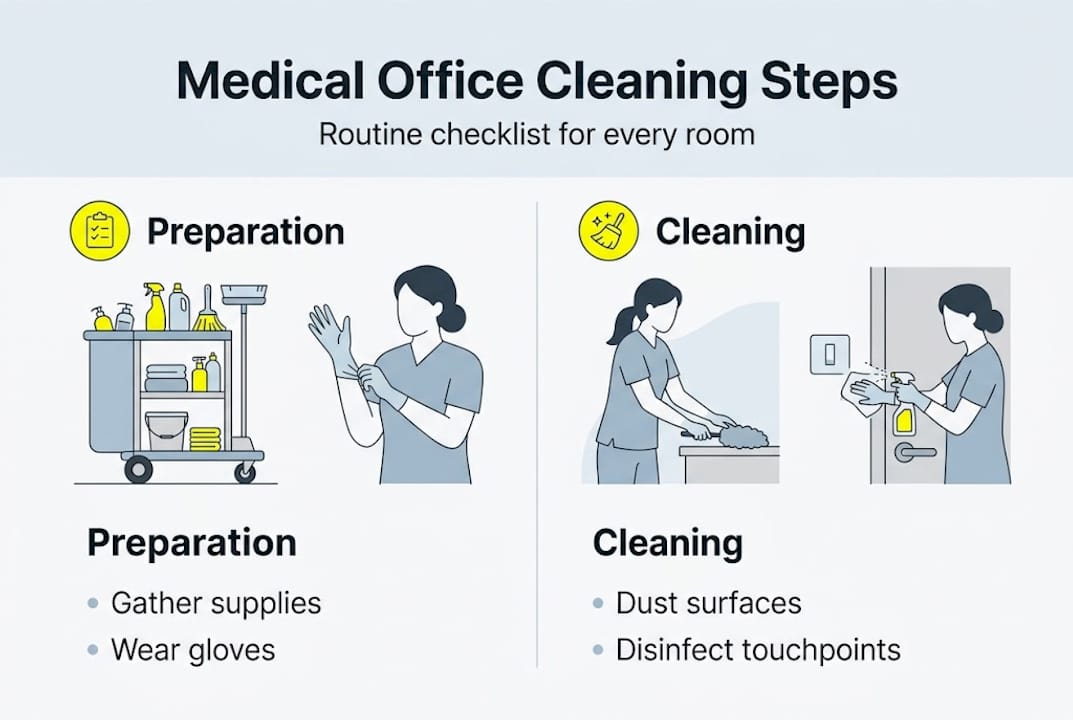
Pro Tip: Clean from high to low and from clean to dirty zones. This prevents cross-contamination and reduces the chance of recontaminating freshly cleaned surfaces.
Common mistakes and quality control checks
Even well-trained teams make mistakes. The key is catching them before they become compliance issues or patient complaints. Quality control is as important as the initial cleaning to maintain professional standards in any medical setting.
Here are the five most common cleaning mistakes in doctor offices:
Skipping dwell time: Spraying a disinfectant and wiping it off immediately does not kill pathogens. Every product requires a specific contact time on the label.
Using the same cloth in multiple rooms: This spreads bacteria from one surface to another. Color-coded microfiber cloths prevent this entirely.
Forgetting low-touch but high-risk surfaces: Light switches, cabinet handles, and baseboards are often skipped but collect significant microbial load over time.
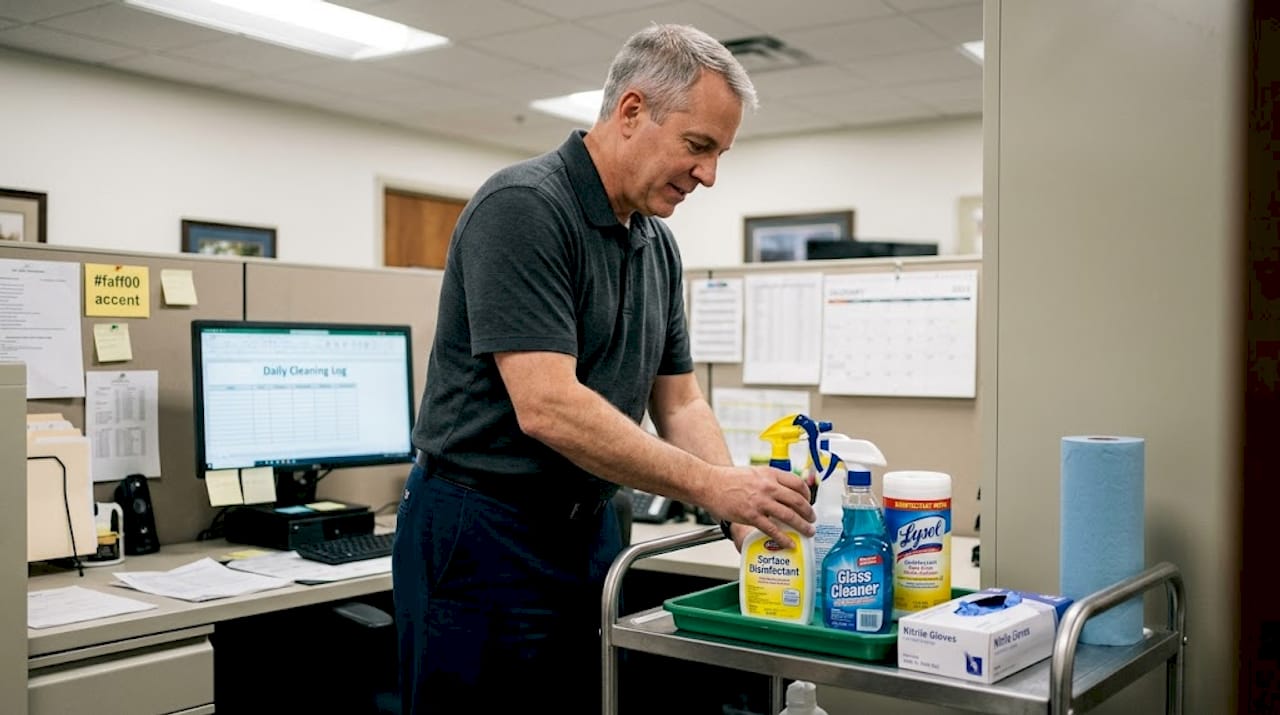
Not documenting completed tasks: Without a log, you cannot prove your office was cleaned if a complaint or inspection occurs.
Reusing mop water: Dirty mop water transfers contaminants to clean floors. Change it between rooms or zones.
Here is a simple quality control table your team can use after each cleaning session:
Check type | Method | Frequency | Who completes it |
Visual inspection | Walk-through with checklist | Daily | Supervisor or lead cleaner |
ATP swab test | Swab high-touch surfaces, read results | Weekly | Supervisor or third-party vendor |
Cleaning log review | Check entries for completeness | Daily | Office manager |
Supply inventory | Confirm stock levels are adequate | Weekly | Lead cleaner |
Staff spot check | Observe technique during cleaning | Monthly | Office manager |
Studies in healthcare settings show that facilities using routine ATP testing catch contamination issues up to three times faster than those relying on visual checks alone. That means fewer infections, fewer complaints, and better regulatory outcomes.
Review your cleaning checklist for quality control and bookmark office cleaning tips specifically compiled for healthcare facilities in the Jacksonville and St. Augustine region.
Why thoroughness beats speed in medical office cleaning
Most managers feel pressure to keep cleaning fast. Shorter cleaning windows mean lower labor costs, and that is a real business concern. But in medical offices, speed is the wrong metric to optimize for.
When cleaning is rushed, dwell times get skipped, surfaces get missed, and documentation becomes an afterthought. The short-term savings from a 20-minute room turnover can be erased by a single patient complaint, a failed inspection, or a healthcare-associated infection traced back to your facility. The liability cost and reputational damage far outweigh any efficiency gains.
What we have observed consistently is that practices in St. Augustine and Ponte Vedra that invest in a slower, methodical cleaning process actually spend less over time. Fewer re-cleans, fewer complaints, and more consistent compliance scores add up to real operational savings.
The most effective cleaning programs treat each task as a protocol, not a chore. That means following the same sequence every time, verifying results, and documenting everything. Refer to medical cleaning standards as your baseline and build your own internal standard operating procedures on top of them. Speed matters in business, but not when patient safety is on the line.
Professional cleaning solutions for peace of mind
Running a doctor’s office in St. Augustine, Ponte Vedra, or Nocatee means juggling patient care, staff management, and compliance demands all at once. Keeping up with a medical-grade cleaning program on top of that is a significant responsibility.

My Lemon Maids provides office cleaning services and deep cleaning services tailored to healthcare and professional environments across the local area. Our team understands compliance requirements, uses EPA-approved products, and follows documented workflows so you always know what was cleaned, when, and how. Whether you need daily maintenance or a scheduled deep clean, we deliver consistent results you can count on. Contact us today to discuss a cleaning plan built around your office’s specific needs.
Frequently asked questions
How often should doctor offices be cleaned?
Doctor offices should be cleaned daily, with high-touch surfaces disinfected frequently between patients. Regular, frequent cleaning is a must in healthcare environments to prevent the spread of infection.
What cleaning products are safe and effective for medical offices?
Use EPA-registered disinfectants and products recommended by the CDC for killing pathogens in clinical settings. EPA-approved disinfectants are required in medical environments and must be used according to label instructions, including contact time.
How can managers verify cleaning quality in doctor offices?
Checklists, ATP testing, and scheduled inspections are effective tools for ensuring quality. Documentation and checklists are crucial for cleaning compliance and provide a paper trail during regulatory reviews.
What are the main risks of improper cleaning in healthcare spaces?
Improper cleaning can lead to infections, regulatory penalties, and reputational damage. Inadequate cleaning puts both patients and staff at risk and can result in costly corrective actions or loss of licensure.
Recommended
Comments