What is included in office cleaning? A complete guide
- Glenn Brosnick
- 11 hours ago
- 8 min read
TL;DR:
Professional office cleaning in Florida requires high-touch disinfection, mold prevention, and compliance documentation.
Humidity accelerates mold growth and bacterial spread, demanding more frequent and specialized cleaning protocols.
Verification through logs, ATP testing, and trained staff is essential to meet regulatory standards and ensure true cleanliness.
Most businesses assume office cleaning means emptying trash cans, wiping desks, and running a vacuum. That assumption can cost you. Florida’s climate brings humidity levels between 74 and 90%, which creates real risks like mold growth, poor air quality, and rapid bacterial spread across shared surfaces. Add state and federal compliance requirements from DBPR and OSHA, and it becomes clear that office cleaning in St. Augustine, Ponte Vedra, and Nocatee is far more involved than a basic checklist. This guide breaks down exactly what professional office cleaning covers, what compliance looks like in practice, and how to make sure your workspace is truly clean, not just visually tidy.
Table of Contents
Key Takeaways
Point | Details |
Office cleaning covers more than appearances | True office cleaning tackles sanitation, compliance, and health—especially in Florida’s humid climate and regulated industries. |
Compliance and documentation matter | Meeting DBPR/OSHA and EPA standards requires logs, inspections, and the right disinfectants, not just visible tidiness. |
Hybrid routines save money and boost health | Optimizing cleaning frequency, like daily restrooms and weekly deep cleans, balances cost against employee wellbeing. |
Specialty spaces need extra care | Restrooms, kitchens, and windows require unique protocols to control mold, odors, and compliance risks. |
Green isn’t everything—efficacy comes first | Eco-friendly cleaning is important, but local rules and sanitation standards always take precedence in Florida offices. |
Core components of professional office cleaning
Quality office cleaning starts with the fundamentals, but in Florida’s environment, even the basics require more attention than in drier climates. High humidity accelerates the spread of bacteria and creates conditions where mold can develop quickly in overlooked corners, HVAC vents, and restrooms. A professional cleaning routine accounts for all of this.
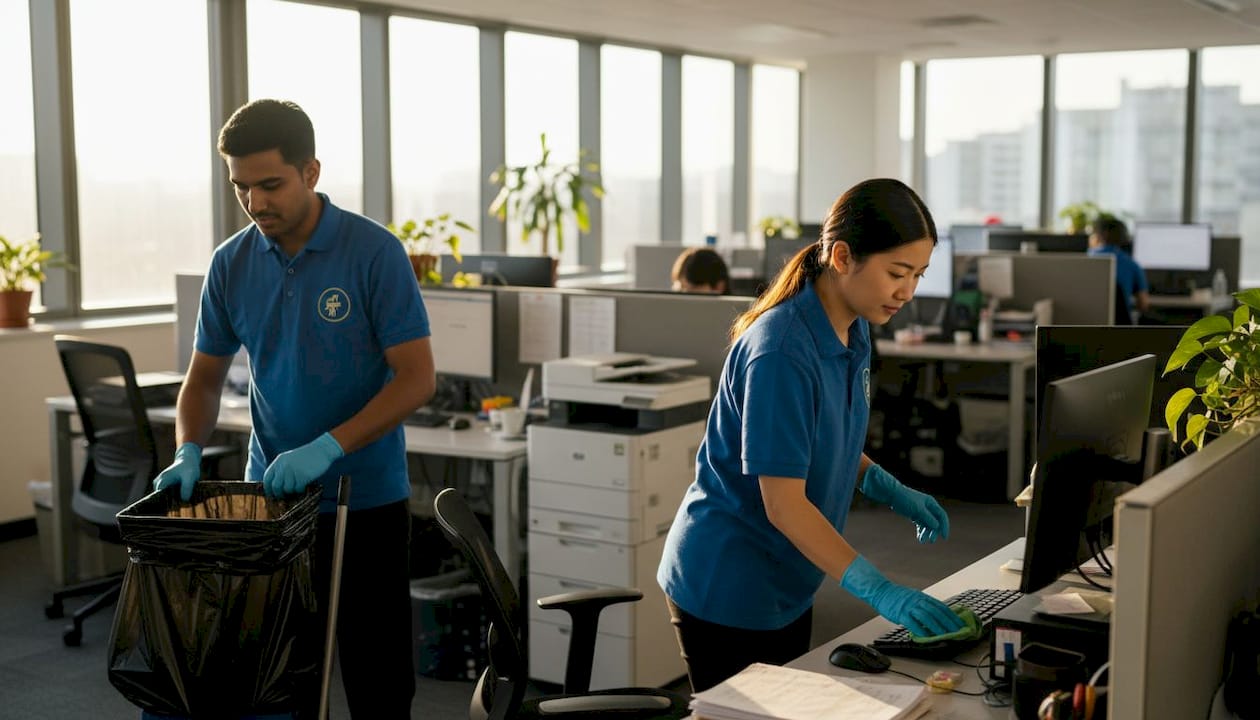
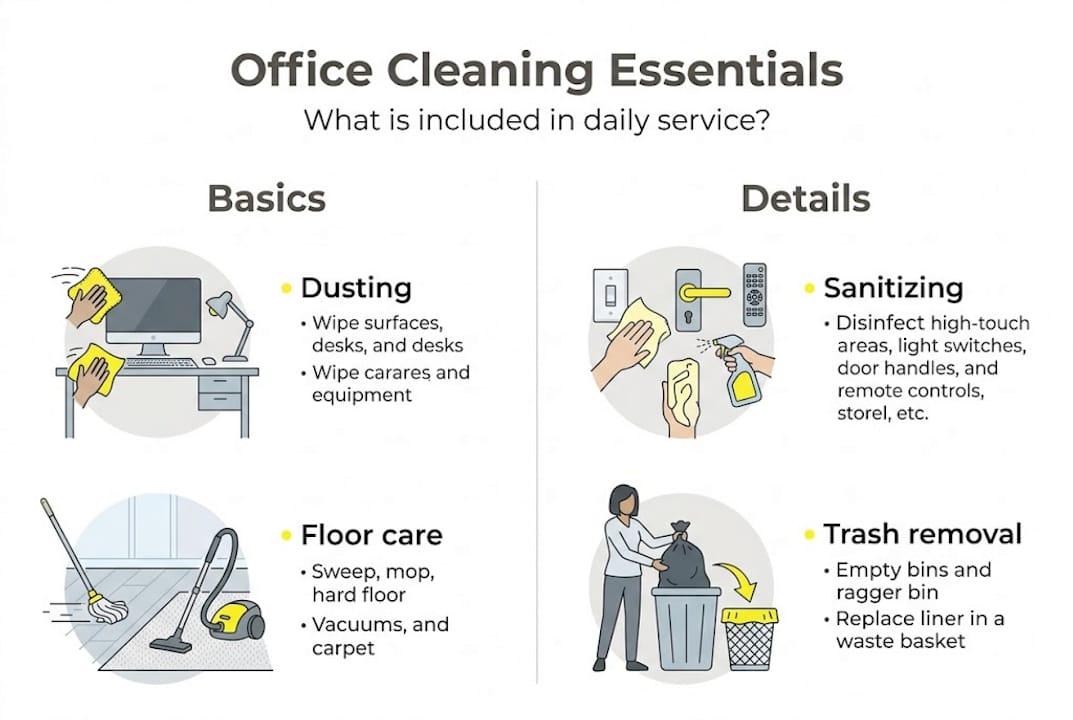
Here is what a complete daily and weekly office cleaning service typically covers:
Trash removal and liner replacement in all workstations, common areas, and restrooms
Dusting of desks, shelves, blinds, baseboards, and ceiling vents
Vacuuming of all carpeted areas and upholstered furniture
Hard floor care including sweeping, mopping, and spot treatment
Surface wiping of desks, counters, and shared equipment
Restroom sanitation including toilet scrubbing, sink disinfection, mirror cleaning, and restocking supplies
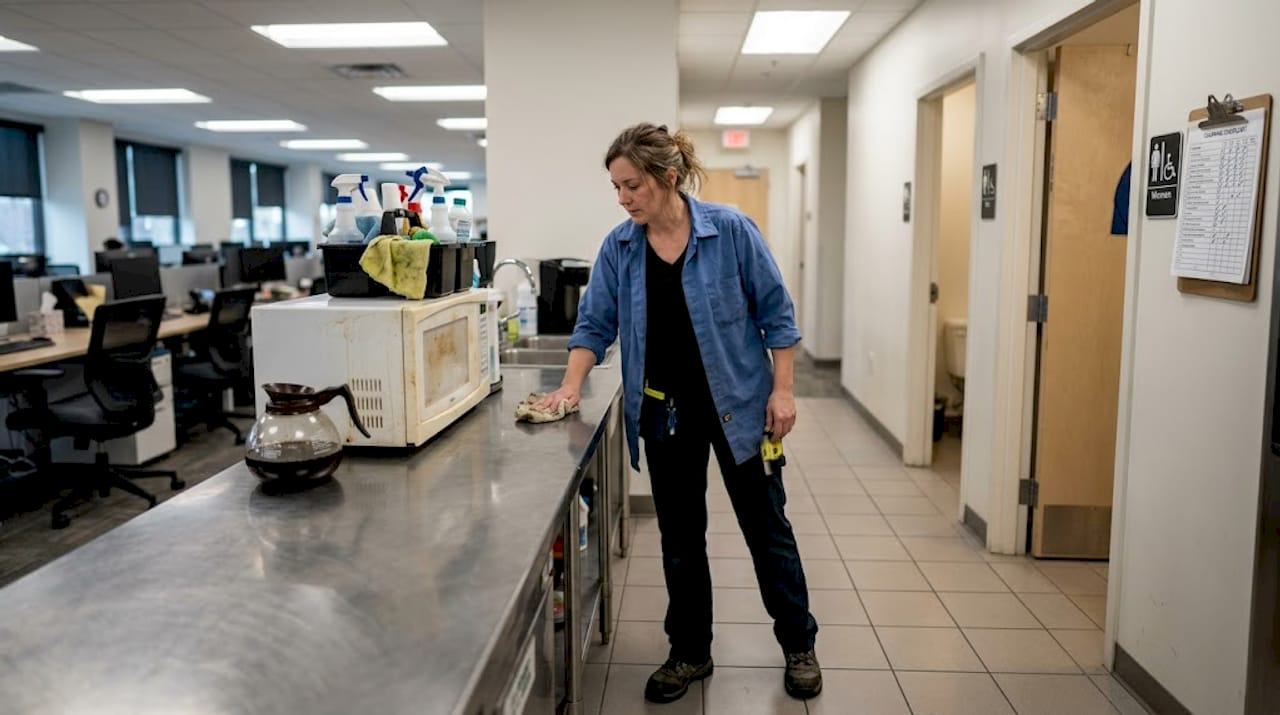
Kitchen and break room cleaning including appliance exteriors, counters, sinks, and microwave interiors
HVAC vent dusting to reduce allergen and mold spore buildup
For Florida offices specifically, cleaning frequency must address mold prevention and more frequent sanitation due to the region’s humidity. This means restrooms and kitchens often need daily attention rather than the standard two or three times per week.
Professional cleaners use EPA-registered disinfectants to meet DBPR and OSHA standards. These products are tested and verified to eliminate specific pathogens, which matters in shared office environments. You can review a detailed office cleaning duties list to understand the full scope of tasks, or look at a standard cleaning process that applies to both homes and offices.
Pro Tip: Ask your cleaning provider for ATP test results or audit logs. ATP testing measures microbial activity on surfaces after cleaning, giving you objective proof that disinfection actually worked, not just a visual check.
Beyond basics: High-touch disinfection, compliance, and scheduling
Foundational tasks are just the beginning. What separates a professional cleaning service from basic janitorial work is the attention to verified disinfection, compliance documentation, and smart scheduling.
Visible cleanliness and verified disinfection are not the same thing. A surface can look spotless and still carry harmful bacteria or viruses. Professional cleaners focus heavily on high-touch points because those areas transfer pathogens most efficiently.
Here are the high-touch areas that require daily disinfection in any office:
Door handles and push plates
Light switches and electrical panel covers
Elevator buttons and stair railings
Shared phones, keyboards, and computer mice
Copier and printer touchscreens
Faucet handles and soap dispensers
Refrigerator and microwave handles
Reception desk surfaces and sign-in tablets
Compliance note: Florida DBPR and OSHA require cleaning logs, use of EPA List N disinfectants, and hybrid cleaning schedules that combine daily spot cleaning with weekly deep cleaning routines.
For medical offices, the standards are even stricter. Daily biohazard waste removal, surface disinfection between patient interactions, and documented protocols are required. You can review a medical office compliance checklist to understand how those requirements differ from standard commercial cleaning.
Scheduling is also a compliance factor. A hybrid routine, meaning daily cleaning of high-touch and high-traffic areas combined with weekly or biweekly deep cleaning, balances cost with effectiveness. For most offices in Nocatee or Ponte Vedra, this approach keeps the workspace safe without overextending your cleaning budget.
Pro Tip: Build your cleaning workflow steps around your office’s actual traffic patterns. A reception area used by 50 people daily needs more frequent attention than a back-office storage room.
Office cleaning for specialty spaces: Kitchens, restrooms, and windows
Once standard and compliance elements are addressed, offices must not overlook specialty spaces that pose unique cleaning challenges. In Florida’s humid environment, kitchens, restrooms, and windows require specific protocols that go well beyond a quick wipe-down.
Area | Standard cleaning | Specialty protocol |
Restrooms | Wipe surfaces, mop floors | Grout scrubbing, disinfection, supply restock, odor control |
Kitchens | Wipe counters, empty trash | Appliance deep clean, drain treatment, mold inspection |
Windows | Spot clean glass | Full interior and exterior wash, frame and sill cleaning |
HVAC vents | Dust exterior | Full vent removal and cleaning to prevent mold spread |
For restrooms and kitchens, frequent sanitation is essential in Florida’s humid climate. Mold and odor develop fast when moisture is not managed properly. Here is what specialty restroom and kitchen cleaning includes:
Scrubbing tile grout and caulk lines in restrooms
Disinfecting all toilet surfaces including the base and behind the bowl
Treating sink drains with enzyme-based cleaners to prevent buildup and odor
Cleaning refrigerator interiors and defrost drip trays in break rooms
Inspecting under sinks for moisture accumulation or early mold signs
Degreasing stovetop surfaces and exhaust fans
Windows deserve special attention in Florida offices because salt air, pollen, and humidity leave residue that blocks natural light and looks unprofessional to clients. A proper office window cleaning routine includes frame wiping, sill cleaning, and streak-free glass treatment on both sides. For a full breakdown of how to maintain a spotless workspace, the workflow for spotless workspace covers each area in sequence.
Neglecting these specialty spaces creates compounding problems. Mold in a restroom spreads to adjacent walls. Grease buildup in a kitchen becomes a fire and health hazard. Window grime signals poor maintenance to every visitor who walks through your door.
Evolving trends: Eco-friendly, health-centered and audit-ready cleaning
With traditional and specialty tasks understood, it is key to address current demands including sustainability and regulatory audits. Modern office cleaning is not just about what gets cleaned. It is about how it gets cleaned and whether you can prove it.
Eco-friendly cleaning products certified by Green Seal or EPA Safer Choice are increasingly common in commercial settings. These products reduce chemical exposure for employees, lower environmental impact, and still meet efficacy standards when used correctly.
Approach | Traditional cleaning | Green cleaning |
Products | Conventional chemical disinfectants | EPA Safer Choice or Green Seal certified |
Residue | Can leave chemical residue on surfaces | Minimal residue, safer for daily contact |
Air quality | May contribute to VOC buildup | Lower VOC emissions, better indoor air |
Compliance | Meets OSHA and DBPR requirements | Meets same requirements when properly selected |
That said, eco-friendly practices are secondary to regulatory and health requirements in Florida’s office cleaning market. A green product that does not meet EPA disinfection standards is not acceptable in a regulated environment, regardless of its environmental profile.
Audit readiness is now a top priority for many offices, especially those in healthcare, food service, or any regulated industry. Here is what audit-ready documentation typically includes:
Daily cleaning logs signed by the cleaning technician
Product labels and Safety Data Sheets (SDS) for all disinfectants used
ATP test records showing surface contamination levels before and after cleaning
ISSA audit checklists completed at regular intervals
Training records for all cleaning staff
The link between cleaning and health is well established, and regulators are paying attention. Offices that follow 2026 office cleaning standards are better positioned for inspections and face fewer liability risks when health incidents occur.
Why visible cleanliness isn’t enough: What most businesses overlook
Here is something most cleaning conversations skip over. Businesses that fail audits rarely fail because their offices are dirty. They fail because they cannot prove their offices are clean. Missing logs, undocumented product use, and untrained staff are the most common audit failures, not visible grime.
Florida DBPR and OSHA require verified processes, logs, and staff training that go well beyond basic unsupervised cleaning. That means a cleaning crew that shows up, does the work, and leaves without documentation is still a compliance liability for your business.
Air quality is another overlooked factor. Poor HVAC maintenance and infrequent vent cleaning contribute to sick building syndrome, increased employee sick days, and potential OSHA citations. The cost of addressing these issues after the fact is always higher than preventing them. A medical compliance checklist shows how documented protocols protect businesses in high-stakes environments, and the same mindset applies to any regulated office. Adopt a proactive, audit-ready approach before an inspector asks for your records.
Get comprehensive office cleaning for your business
Now that you understand what quality office cleaning really includes, the next step is finding a service that delivers it consistently in your area. My Lemon Maids provides professional office cleaning services for businesses throughout St. Augustine, Ponte Vedra, and Nocatee, with routines built around Florida’s climate and compliance requirements.
Whether you need daily maintenance, periodic commercial cleaning solutions, or a thorough deep cleaning to reset your workspace, we can build a custom plan that fits your schedule and budget. Contact us today to get started with a cleaning routine your employees and clients will notice.
Frequently asked questions
How often should offices be professionally cleaned in Florida?
Most offices in Florida need daily cleaning of high-use areas and weekly deep cleaning because of humidity and regulatory requirements. High-traffic zones like restrooms and reception areas typically need attention every single day.
Are eco-friendly cleaning products as effective for office cleaning?
Eco-products are effective but must meet EPA and local health standards. Sustainable products are gaining use but must pass regulatory efficacy standards before they can be used in Florida workplaces.
What documentation is required for office cleaning compliance?
DBPR and OSHA regulations in Florida require cleaning logs, checklists, and use of EPA-registered disinfectants, especially in medical and food-adjacent environments.
Which office areas require the most frequent cleaning?
Restrooms, kitchens, and high-touch points like door handles and switches must be cleaned and disinfected daily. Restrooms and kitchens demand frequent sanitation in Florida’s humid climate to prevent mold and odor.
How can an office prepare for a cleaning audit or inspection?
Keep detailed logs, use EPA-recommended disinfectants, and maintain visible checklists at all times. ISSA audits and ATP testing are common verification steps for cleaning compliance in Florida, so having records ready is essential.
Recommended
Comments