Doctor office cleaning checklist: Compliance & safety guide
- Glenn Brosnick
- 2 hours ago
- 8 min read
TL;DR:
Medical office cleaning is essential for patient safety, regulatory compliance, and community trust.
Using a detailed, standardized checklist improves staff accountability and reduces missed high-touch surfaces.
Professional cleaning services can help ensure compliance and maintain thorough infection control protocols.
One missed surface in an exam room can trigger a failed compliance inspection, expose patients to harmful pathogens, and damage your practice’s reputation overnight. Medical office cleaning is not optional maintenance — it is a direct line to patient safety, regulatory compliance, and the trust your community places in your facility. Whether you manage a busy clinic in St. Augustine, a specialty practice in Ponte Vedra, or a growing office in Nocatee, having a structured cleaning checklist in place is one of the most reliable ways to protect patients and staff. This guide walks you through every step, from preparation to verification.
Table of Contents
Key Takeaways
Point | Details |
Preparation matters most | A thorough review of tools and compliance rules prevents errors before cleaning even begins. |
Follow a detailed checklist | Using a standardized checklist ensures no critical cleaning steps or high-touch areas are missed. |
Document and verify work | Ongoing recordkeeping and inspections offer proof of compliance for audits and improve hygiene standards. |
Avoid common mistakes | Watch for overlooked surfaces and cross-contamination to safeguard patient health and office reputation. |
Professional help is available | Commercial cleaning experts simplify compliance, offering customized solutions for medical offices. |
Pre-clean preparation: Tools, supplies, and compliance requirements
Before you touch a single surface, you need the right supplies on hand and a clear understanding of what the rules require. Skipping this step creates delays, increases the risk of missed areas, and can leave your staff using the wrong products on regulated surfaces.
Essential tools and supplies to have ready:
EPA-registered disinfectants rated for healthcare settings
Microfiber cloths (color-coded by zone)
Disposable gloves, masks, and protective eyewear
Mop heads designated for specific areas only
HEPA-filtered vacuum cleaner
Spray bottles labeled by solution type
Biohazard waste bags and compliant disposal containers
Fresh mop buckets with clearly diluted solutions
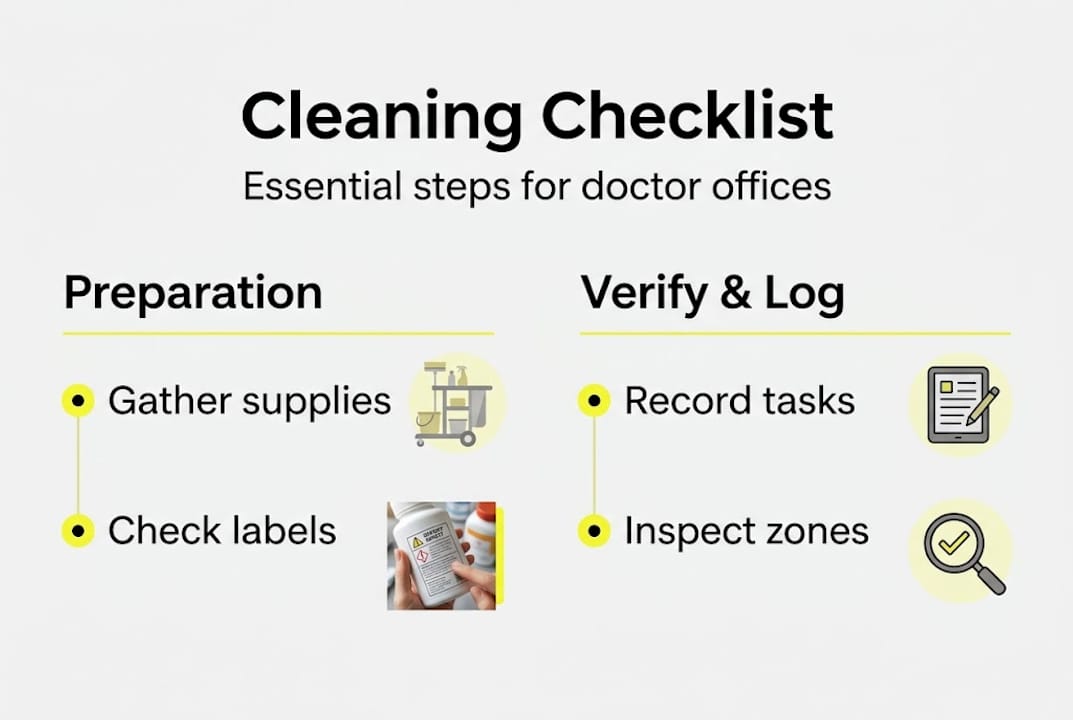
Supplies should match CDC recommendations and local compliance requirements, which means you should verify product labels confirm the EPA registration number and list the pathogens the product is effective against.
Following medical cleaning standards also means keeping a log of what products you are using, when they were opened, and when they expire. Disinfectants lose effectiveness after their expiration date, and using an expired product on a high-touch surface is no different than using plain water.
For regulatory updates specific to Florida healthcare facilities, the Florida Department of Health and OSHA both publish guidance that your cleaning compliance guide procedures should reference regularly.
Supply | Purpose | Compliance note |
EPA-registered disinfectant | Kill pathogens on hard surfaces | Must list target pathogens on label |
Color-coded microfiber cloths | Prevent cross-contamination | Assign one color per zone |
HEPA vacuum | Remove fine particulate matter | Required in rooms with immunocompromised patients |
Disposable PPE | Protect cleaning staff | OSHA bloodborne pathogen standard applies |
Biohazard bags | Contain regulated medical waste | Must meet state disposal regulations |
Pro Tip: Check the expiration dates on all disinfectants at the start of each week, not just when you reorder supplies. Review your local Florida Department of Health guidelines at least once a month, since requirements can update without much notice.
Step-by-step cleaning checklist for doctor offices
Once preparation is complete, follow this step-by-step process to ensure thorough cleaning. Working in a consistent order from cleanest to dirtiest areas reduces the risk of spreading contaminants from one zone to another.
Start at the entry and waiting room. Wipe down door handles, push plates, and railings with an EPA-registered disinfectant. Clean reception desk surfaces, countertops, pens, and any shared touchscreens.
Move to administrative areas. Disinfect keyboards, phones, mouse devices, and desk surfaces. Empty trash and replace liners.
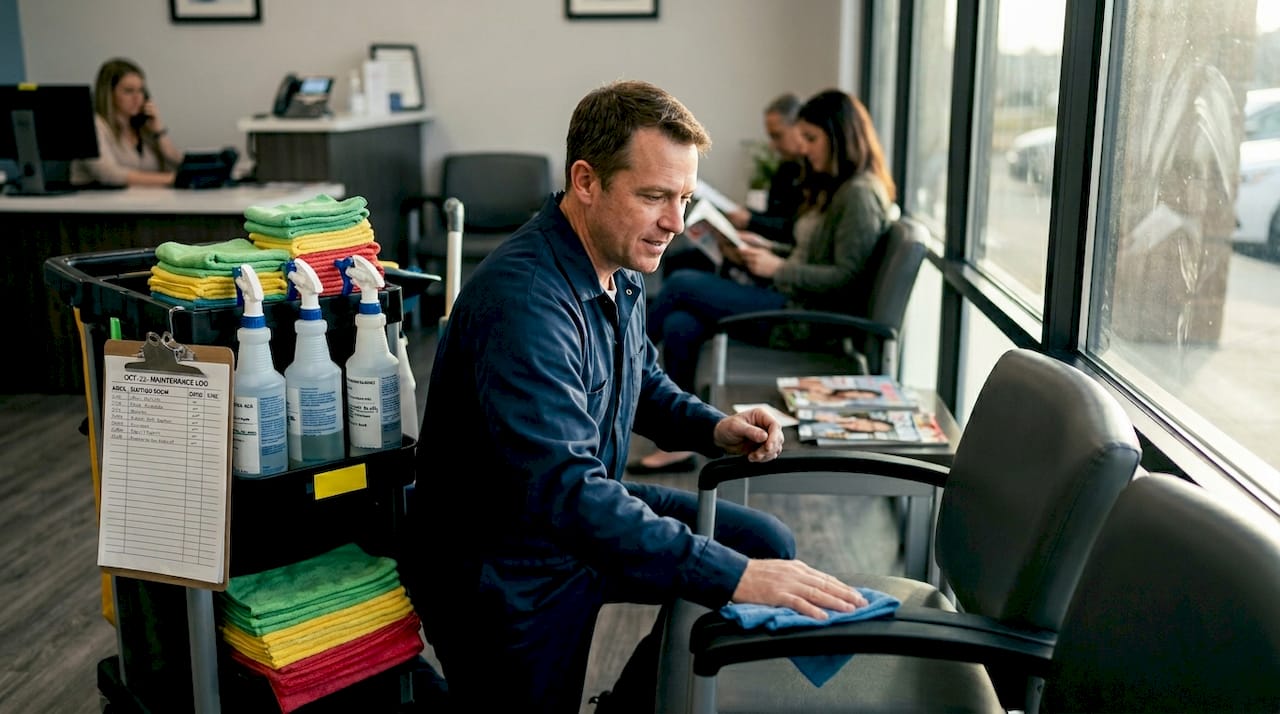
Clean exam rooms between each patient. Disinfect exam tables (including underneath), instrument trays, cabinet handles, sinks, and faucets. Replace paper table covering.
Sanitize restrooms thoroughly. Toilets, sinks, faucet handles, soap dispensers, paper towel holders, door handles inside and out, and floor areas around fixtures.
Address common hallways and break rooms. Wipe down hallway light switches, elevator buttons if applicable, microwave handles, and coffee machine surfaces.
Perform end-of-day deep cleaning. Mop all hard floors with a fresh disinfectant solution, empty all trash, spot-clean walls and baseboards for visible contamination.
A medical cleaning checklist is not just a convenience tool — following a documented checklist increases compliance and reduces risk, especially during state or accreditation inspections.
Cleaning method | Pros | Cons | Best for |
In-house staff | Immediate availability, familiar with layout | Requires ongoing training, supplies management | Small practices with consistent schedules |
Contract cleaning service | Trained in healthcare standards, accountable | Higher cost, requires onboarding | Mid-to-large clinics needing verified compliance |
Using manager cleaning tips to evaluate whether in-house or contract cleaning better fits your practice size is a smart first step before building your protocol.
Studies show that a significant portion of medical facilities fail compliance inspections due to missed cleaning steps, particularly in transition areas like hallways and break rooms that staff assume someone else is handling.
Pro Tip: Use color-coded cloths consistently. Assign one color to patient areas like exam rooms, a different color to restrooms, and a third to administrative spaces. Post a simple chart in your supply closet so every team member follows the same system without having to memorize it.
Troubleshooting common cleaning mistakes and missed areas
Even with a checklist, some errors are surprisingly common. Here’s how to fix them before they become compliance problems.
Most frequently missed areas and how to correct them:
Light switches and wall plates: Often wiped around, not on. Add them explicitly to your checklist with a reminder to disinfect the entire plate surface.
Door handles on both sides: Staff frequently clean the interior handle but forget the exterior. Assign both sides as one single task.
Computer keyboards and mice: Neglected surfaces often include light switches, door handles, and computer keyboards, all of which are touched constantly throughout the day.
Waiting room chair armrests and seat edges: Staff tend to wipe seat surfaces but skip the sides and underside edges where hands rest.
Medical equipment cords and bases: The device itself may get wiped, but cords, base units, and control panels are often overlooked.
Soap dispensers and paper towel holders: The dispenser pump itself is touched by every person who washes their hands, yet it is rarely included in daily disinfection tasks.
“Improper cleaning and disinfection practices in healthcare settings contribute directly to the spread of healthcare-associated infections, which affect approximately 1 in 31 hospital patients on any given day.” — CDC guidance on environmental surface cleaning in healthcare settings.
To catch overlooked spots in your daily routine, we recommend doing a brief walkthrough of each zone after cleaning is complete. Look at surfaces from a patient’s perspective, not a staff member’s. Patients touch things staff never think about.
For weekly routines, review your doctor office cleaning tips protocol against your actual logs. If a surface appears clean but was never recorded as disinfected, it should be treated as uncleaned. Documentation is part of the office cleaning standards requirement, not just good practice.
Verification and documentation: Ensuring ongoing compliance and hygiene
It’s essential not just to clean thoroughly but to prove and track the work. Regulatory inspectors and accreditation reviewers will ask for documentation. If you cannot show it, the cleaning effectively did not happen from a compliance standpoint.
Steps for verifying cleaning tasks and logging completion:
Assign each cleaning task to a specific staff member or vendor, not a general team.
Use a printed or digital sign-off sheet that lists every area and the time it was cleaned.
Have a supervisor spot-check at least three randomly selected areas per shift.
Record the name of the product used, its EPA registration number, and the dilution ratio applied.
Keep completed logs for a minimum of 90 days, or longer if your accreditation body requires it.
Review logs weekly to identify patterns, such as one room consistently left unchecked.
Best practices for maintaining your compliance documentation:
Store logs in a centralized, accessible location that inspectors can review on arrival
Back up digital records to a secure cloud platform weekly
Train new staff on documentation procedures during their first week, not after an inspection
Include a signature field on every log so individual accountability is clear
Review and update your documentation templates any time regulations change
Proper documentation and routine verification help prevent compliance failures, especially in facilities that have multiple cleaning staff or rotating schedules.
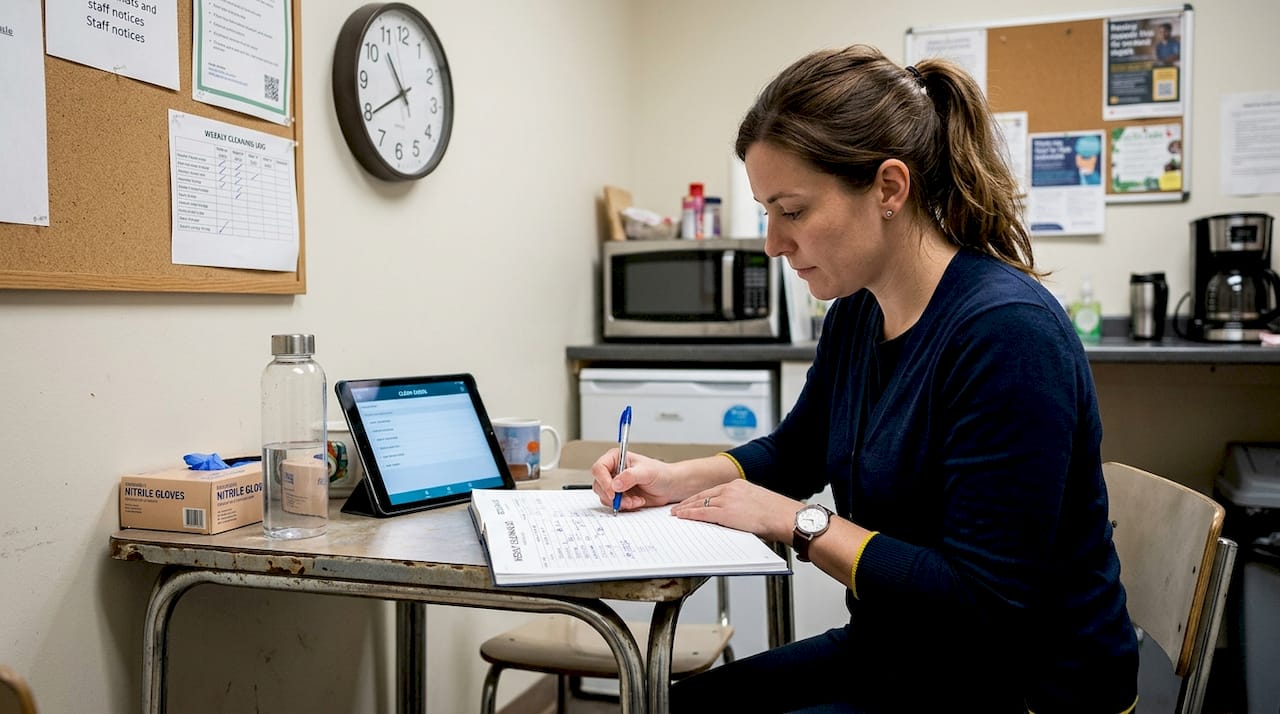
Pro Tip: Use a free app like Swept or Janitorial Manager to digitize your cleaning logs. These tools let you set automated reminders for recurring tasks, capture timestamps, and export reports instantly when an inspector arrives. Pair the app with your cleaning workflow steps to build a fully auditable system.
Why a standardized cleaning checklist transforms patient care and compliance
Most facility managers treat a cleaning checklist as a box to check before an inspection. We believe that perspective misses the real value entirely.
When you introduce a standardized checklist, you are not just organizing tasks. You are changing how your staff thinks about their role. Cleaning staff who follow documented protocols report feeling more confident and more accountable, because they know exactly what success looks like. That shift in mindset leads to fewer errors, not because anyone is watching more closely, but because clear expectations make good habits easier to maintain.
Practices across Northeast Florida, from St. Augustine to Nocatee, report that after implementing consistent cleaning protocols, they see smoother regulatory audits and stronger patient satisfaction scores. Patients notice a clean environment. They connect it directly to the quality of care they are receiving.
Understanding the role of office cleaning in shaping patient perception is something many practice owners overlook until a complaint arrives. A structured checklist prevents that moment entirely.
The checklist is not the end goal. A safer, more trustworthy practice is.
Next steps: Professional cleaning solutions for doctor offices
A standardized checklist is powerful, but sometimes you need expert help to implement it correctly and maintain it consistently.
At Lemon Maids, we specialize in commercial cleaning services tailored to healthcare environments across St. Augustine, Ponte Vedra, and Nocatee. Our team understands Florida compliance requirements and uses EPA-approved products suited for medical settings. We build customized cleaning plans around your schedule, patient volume, and specific regulatory needs. Whether you need a recurring office cleaning service or a one-time deep clean before an inspection, we are ready to help. Contact us today to request a quote and take the guesswork out of keeping your practice compliant and your patients safe.
Frequently asked questions
How often should doctor offices be cleaned?
High-traffic areas and exam rooms should be cleaned and disinfected daily, with deeper cleaning protocols scheduled weekly per CDC compliance standards for clinical environments.
What areas in a doctor office are most frequently missed during cleaning?
Commonly overlooked areas include door handles, light switches, keyboards, and waiting room chair armrests, all of which are high-touch neglected surfaces that staff often skip unintentionally.
What documentation is required to prove compliance in medical office cleaning?
You should maintain detailed cleaning logs, staff sign-off records, product usage sheets, and inspection reports, as routine verification records are frequently requested during compliance audits.
Can professional cleaning services help with compliance in doctor offices?
Yes, specialized providers familiar with healthcare cleaning standards can implement consistent disinfection protocols and provide the documentation your practice needs to stay compliant.
Recommended
Comments