
Step-by-step move-in cleaning guide for a fresh start
- Glenn Brosnick
- 2 days ago
- 8 min read
TL;DR:
Hidden bacteria, dust, and allergens often remain in move-in homes, needing thorough cleaning.
Proper move-in cleaning involves systematically addressing every zone from top to bottom with the right tools.
Hiring professional cleaners ensures a deeper, more thorough clean, especially for larger or neglected homes.
Moving into a new home in St. Augustine, Ponte Vedra, or Nocatee feels exciting until you notice a sticky cabinet shelf, a dusty vent cover, or a bathroom that smells like the previous tenant. Even homes labeled “move-in ready” can harbor hidden bacteria, grime, and allergens that a quick wipe-down never touches. This guide walks you through exactly what to do before you unpack a single box. You will learn which supplies to gather, how to clean zone by zone, which mistakes to avoid, and when it makes sense to call in a professional team.
Table of Contents
Key Takeaways
Point | Details |
Supplies matter | Gather all tools and products before you begin for a smoother, faster clean. |
Follow a method | Tackle rooms in logical order to maximize results and minimize wasted effort. |
Don’t miss details | Focus on overlooked areas like vents and switch plates to avoid unwanted surprises. |
Consider professional help | Hiring experts ensures a deep, thorough clean and saves significant time. |
What you need before you start
Before you touch a single surface, you need the right tools in your hands. Trying to clean without a complete kit means stopping mid-task to run to the store, which wastes time and breaks your momentum. A well-stocked caddy keeps everything within reach and makes the whole process faster and less frustrating.
Here is what to gather before you begin:
Microfiber cloths (at least 10 to 12 for a full home)
All-purpose cleaner and disinfectant spray
Scrub brushes in multiple sizes for grout, corners, and tight spaces
Mop with a washable head and a bucket
Vacuum with attachments for upholstery and crevices
Glass cleaner for windows and mirrors
Baking soda and white vinegar for natural deodorizing
Rubber gloves and disposable gloves
Trash bags and a step stool
Toilet brush and bowl cleaner
As cleaning experts note, different tools and products are necessary to address the variety of surfaces found in a new home. One product does not do everything well. Using the wrong cleaner on a surface can scratch it or leave residue behind.
Supply | Purpose | Recommended type |
Microfiber cloths | Dusting and wiping surfaces | Color-coded by room |
All-purpose cleaner | General surface cleaning | Non-abrasive formula |
Scrub brush | Grout, tile, and corners | Stiff bristle |
Mop | Hard floor cleaning | Flat head with washable pad |
Vacuum | Carpets, vents, upholstery | HEPA filter model |
Glass cleaner | Windows and mirrors | Streak-free formula |
Before you start cleaning, walk through the home with a notepad. Note any repairs needed, stains that require special treatment, or areas that look worse than expected. This quick walkthrough saves you from discovering a problem mid-clean when your hands are already wet.
Pro Tip: Stock one cleaning caddy per floor if the home has multiple levels. This prevents you from hauling supplies up and down stairs and keeps your workflow moving forward without interruption.
Step-by-step move-in cleaning process
With your supplies ready, you can confidently tackle the cleaning process itself. The order you clean matters as much as the products you use. Cleaning in the wrong sequence means you will redo work you already finished, which is frustrating and time-consuming.
Follow this sequence for the best results:
Open windows and ventilate the home before using any products.
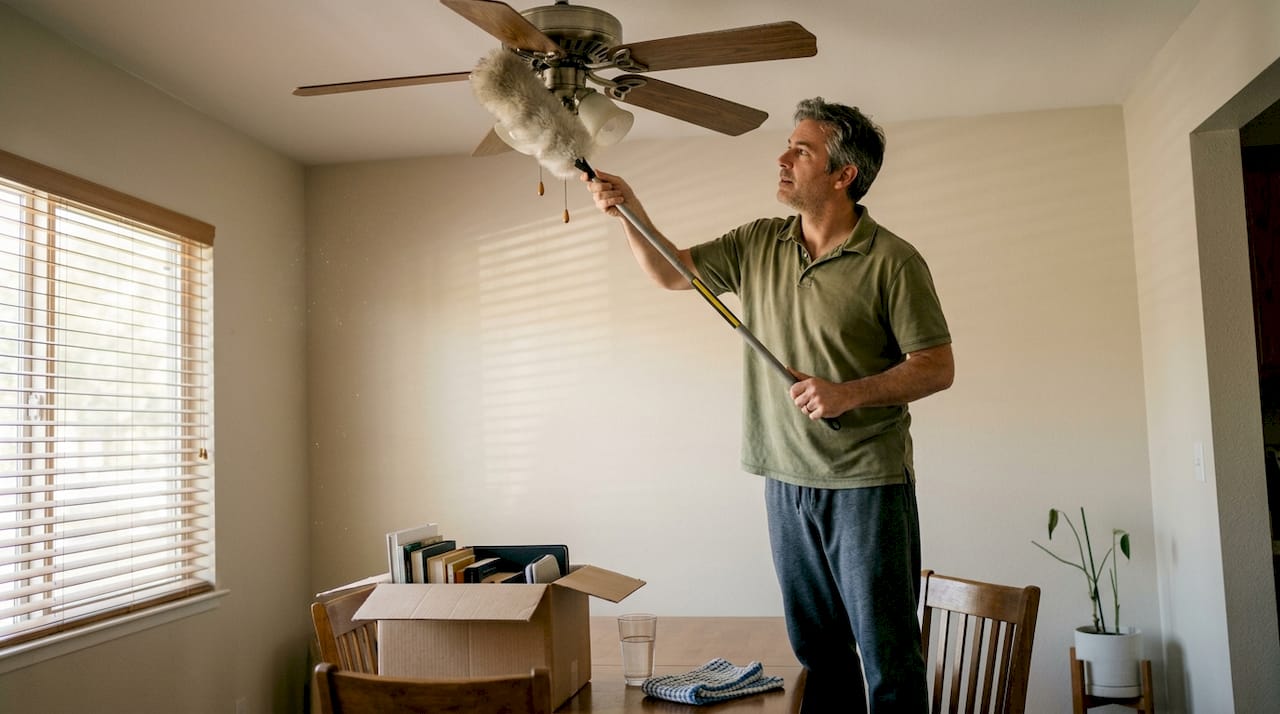
Dust all ceiling fans, light fixtures, and vents from top to bottom.
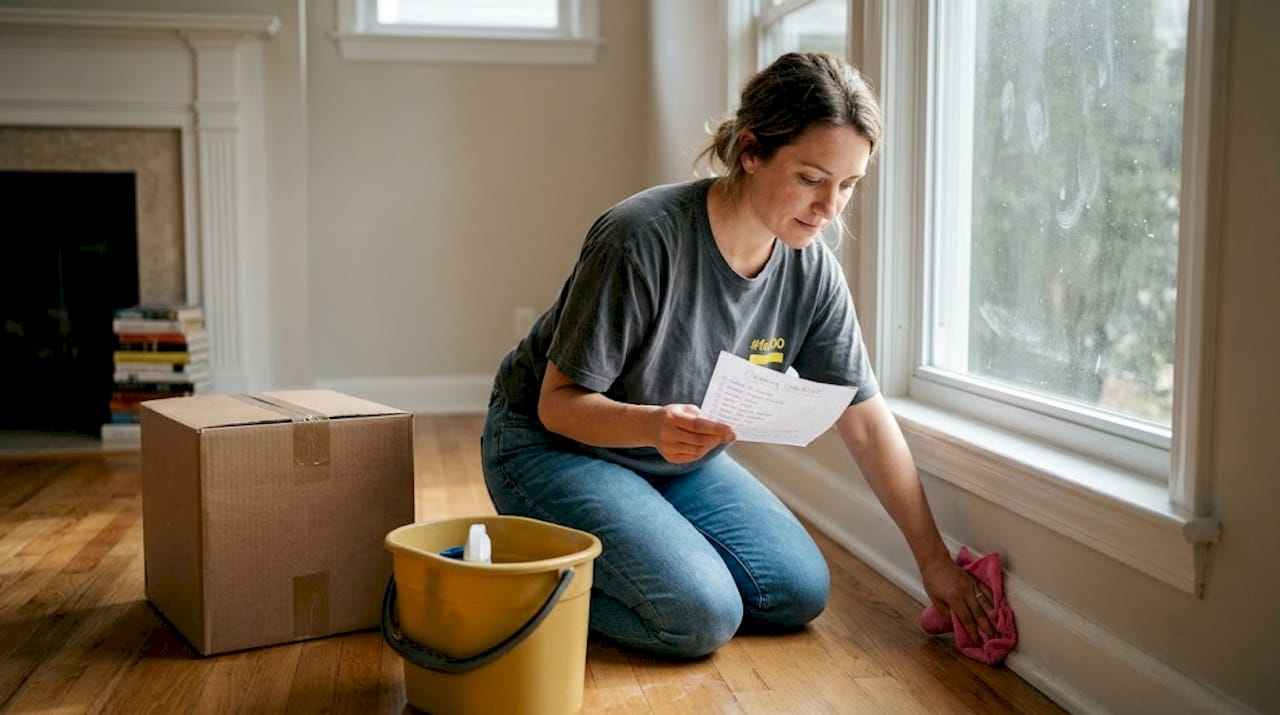
Wipe down walls and baseboards with a damp microfiber cloth.
Clean inside all cabinets, drawers, and closet shelves before loading anything in.
Scrub the kitchen thoroughly, including inside the oven, refrigerator, and microwave.
Clean all bathrooms, scrubbing tile, grout, toilet, sink, and shower surfaces.
Clean windows and mirrors with streak-free glass cleaner.
Vacuum all carpets, rugs, and upholstered surfaces, including under furniture.
Mop all hard floors using a clean mop head.
Wipe high-touch surfaces last, including door handles, light switches, and faucets.
Following a logical top-to-bottom sequence saves time and prevents rework. Dust falls downward, so always start high and finish at floor level. Dry tasks like dusting always come before wet tasks like mopping.
Task | DIY time estimate | Professional time estimate |
Kitchen deep clean | 2 to 3 hours | 45 to 60 minutes |
Bathrooms (per room) | 45 to 90 minutes | 20 to 30 minutes |
Floors (full home) | 1 to 2 hours | 30 to 45 minutes |
Windows and fixtures | 1 to 2 hours | 20 to 40 minutes |
Full home total | 6 to 10 hours | 2 to 4 hours |
Understanding the move-in cleaning types available helps you decide how deep to go. Some homes need a standard clean, while others need a full deep clean with appliance interiors and grout scrubbing.
Pro Tip: Wipe high-touch areas like light switches, door handles, and faucet knobs last. Cleaning these early and then touching them repeatedly during the rest of your clean just recontaminates them.
Avoiding common move-in cleaning mistakes
Even when following a checklist, it is easy to slip up and miss crucial details. Some of the most common mistakes are not about skipping steps on purpose. They happen because certain areas are simply easy to overlook.
Here are the top five mistakes to avoid:
Skipping hidden zones: Under sinks, inside closet shelves, behind toilets, and inside vents are frequently missed. A surprising number of people skip vent covers and under-appliance areas, leaving allergens behind.
Using the wrong products: Bleach on colored grout, abrasive scrubbers on stainless steel, or vinegar on natural stone can cause permanent damage.
Cleaning in the wrong order: Mopping before dusting means your clean floor gets covered in falling debris. Always dust first.
Ignoring air quality: Dirty vents and filters circulate dust through the entire home. Replace or clean HVAC filters before running the system.
Unsafe ladder use: Reaching ceiling fans or high shelves without a stable step stool causes falls. Use proper equipment.
Warning: Do not assume a home is clean because it looks clean. Hidden bacteria are common in move-in ready homes, invisible to the naked eye but present on surfaces, especially in kitchens and bathrooms.
Forgotten spots that professionals always check include:
Top of the refrigerator and inside the freezer
Ceiling fan blades and light fixture covers
Inside bathroom exhaust fans
Closet rod hardware and shelf brackets
Window tracks and sliding door channels
Garage door handles and utility room shelves
Before you move furniture in, review your move-out cleaning list as a cross-reference. It highlights the same zones that previous tenants or owners were responsible for cleaning, which tells you exactly where to look for missed spots.
DIY move-in cleaning vs. hiring professionals
When all the work feels overwhelming, you might wonder if hiring a pro makes more sense. The answer depends on your time, budget, and the condition of the home. Both approaches have real advantages.
Factor | DIY cleaning | Professional cleaning |
Cost | Low (supplies only) | Moderate to higher upfront |
Time required | 6 to 10 hours | 2 to 4 hours |
Results | Good with effort | Consistent and thorough |
Equipment | Basic tools | Commercial-grade tools |
Satisfaction guarantee | None | Often included |
Allergen removal | Limited | Deep and systematic |
DIY cleaning works well when:
You are moving into a smaller apartment or condo
You have a full weekend available before move-in day
The home is recently renovated and relatively clean
Your budget is tight and you have the energy
Hiring professionals makes more sense when:
You are moving into a larger home in St. Augustine, Ponte Vedra, or Nocatee
You have a tight move-in timeline with no extra days to spare
Someone in your household has allergies or asthma
The home has not been cleaned in a while or has visible buildup
Some pros guarantee 100% satisfaction, while DIY cleaning can miss deep-seated germs in grout lines, behind appliances, and inside vents. Local professionals who specialize in move-in work also bring specialty solutions and commercial equipment that simply are not available in a standard store.
Choosing a local cleaner in St. Augustine or Ponte Vedra means you get someone familiar with the area, the housing types, and the specific challenges that come with Florida homes, including humidity-related mold and mildew concerns.
A professional’s take: The move-in clean no one should skip
We have cleaned hundreds of homes across St. Augustine, Ponte Vedra, and Nocatee, and the pattern is always the same. Clients walk in expecting a quick wipe-down and leave shocked by what we find. Grease buildup behind the stove. Mold inside the refrigerator seal. Dust caked into bathroom exhaust fans that have not been touched in years.
The counterintuitive truth is that even newly cleaned homes can harbor invisible bacteria and residue. “Move-in ready” is a real estate term, not a cleaning standard.
We once cleaned a brand-new construction home and found drywall dust packed into every cabinet shelf and vent. The builder’s crew had wiped the counters, but nothing else had been touched.
Our honest advice: trust your senses. If a cabinet smells musty, clean it again. If a surface looks clean but feels sticky, it is not clean. Your nose and fingertips are better inspection tools than your eyes alone. A thorough move-in clean is not optional. It is the foundation of a healthy, comfortable home.
Pro Tip: Run your finger along the top of door frames and window sills before deciding a room is done. These are the spots that show you whether a space was truly cleaned or just made to look clean.
Ready for your fresh start?
If tackling a full move-in clean on your own sounds like too much, you do not have to do it alone. Our team at Lemon Maids serves homeowners and renters across St. Augustine, Ponte Vedra, and Nocatee with thorough, reliable move-in cleaning services that cover every room, every surface, and every forgotten corner.
Whether you need a standard clean or full deep cleaning help before your furniture arrives, we bring the tools, the products, and the expertise to get it done right the first time. No guessing, no missed spots, and no stress on one of the busiest days of your life.

Get in touch today and let us handle the cleaning so you can focus on settling in.
Frequently asked questions
What is included in a typical move-in cleaning?
A standard move-in cleaning includes scrubbing kitchens and bathrooms, cleaning floors and baseboards, wiping inside cabinets and closets, and sanitizing all surfaces. As outlined in a thorough move-in checklist, every zone and surface should be addressed for health and comfort.
How long does thorough move-in cleaning take?
Cleaning a typical home takes 4 to 8 hours depending on size, condition, and whether you work alone or with help. A full move-in clean is a significant project that most new residents underestimate.
Is move-in cleaning really necessary for new or renovated homes?
Yes, because new homes often contain dust, allergens, and debris left over from construction. Even move-in ready homes can harbor invisible bacteria and residue that needs to be removed before you settle in.
Should I hire professional cleaners for my move-in?
Professionals save you time, offer deeper cleaning, and often provide satisfaction guarantees. Pros offer more extensive cleaning than most DIYers can achieve with standard household tools and products.
Recommended
Comments