Essential medical office cleaning checklist for safe, compliant care
- Glenn Brosnick
- 21 hours ago
- 8 min read
TL;DR:
Medical office cleaning must comply with OSHA, CDC, and EPA standards to prevent violations and protect trust.
Regular cleaning, waste handling, and environmental hygiene are essential for safety and inspection readiness.
Building a culture of cleanliness and staff accountability ensures consistent compliance beyond just checklist tasks.
Missing a single step on your medical office cleaning checklist can cost you far more than a few hours of extra work. OSHA fines reach up to $16,550 per serious violation, and that does not count the damage to patient trust or your facility’s reputation. For office managers and business owners in St. Augustine, Ponte Vedra, and Nocatee, running a medical or dental office means holding yourself to a higher standard every single day. This guide gives you a clear, actionable checklist built around OSHA, CDC, and EPA requirements so you can stay compliant, protect your patients, and keep inspectors satisfied.
Table of Contents
Key Takeaways
Point | Details |
Regulatory alignment | OSHA, CDC, and EPA rules form the backbone of compliant medical office cleaning. |
Comprehensive checklist | Cover daily, weekly, and monthly tasks to ensure nothing is overlooked. |
Proper waste handling | Regulated waste like sharps and dental amalgam must follow strict federal and EPA guidelines. |
Patient-facing areas matter | Clean, well-kept windows and waiting rooms help maintain patient trust and pass inspections. |
Staff training and documentation | Regular training and documented checklists protect your staff and your practice. |
Why compliance matters in medical and dental offices
Medical and dental offices are not like standard commercial spaces. The risks here are real and regulated. You are dealing with bloodborne pathogens, chemical disinfectants, and patients who may already be vulnerable. Getting cleaning wrong is not just a hygiene issue. It is a legal and ethical one.
Three federal agencies set the rules you need to follow:
OSHA governs workplace safety, including written plans and staff training for bloodborne pathogen exposure control.
CDC provides environmental cleaning guidance and standard precautions that directly shape how clinical spaces should be cleaned and disinfected.
EPA regulates the chemical products used for disinfection and sets rules for dental amalgam waste disposal.
Together, these three agencies form the compliance triad that every medical and dental office manager in Northeast Florida needs to understand. Florida does not have a separate state mandate that overrides federal rules, but consulting your local health department is always a smart move. Conditions and expectations can shift, and staying current protects you.
“A single missed documentation step or an unlabeled biohazard container can trigger a full inspection and put your license at risk.”
The consequences of non-compliance go beyond fines. Patients notice when a waiting room smells stale or when a clinical surface looks questionable. That kind of detail erodes trust fast. Our compliance cleaning guide walks through how to align your cleaning program with federal expectations, and our overview of medical cleaning standards breaks down what inspectors actually look for.
If you run a dental practice specifically, our dentist office cleaning tips cover the unique requirements that come with aerosol-generating procedures and amalgam handling. Compliance is not just a box to check. It is the foundation of a safe practice.
Core elements of a medical office cleaning checklist
A strong checklist does not just list tasks. It organizes them by area, frequency, and priority so nothing slips through. Here is how to structure yours.
Checklist categories by area:
Reception and waiting room: Wipe down check-in counters, sanitize chairs and armrests, disinfect door handles, clean glass partitions, restock hand sanitizer dispensers.
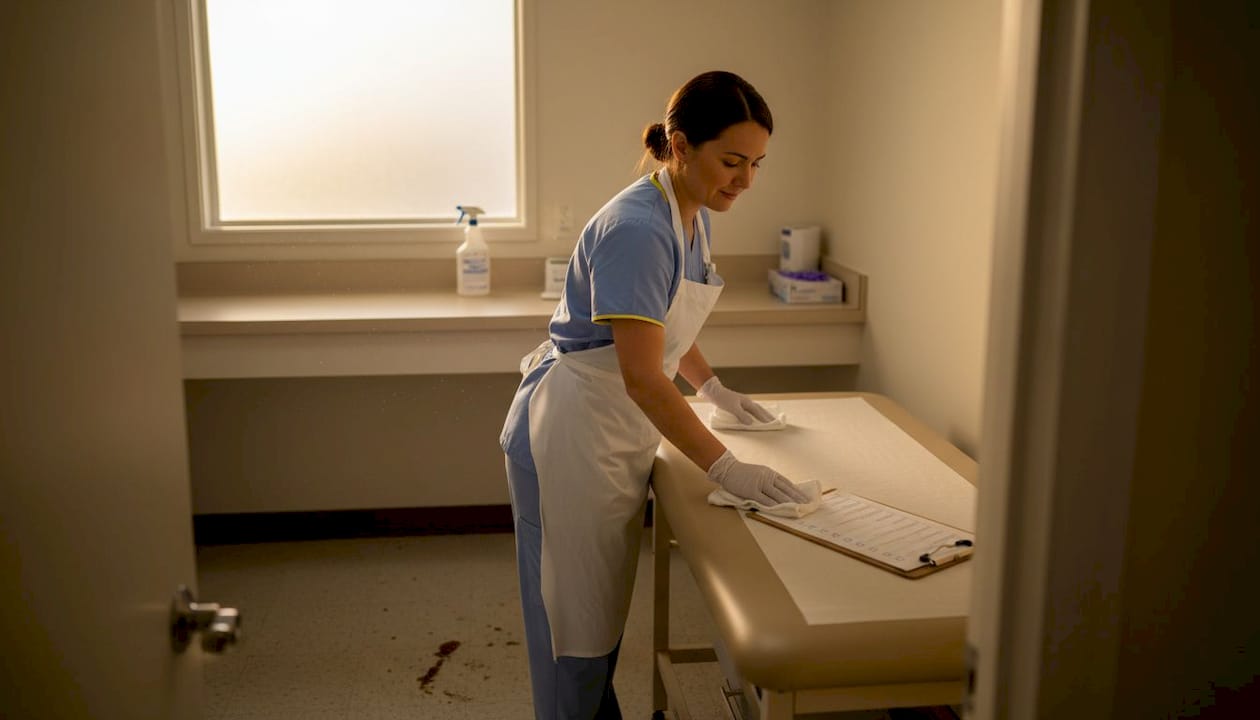
Clinical rooms: Disinfect exam tables and paper roll covers between every patient, wipe all equipment surfaces, sanitize light handles and drawer pulls, mop floors with an EPA-registered disinfectant.
Restrooms: Scrub toilets, sinks, and faucets, restock soap and paper towels, disinfect all touch points including flush handles and light switches.
Staff and common areas: Clean break room surfaces, sanitize shared equipment like keyboards and phones, empty all trash bins.
CDC guidelines mandate environmental and surface cleaning as essential for infection prevention, which means your checklist needs to be consistent, not just thorough on inspection days.
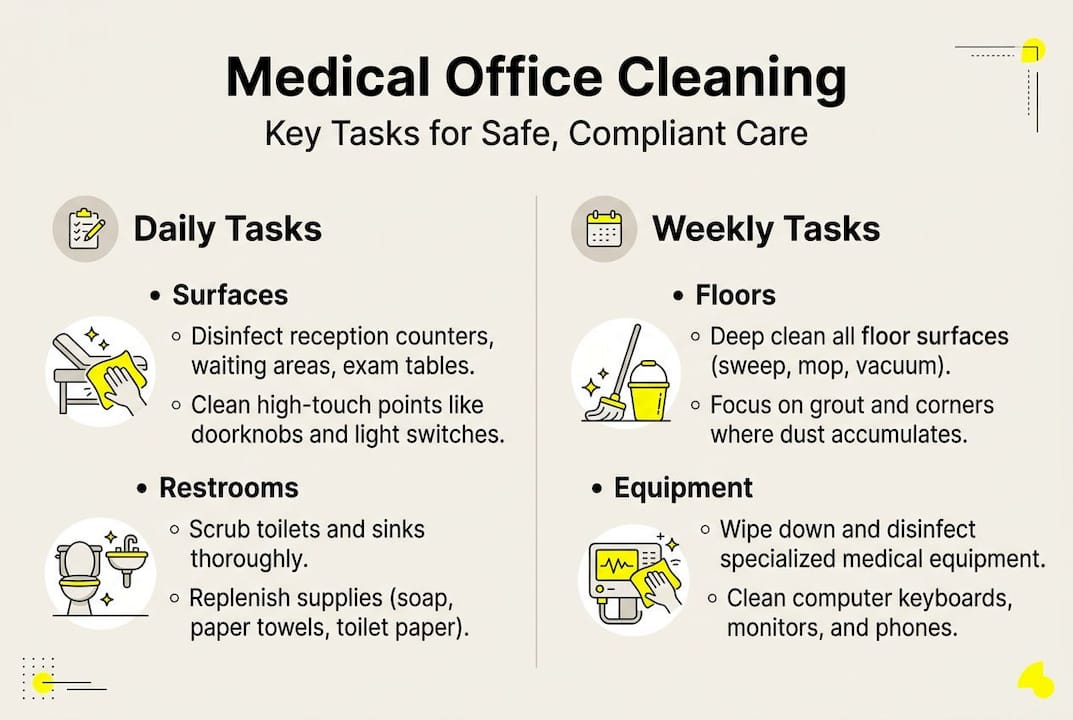
Frequency | Task examples |
Daily | Sanitize high-touch surfaces, restock PPE and hand hygiene supplies, empty biohazard and regular trash |
Weekly | Deep clean restrooms, mop all hard floors, wipe baseboards and light switches |
Monthly | Clean window interiors, inspect and restock first aid supplies, audit checklist completion logs |
Pro Tip: Assign each task a responsible staff member by name, not just by role. Accountability drops when tasks are assigned to a vague group. Named responsibility keeps standards consistent.
For a detailed breakdown of how to run your cleaning program efficiently, check our doctor office cleaning tips and our guide to building a reliable office cleaning workflow.
Handling regulated waste and hazardous materials
This is where many offices make costly mistakes. Regulated waste is not just trash. It has specific handling, labeling, and disposal requirements that you cannot ignore.
Key waste categories and handling rules:
Sharps: Must go directly into puncture-resistant containers that are clearly labeled with the biohazard symbol. Never overfill. Seal and replace at 75% capacity.
Biohazard bags: Use red or orange bags for regulated biological waste. These must be stored separately from regular trash at all times.
Dental amalgam: Requires EPA-compliant amalgam separators. Waste amalgam cannot go into regular trash, drain lines, or biohazard containers. It needs its own certified disposal stream.
Chemical disinfectants: Check Safety Data Sheets for each product. Some require specific disposal methods and cannot go down the drain.
Waste type | Container required | Label required |
Sharps | Puncture-resistant, rigid | Biohazard symbol |
Biological waste | Red/orange biohazard bag | Biohazard label |
Dental amalgam | Sealed amalgam container | Amalgam waste label |
Chemical waste | Manufacturer-specified | SDS-compliant label |
Pro Tip: Keep a waste log near your disposal station. Document the date, container type, and staff member who sealed and removed each container. This record is one of the first things an inspector will ask to see.
Never mix waste streams. Putting a bloody gauze in a regular trash bin is a violation. Putting amalgam in a biohazard bag is also wrong. Each stream has its own rules. Our guide to deep dental cleaning compliance covers these distinctions in more detail.
Practical tips for flawless daily and periodic cleaning
Knowing what to clean is only half the job. Making it happen consistently, every day, with every staff member, is where most offices struggle.
Daily non-negotiables:
Sanitize all high-touch surfaces before the first patient and after the last
Restock hand sanitizer, soap, and paper towels at every station
Empty and replace all trash and biohazard containers
Wipe down clinical equipment between every patient encounter
Mop clinical floors with an EPA-registered disinfectant at the end of each day
Thorough hand hygiene and environmental cleaning are two of the CDC’s top priorities for infection prevention in healthcare settings. These are not optional extras. They are baseline expectations.
How to audit your program:
Use a printed or digital checklist that staff sign off on after each task.
Conduct weekly spot-checks of high-risk areas like exam rooms and restrooms.
Review checklist logs monthly to identify patterns in missed tasks.
Schedule a quarterly surprise audit to see what the space looks like without advance preparation.
Staff training matters just as much as the checklist itself. Telling someone to “clean the exam room” is not training. Walk through the steps, explain why each task matters, and connect the work to patient safety outcomes. Staff who understand the stakes are more careful and consistent.
Our essential healthcare cleaning tips and standard cleaning steps are useful resources to share with your team during onboarding or refresher sessions.
Special considerations: windows, waiting rooms, and patient confidence
Tight clinical checklists sometimes leave out the spaces patients see first. That is a mistake. The waiting room and the windows facing the street are the first things a patient and an inspector notice when they walk in.
Waiting room priorities:
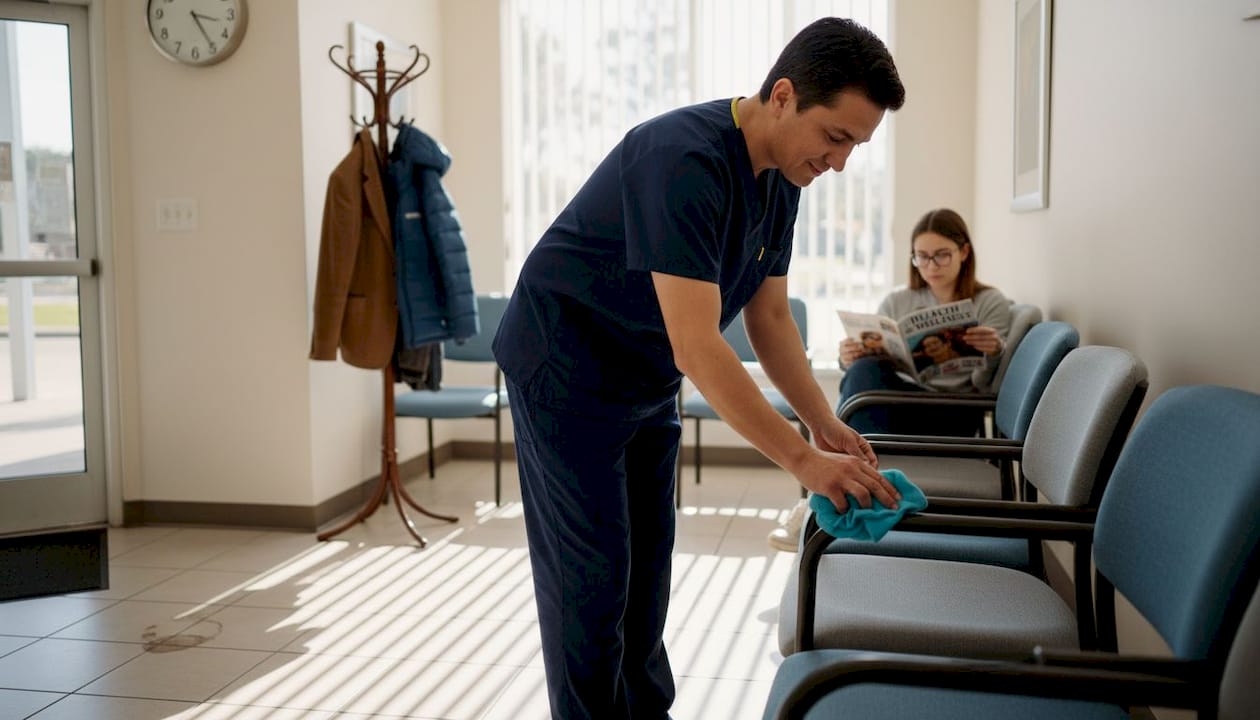
Disinfect armrests, seat surfaces, and shared tables after every patient wave
Remove or regularly sanitize shared reading materials and toys
Keep counters clear and visibly clean
Monitor for odors. A stale or chemical smell signals a problem either way
Ensure hand sanitizer is visible and fully stocked at the entrance
Windows and exterior-facing surfaces:
Grimy windows send a clear message to patients: if this is what they can see, what does the back look like? Clean windows and public areas directly contribute to positive patient impressions and support compliance expectations. Add interior window cleaning to your monthly checklist and exterior cleaning to your quarterly schedule.
“Inspectors and patients form their first impression before they ever reach the clinical area. The waiting room and windows set the tone for everything that follows.”
Odor is also a compliance signal. A strong chemical smell can indicate improper ventilation or overuse of disinfectants. A musty smell suggests moisture or mold issues. Neither is acceptable in a medical setting. Address both proactively. Our window cleaning best practices guide covers how to keep all public-facing surfaces in inspection-ready condition.
Beyond compliance: What most checklists miss (and what actually impresses inspectors)
Here is something most cleaning guides will not tell you: inspectors are not just looking at surfaces. They are reading the room. They notice whether staff seem confident about procedures, whether logs are current and organized, and whether the facility feels like a place where standards are lived rather than performed.
The offices that consistently pass inspections without stress are not the ones with the longest checklists. They are the ones where cleaning is a culture, not a chore. Staff know why each step matters. Logs are filled out in real time, not reconstructed at the end of the week. Surfaces are clean because the team takes pride in the space, not just because an inspector might show up.
The most common failures we see are not dramatic. They are incomplete logs, overlooked light switches, and waiting rooms that smell slightly off. These small details tell an inspector a lot about how seriously you take the rest of your compliance program.
Our cleaning compliance insights go deeper into how to build that kind of culture in your facility. The shift from minimum standard to visible excellence is what separates the practices patients trust and recommend.
Get expert support for stress-free medical office cleaning
Building and maintaining a compliant cleaning program takes time, training, and consistency. That is a lot to manage alongside running a busy medical or dental practice in St. Augustine, Ponte Vedra, or Nocatee.
At Lemon Maids, we specialize in professional office cleaning for medical and dental facilities, with protocols built around OSHA, CDC, and EPA standards. From daily sanitizing routines to scheduled deep cleaning services, we handle the details so you can focus on patient care. We understand the specific expectations that come with healthcare environments in Northeast Florida. Contact us today to get a tailored cleaning plan for your facility.
Frequently asked questions
What are the daily must-dos on a medical office cleaning checklist?
Daily must-dos include sanitizing high-touch surfaces, restocking hand hygiene supplies, emptying trash, and cleaning clinical and waiting areas. CDC outlines daily environmental cleaning as essential for infection control in all healthcare settings.
How should medical waste be handled and labeled?
Sharps and regulated waste must go in puncture-resistant, clearly labeled containers, while dental amalgam requires EPA-compliant separators. Regulated waste handling and amalgam rules are strictly enforced and must be followed to avoid violations.
Are there special cleaning steps for waiting rooms and windows?
Yes, waiting rooms require frequent disinfection of shared surfaces and items, and windows should be kept clear to promote confidence and meet compliance expectations. Cleanliness of public areas directly impacts patient impressions and supports a positive inspection outcome.
How do OSHA, CDC, and EPA guidelines apply to my St. Augustine area medical office?
Florida follows all OSHA, CDC, and EPA standards, so compliance means adhering to these federal guidelines while checking with your local health department for updates. CDC infection control standards apply uniformly across all states, including Florida, with no separate state override.
Recommended
Comments