Industry Terms in Vacation Rental Cleaning Demystified
- jeffwashausen
- 7 days ago
- 7 min read


Keeping your St. Augustine or Ponte Vedra vacation rental spotless demands more than just elbow grease—it requires understanding the language that drives professional cleaning standards. Property managers and owners who master industry-specific terms set clear expectations for their teams, avoid costly missteps, and deliver a superior guest experience. This guide brings clarity to the essential vocabulary every local rental professional needs for smooth operations and consistent quality.
Table of Contents
Key Takeaways
Point | Details |
Understanding Industry Terms | Familiarize yourself with key cleaning terminology to ensure effective communication and consistent standards in vacation rental cleaning. |
Choose Appropriate Cleaning Services | Select cleaning service types based on your property characteristics and guest expectations for optimal cleanliness. |
Implement Legal Compliance | Stay informed about legal requirements and safety protocols to protect your cleaning business and staff. |
Manage Financial Risks | Develop strategies to track cleaning-related expenses and avoid pitfalls that can impact profitability. |
What Are Industry Terms in Vacation Rental Cleaning
Vacation rental cleaning involves specialized terminology that helps property managers and hosts maintain exceptional standards. Understanding these industry-specific terms ensures clear communication and consistent service quality across different properties and cleaning teams.
The vacation rental management industry has developed a comprehensive language that covers various cleaning aspects. Key terms help standardize expectations and streamline operations for hosts and cleaning professionals. These terms go beyond traditional housekeeping vocabulary and address the unique requirements of short-term rental environments.
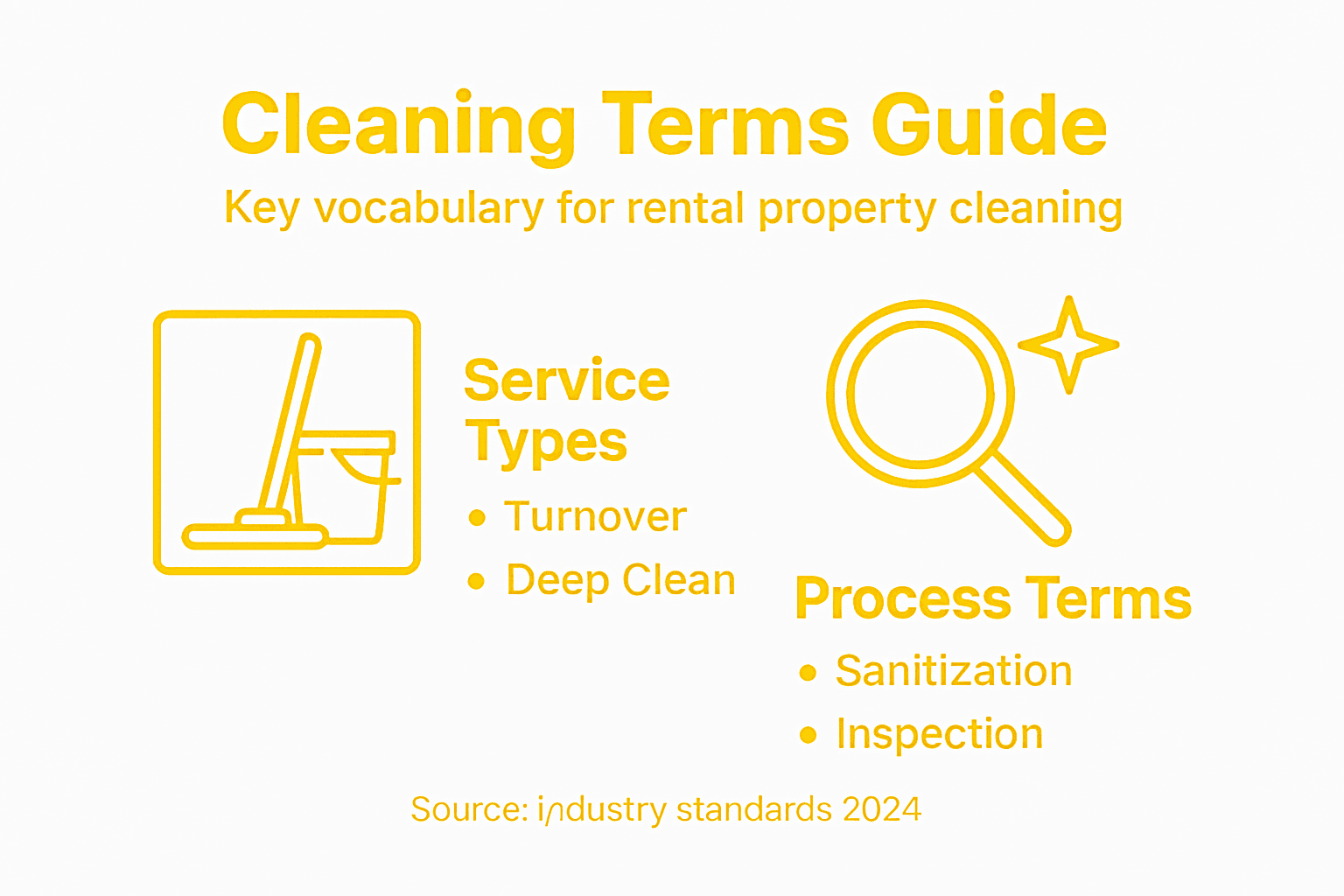
Some critical industry terms include:
Turnover Cleaning: A complete reset of the property between guest stays, involving thorough sanitization and preparation
High-Touch Areas: Surfaces frequently contacted by guests like doorknobs, remote controls, light switches, and kitchen counters
Sanitization Protocol: Specific procedures designed to eliminate germs and create a hygienic environment
Restocking Amenities: Replenishing consumable items like toiletries, kitchen supplies, and linens
Deep Cleaning: Comprehensive cleaning beyond standard surface maintenance, addressing hard-to-reach areas and detailed sanitization
Understanding these housekeeping industry standards helps property managers communicate effectively with cleaning teams and maintain consistent quality across multiple rental properties. Each term represents a specific expectation and procedure in the vacation rental cleaning ecosystem.
Pro tip: Create a standardized cleaning checklist using these industry terms to ensure every cleaning team understands exactly what needs to be done between guest stays.
Types of Vacation Rental Cleaning Services
Vacation rental cleaning services are not one-size-fits-all. Property managers and hosts must understand the nuanced range of cleaning approaches tailored to different property types and guest expectations. Cleaning service variations reflect the complexity of maintaining short-term rental properties.
The primary types of vacation rental cleaning services include:
Turnover Cleaning: Standard service performed between guest stays, involving complete property reset and basic sanitization
Standard Cleaning: Routine maintenance focusing on general cleanliness and surface-level sanitization
Deep Cleaning: Comprehensive service addressing hard-to-reach areas, intensive sanitization, and thorough detailed cleaning
Specialty Cleaning: Targeted services for specific areas like carpets, windows, or exterior spaces
Sanitization Cleaning: Advanced disinfection process using specialized equipment and techniques
Vacation rental properties, ranging from single-family homes to resort units, require flexible cleaning approaches. The cleaning strategy depends on multiple factors including property size, location, guest demographics, and specific rental platform requirements.
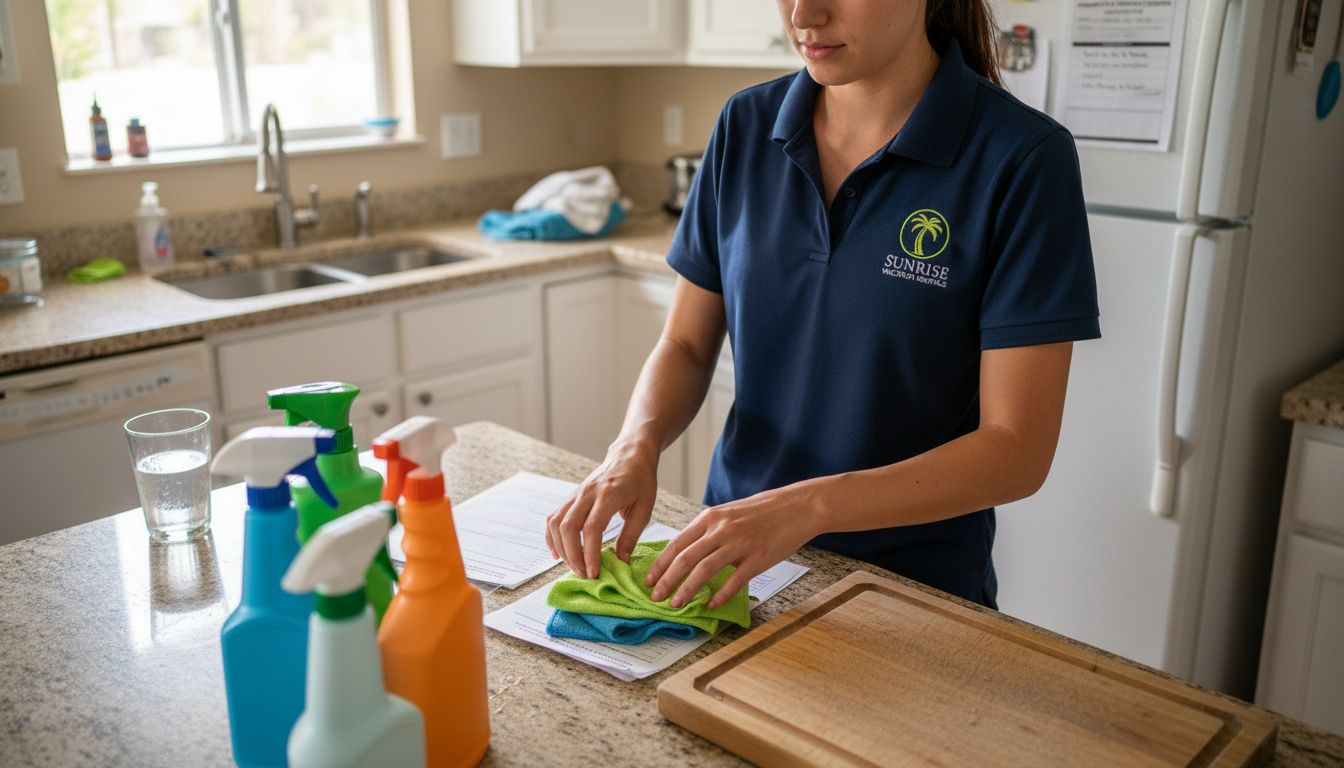
Each cleaning type serves a unique purpose in maintaining rental property standards. Property managers must select appropriate services based on their specific property characteristics and guest expectations to ensure optimal cleanliness and guest satisfaction.
Here’s a comparison of different vacation rental cleaning service types and their typical business impact:
Cleaning Service Type | Scope of Work | Business Impact | Recommended Frequency |
Turnover Cleaning | Full property reset & basic sanitization | Maximizes guest satisfaction | After every guest departure |
Standard Cleaning | General surface maintenance | Reduces routine upkeep costs | Weekly or bi-weekly |
Deep Cleaning | Intensive, detail-oriented cleaning | Extends asset life, prevents issues | Monthly or quarterly |
Specialty Cleaning | Focused area treatments | Tackles stubborn stains, boosts appeal | As needed, based on condition |
Sanitization Cleaning | Advanced disinfection methods | Enhances safety, meets platform standards | During disease outbreaks or monthly |
Pro tip: Develop a customized cleaning checklist that adapts to different property types and cleaning service levels to maintain consistent quality.
Key Terms for Processes and Standards
Vacation rental cleaning involves a complex set of professional standards that ensure consistent quality and guest satisfaction. Cleaning process standards provide a comprehensive framework for property managers to maintain exceptional cleanliness and hygiene across different rental properties.
Key terminology in cleaning processes and standards includes:
Cross-Contamination Prevention: Techniques to prevent spreading germs between surfaces and areas
Risk-Based Cleaning: Targeted cleaning approach focusing on high-risk and high-touch areas
Sanitization Protocol: Systematic method for reducing microorganisms to safe levels
Performance Verification: Processes to confirm cleaning effectiveness through visual and microbiological assessments
Cleaning Frequency Matrix: Guidelines determining how often different areas require specific cleaning interventions
Understanding cleaning and disinfection procedures helps property managers develop robust cleaning strategies. These standards go beyond surface-level cleaning, incorporating scientific approaches to maintaining a safe and welcoming environment for guests.
Each term represents a critical component in creating a comprehensive cleaning framework that meets professional industry standards and guest expectations. Property managers must integrate these concepts to ensure consistent, high-quality cleaning across all rental properties.
Pro tip: Develop a standardized training manual that clearly explains these key terms and processes to ensure all cleaning staff understand and implement professional standards.
Legal, Safety, and Compliance Terminology
Vacation rental cleaning involves complex legal and safety considerations that go beyond standard cleaning practices. Cleaning fee regulations establish critical guidelines for property managers to understand their financial and legal responsibilities.
Key legal and compliance terminology includes:
Non-Refundable Cleaning Fee: A predetermined charge covering standard cleaning between guest stays
Normal Wear and Tear: Expected property deterioration that does not constitute damage requiring additional charges
Liability Waiver: Legal document protecting cleaning services from potential claims during property maintenance
Personal Protective Equipment (PPE): Safety gear required for cleaning staff to prevent workplace injuries
Chemical Safety Protocol: Guidelines for handling, storing, and using cleaning chemicals safely
Occupational safety standards provide critical frameworks for protecting both cleaning staff and property owners. These regulations ensure that cleaning procedures meet rigorous safety and health requirements.
Property managers must understand these terms to create comprehensive cleaning agreements that protect both their business interests and the safety of cleaning personnel. Compliance involves more than just following rules—it’s about creating a safe, transparent environment for everyone involved.
Below is a summary table of common legal and safety terms in vacation rental cleaning and their purpose:
Term | Purpose | Impact on Property Management |
Non-Refundable Cleaning Fee | Covers routine cleaning expenses | Ensures cost recovery, avoids disputes |
Normal Wear and Tear | Defines acceptable deterioration | Prevents unfair cleaning charges |
Liability Waiver | Limits legal risk | Reduces potential claims and lawsuits |
Personal Protective Equipment (PPE) | Protects cleaning staff | Maintains workplace safety compliance |
Chemical Safety Protocol | Ensures safe chemical handling | Prevents accidents and health hazards |
Pro tip: Develop a comprehensive compliance checklist that documents all legal and safety requirements to protect your vacation rental cleaning business.
Costs, Liabilities, and Common Mistakes
Vacation rental cleaning involves complex financial considerations and potential legal pitfalls that can significantly impact property management profitability. Rental property tax implications reveal critical insights into managing cleaning-related expenses and understanding potential financial risks.
Common financial and liability challenges include:
Unexpected Cleaning Costs: Expenses beyond standard cleaning that can erode profit margins
Improper Fee Structuring: Incorrectly applied cleaning charges that may violate rental agreements
Inadequate Damage Documentation: Failure to properly record and assess property condition between guests
Incomplete Insurance Coverage: Gaps in liability protection for cleaning-related incidents
Tax Reporting Errors: Misclassification of cleaning expenses and deductions
Understanding legal complexities of cleaning fees helps property managers avoid costly mistakes. These potential pitfalls can result in financial losses, legal disputes, and damaged reputation if not carefully managed.
Property managers must develop comprehensive strategies that balance thorough cleaning practices with financial prudence. This requires careful documentation, transparent fee structures, and proactive maintenance approaches that protect both the property and the business’s financial interests.
Pro tip: Create a standardized financial tracking system that precisely documents all cleaning-related expenses and potential damage to protect your rental investment.
Master Vacation Rental Cleaning with Expert Services You Can Trust
Navigating the complex industry terms like turnover cleaning, sanitization protocols, and deep cleaning can be challenging when managing vacation rentals. Ensuring your property meets the highest standards is critical to guest satisfaction and legal compliance. At My Lemon Maids, we understand these challenges and specialize in delivering tailored cleaning solutions that align perfectly with vacation rental cleaning terminology and best practices.
Ready to elevate your rental property’s cleanliness and avoid costly mistakes? Explore our comprehensive cleaning options including deep cleaning and standard cleaning designed to meet all your vacation rental needs. Visit My Lemon Maids now and secure a professional cleaning partner who knows the language of your business. Get started today to protect your investment and delight your guests with pristine properties.
Frequently Asked Questions
What is turnover cleaning in vacation rental cleaning?
Turnover cleaning is a comprehensive cleaning process that resets the property between guest stays. It includes thorough sanitization and preparation to ensure the property is ready for the next guest.
Why is deep cleaning important for vacation rentals?
Deep cleaning is essential for maintaining high standards in vacation rentals as it involves thorough cleaning of hard-to-reach areas and intensive sanitization, thus extending the asset’s life and preventing potential issues.
What are high-touch areas in cleaning vacation rentals?
High-touch areas are surfaces frequently contacted by guests, such as doorknobs, remote controls, light switches, and kitchen counters. These areas need special attention to ensure they are clean and sanitized.
What is a sanitization protocol in vacation rental cleaning?
A sanitization protocol refers to specific procedures designed to eliminate germs and maintain a hygienic environment in vacation rentals, ensuring guest safety and satisfaction.
Recommended
Comments