
Essential window cleaning tools: Achieve spotless results
- Glenn Brosnick
- 9 hours ago
- 10 min read
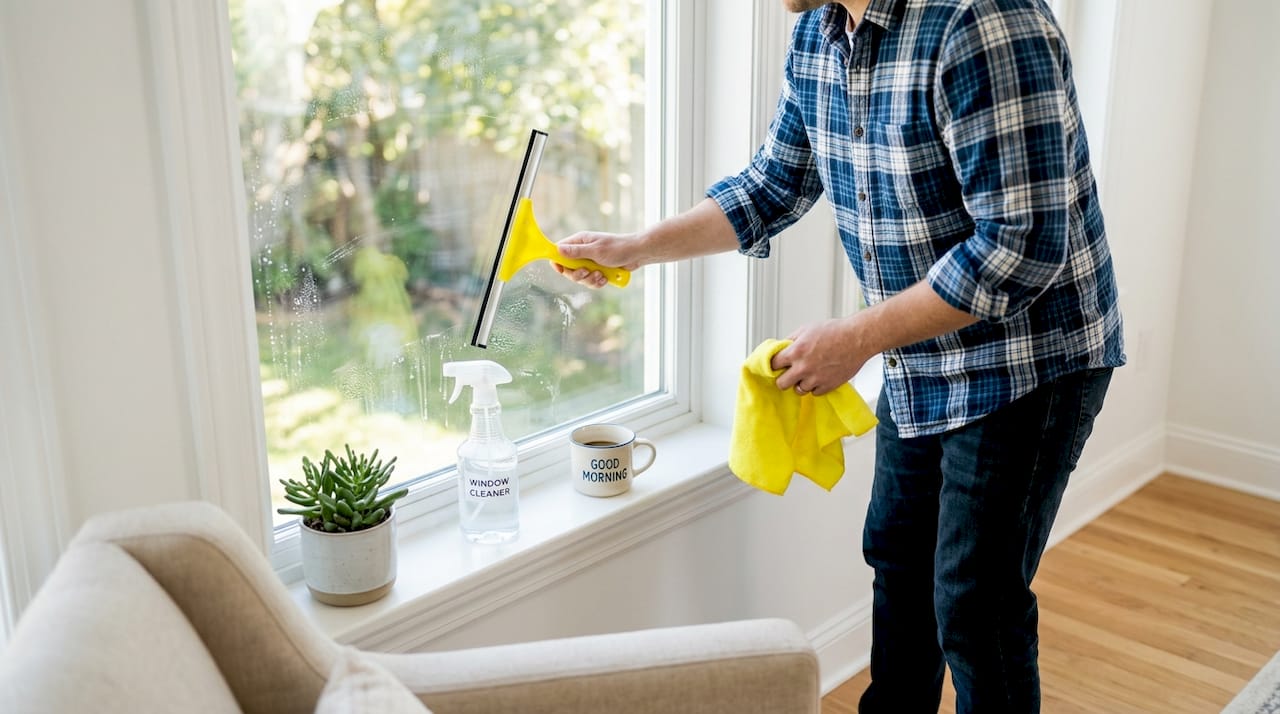
TL;DR:
Effective window cleaning relies on quality tools like squeegees and microfiber cloths, not just solutions.
Proper technique, routines, and tool maintenance are key to streak-free, clear windows in Florida’s climate.
For challenging jobs or large properties, professional services are recommended to achieve optimal results.
You wipe down your windows, step back, and see streaks. You try again with a different cloth. Still hazy. Most homeowners and property managers in St. Augustine, Ponte Vedra, and Nocatee face this exact frustration, and the culprit is almost never the cleaning solution. It is the tools. Choosing the wrong squeegee, reaching for paper towels out of habit, or skipping edge detailing are mistakes that cost you time and leave your windows looking worse than before. This guide walks you through the tools, techniques, and comparisons that produce genuinely clear, streak-free glass every time.
Table of Contents
Key Takeaways
Point | Details |
Squeegee and microfiber win | Quality squeegees and microfiber cloths consistently outperform alternatives for streak-free cleaning. |
Technique matters most | Following the right method—overlapping strokes, wiping the blade, and edge detailing—is crucial for professional results. |
Tool selection by property | Choose tools based on your property’s needs, balancing cost, durability, and ease-of-use. |
Avoid common mistakes | Overusing solutions, skipping blade care, and ignoring edge detailing are errors you can easily prevent. |
Local conditions affect outcomes | Humidity and salt in Florida require more frequent cleaning and adaptation of standard methods. |
Understanding the essentials: What makes a window cleaning tool effective?
Not all window cleaning tools perform the same way. The difference between a streaky mess and a crystal-clear pane often comes down to the materials your tools are made from, how well they fit the window size, and how they handle water and residue. Understanding these basics saves you money, time, and repeated effort.
The core tool categories are:
Squeegees: The gold standard for removing water and solution quickly from flat glass surfaces. The quality of the rubber blade is everything. A cheap blade drags, skips, and leaves lines. A professional-grade blade glides evenly and pulls liquid off cleanly.
Microfiber cloths: Designed with tiny split fibers that physically lift dirt and moisture rather than pushing them around. They are ideal for detailing edges and polishing glass after squeegee passes.
Scrubbers or applicators: Soft, sponge-like pads that hold cleaning solution and loosen dirt without scratching. You apply solution with the scrubber, then follow up with a squeegee.
Paper towels: Familiar but ineffective. They leave lint, create streaks, and break down when wet.
“Newspaper and paper towels are outdated and outperformed. Microfiber is superior to paper towels for streak-free cleaning, confirmed by repeated testing against traditional materials.”
A good tool delivers on three key attributes: grip (so you maintain control), blade or fiber quality (so the surface contact is clean and consistent), and edge-detailing capacity (so no grime is left hiding along the frame). When you follow a solid residential workflow, each of these attributes becomes part of a repeatable process rather than guesswork.
One major misconception is that more cleaning solution equals cleaner windows. In reality, excess soap leaves residue that attracts dust faster and makes streaks worse. The scrubber applies solution, the squeegee removes it, and the microfiber cloth mops up what is left. That three-step system, matched with quality tools, is what experienced cleaners swear by. You can read more about applying these principles in our expert window tips guide built specifically for local conditions.
Core window cleaning tools and techniques: A side-by-side comparison
With a clear picture of what makes tools effective, it helps to see how they stack up against each other in real-world use. Here is a direct comparison of the main approaches used by homeowners and professionals alike.
Tool or method | Best use | Streak risk | Cost range | Skill required |
Traditional squeegee | Flat glass, standard windows | Low with good blade | $10 to $40 | Moderate |
Microfiber cloth | Edge detailing, polishing | Very low | $5 to $20 | Low |
Pure water pole system | Large or hard-to-reach windows | Very low | $150 to $500+ | Moderate to high |
Paper towels | Not recommended | Very high | Low | Low |
Scrubber applicator | Applying solution, loosening dirt | N/A (prep tool) | $8 to $25 | Low |
Spray bottle with cloth | Small panes, interior glass | Moderate | $5 to $15 | Low |
The Family Handyman outlines the professional sequence clearly: pre-rinse, apply solution, scrub, squeegee at specific angles, then detail edges with microfiber. That sequence works because each step prepares the surface for the next. Skipping the pre-rinse means you are dragging loose dirt across the glass when you scrub. Skipping edge detailing means moisture sits in the corners and dries into visible marks.
For residential use, a quality squeegee paired with a microfiber cloth handles 90% of window cleaning needs. Look for a squeegee with a brass or stainless channel, which holds the blade firmly and resists warping. For types of window cleaning that go beyond standard flat glass, such as multi-pane, jalousie, or casement windows, technique adjustments matter just as much as tool choice.
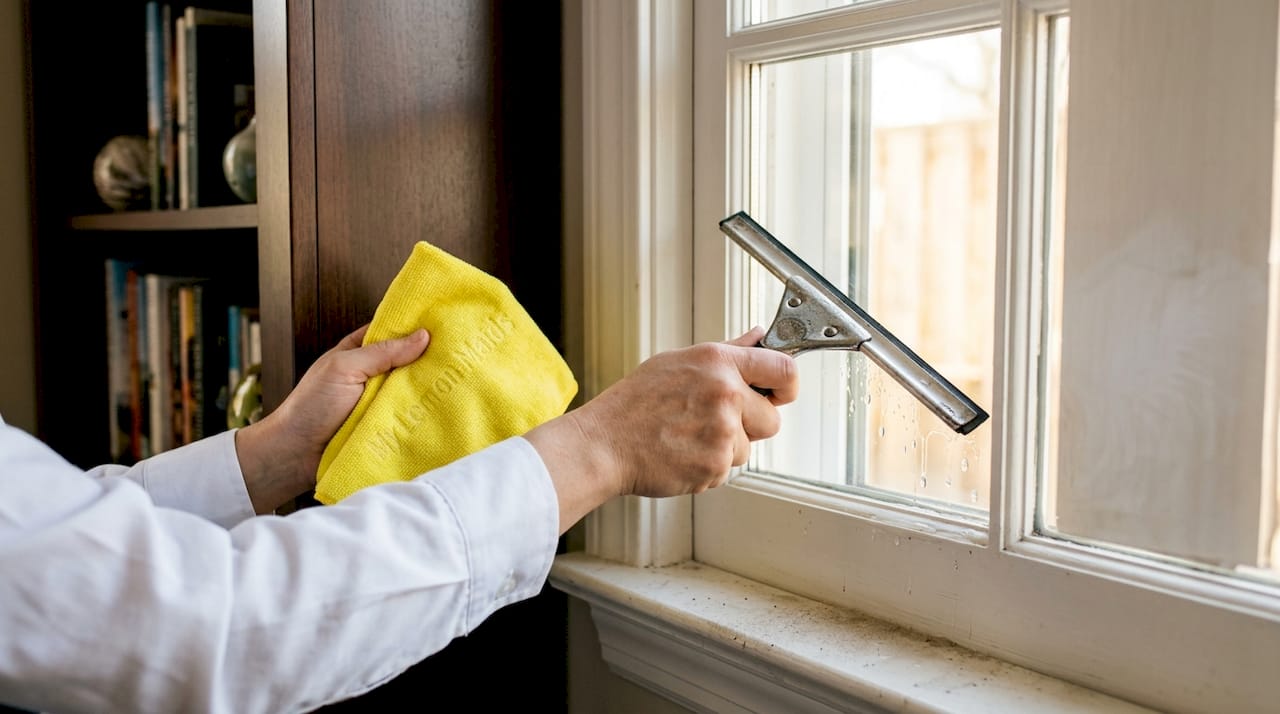
For commercial applications, pure water pole systems have changed the game. These systems filter tap water through reverse osmosis and deionization to remove dissolved minerals. The result is water that dries completely clear, with no spots. Pure water pole systems offer eco-friendly, spot-free cleaning that works especially well for large commercial windows and multi-story buildings. They eliminate the need for chemical solutions entirely.
Pro Tip: Overlap your squeegee strokes by about 2 inches and always use cold water in your cleaning solution. Warm or hot water evaporates faster, especially in Florida’s heat, and can leave streaks before you finish a single pane. Cold water gives you more working time and better results.
If you are preparing a property for new tenants or settling into a new home, the moving cleaning process requires a slightly different approach since windows may have accumulated months of grime, paint splatter, or adhesive residue that standard scrubbing alone cannot address.
Choosing the right tools for your property: Practical guidance
Now that the differences are clear, the next step is matching tools to your specific property. Not every home or business needs the same setup, and spending money on a professional-grade pure water system for a two-bedroom condo is not necessary. Here is how to think through your choices.
Recommended tool combinations by property type:
Single-family home (residential): A 12-inch or 18-inch squeegee with a rubber blade, one or two microfiber cloths for edge detailing, a soft scrubber or applicator, and a spray bottle or bucket with a mild cleaning solution. This setup costs under $60 and handles most residential windows effectively.
Rental or vacation property: The same basic kit as above, but add a long-handled extension pole to reach higher windows safely without a ladder. For rental property owners managing turnover cleans, our guide on rental cleaning basics goes into more detail on frequency and standards.
Office or commercial property: A wider squeegee (22 to 24 inches), a pure water pole system for exterior glass, and commercial-grade microfiber cloths that are thicker and more absorbent than consumer versions. Our office cleaning guide covers this in depth for business owners managing ongoing maintenance.
Boat or marine property: Salt exposure and constant moisture make marine windows a unique challenge. Squeegees with corrosion-resistant handles and chamois cloths work best. Our boat cleaning workflow addresses the specific needs of boat windows in the St. Augustine area.
Property type | Squeegee size | Microfiber cloths | Extension pole | Pure water system |
Small home | 12 to 14 inch | 2 to 3 | Optional | No |
Large home | 18 inch | 4 to 6 | Recommended | No |
Office or commercial | 22 to 24 inch | 6 or more | Yes | Recommended |
Rental or Airbnb | 12 to 18 inch | 4 | Recommended | No |
Boat or marine | 12 to 14 inch | 2 to 4 | No | No |
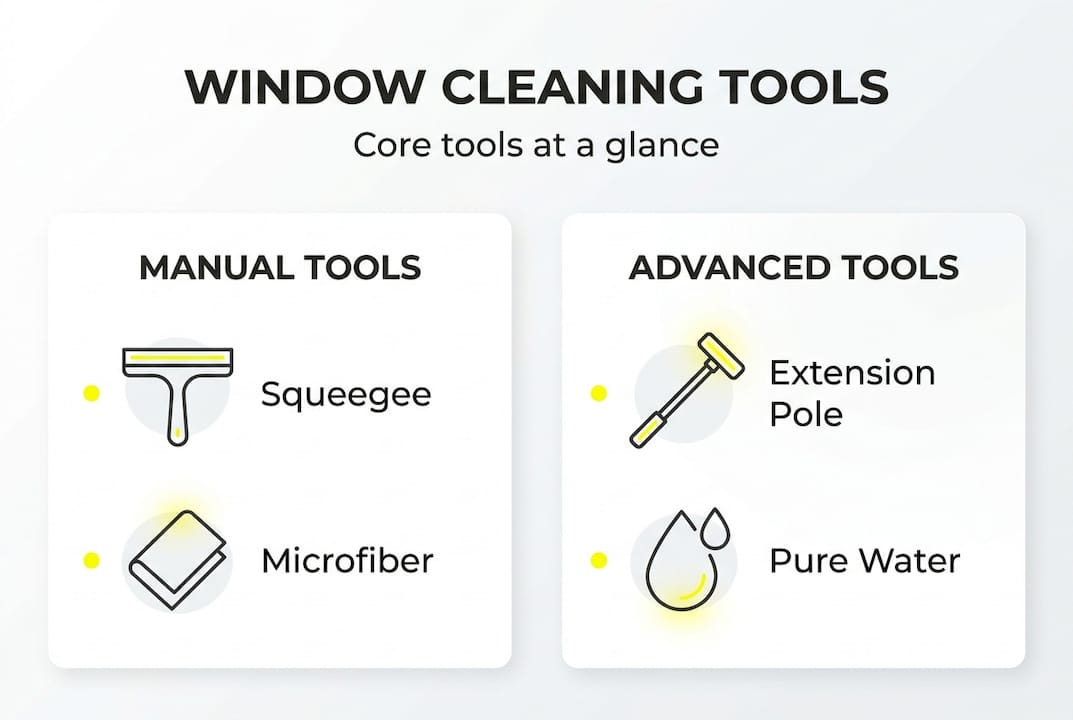
The Family Handyman recommends detailing edges with dry microfiber after squeegee passes for optimal clarity. This step is worth building into your routine because the edges are where residue collects most visibly.
If your home has plantation shutters adjacent to windows, learning how to clean plantation shutters properly prevents grime from transferring back onto the glass after you clean it.
Pro Tip: Wipe the squeegee blade with a clean, dry microfiber cloth between every single pass. This takes two seconds and eliminates the most common cause of streaks, which is reapplying the dirty water you just removed.
Common mistakes and how to avoid them: Expert advice for streak-free windows
Even with the right tools, mistakes happen. The good news is that the most common errors are easy to correct once you know what to look for. Here are the four mistakes we see most often and exactly how to fix them.
The top four window cleaning mistakes:
Overusing cleaning solution. More soap does not mean cleaner glass. Excess solution creates a soapy film that dries on the glass and attracts new dust quickly. Use a small amount, roughly one teaspoon of dish soap per gallon of water, or a simple vinegar and water mixture.
Neglecting blade maintenance. A squeegee blade that is nicked, warped, or dried out will skip across the glass instead of gliding smoothly. Inspect your blade before every session and replace it every 3 to 6 months depending on use frequency.
Skipping edge detailing. After the squeegee pulls water off the main surface, moisture collects along the frame edges. If you leave it there, it dries into a visible line that makes the whole pane look dirty. Always follow up with a dry microfiber cloth along all four edges.
Cleaning in direct sunlight or heat. In St. Augustine summers, the sun can dry your cleaning solution before you finish a single pane. This leaves residue baked onto the glass. Clean windows in the early morning, late afternoon, or on overcast days.
“Microfiber edges work best for detailing and removing stubborn smears,” particularly in the corners and along window frames where squeegees cannot reach precisely.
One thing many people overlook is how Florida’s coastal humidity and salt air accelerate build-up on exterior glass. Windows near the coast in Ponte Vedra and Vilano Beach accumulate salt film that ordinary cleaning misses without proper scrubbing. For rental window tips tailored to high-turnover properties in Northeast Florida, technique matters as much as frequency.
Another emerging option for commercial buildings and multi-story properties is drone-assisted window inspection and cleaning. If you manage a larger building, it is worth understanding window cleaning drone safety before considering this as part of your maintenance plan.
Our take: Why local context and technique matter most
After working through tools, techniques, and common mistakes, we want to share something that rarely gets mentioned in generic guides. Buying better tools alone will not solve your window cleaning problems. What actually matters in Northeast Florida is adapting your approach to the local environment.
St. Augustine, Ponte Vedra, and Nocatee share a climate that is hard on windows. High humidity means condensation and mold growth on frames happen faster than in drier regions. Salt air from the Atlantic coats exterior glass with a mineral film that feels invisible until sunlight hits it. UV intensity bleaches and degrades squeegee blades faster than in northern climates, which means you may need to replace blades more often than manufacturer guidelines suggest.
We have seen homeowners invest in expensive pure water pole systems and still get poor results because they did not adjust their solution concentration or cleaning frequency to match Florida’s conditions. The tool did its job. The routine did not support it.
Our recommendation is to build a simple but consistent routine. Clean exterior windows every 3 to 4 months if you are near the coast, and every 4 to 6 months if you are further inland. After every significant storm or heavy rain, do a quick rinse and wipe rather than waiting for your next scheduled clean. Salt and debris that sit on glass for weeks are significantly harder to remove than fresh deposits.
Mixing professional-level technique with standard residential tools is the most practical approach for most homeowners. You do not need a $400 pole system. You need the right blade, the right microfiber cloth, a consistent sequence, and knowledge of when and why Florida’s weather demands a different approach. When you do encounter situations that go beyond DIY capability, such as moving window cleaning for a large property or post-construction glass that has cement splatter, professional help is the smarter call. If you are also thinking about window treatments, understanding eco-friendly window treatments can help you choose options that are easier to clean and maintain in Florida’s conditions.
Next steps: Professional help and advanced solutions
You now have the knowledge to choose the right tools, follow the right sequence, and avoid the mistakes that lead to frustrating results. For many homeowners and property managers, that is enough to handle routine maintenance with confidence.

But some situations call for professional support. Hard-to-reach second-story windows, post-construction glass with adhesive or cement residue, and commercial properties with large glass facades all benefit from professional-grade equipment and trained technique. Our window washing services are designed for exactly these situations. If your property needs more than window cleaning, our deep cleaning services cover every surface inside your home, and our commercial cleaning services are built for offices, retail spaces, and multi-unit properties across St. Augustine, Ponte Vedra, and Nocatee. Reach out today for a custom quote.
Frequently asked questions
What is the best window cleaning tool for avoiding streaks?
Microfiber cloths and quality squeegees are proven best for streak-free results. Microfiber outperforms paper towels in streak-free cleaning according to repeated professional testing.
How often should I clean windows in a humid climate like Florida?
Windows should be cleaned every 3 to 6 months to prevent build-up from humidity and salt, especially near the coast. Coastal properties in St. Augustine and Ponte Vedra may need cleaning closer to every 3 months.
Is it worth investing in pure water pole systems for a home?
Pure water systems deliver eco-friendly, spot-free results ideal for commercial glass but are generally not necessary for standard residential windows. A quality squeegee and microfiber cloth set handles most home needs at a fraction of the cost.
Can I use vinegar or dish soap for window cleaning?
Yes, both work effectively as window cleaning solutions. The recommended method is to apply solution, scrub, then squeegee in overlapping passes for best results.
What is the single most important step people forget when cleaning windows?
Detailing edges with a dry microfiber cloth after squeegee passes is the most commonly skipped step. Detail edges with microfiber after each squeegee pass to eliminate residue lines and achieve truly clear glass.
Recommended

Comments