How to manage a cleaning schedule for homes and properties
- Glenn Brosnick
- 6 hours ago
- 9 min read
TL;DR:
A well-organized cleaning schedule improves home upkeep and tenant or guest satisfaction.
Categorizing tasks into routine, preventive, seasonal, and emergency ensures efficiency and flexibility.
Using the right tools and ongoing monitoring helps sustain a consistent and effective cleaning routine.
Missed cleaning tasks pile up faster than you might expect. One skipped bathroom scrub turns into a week of buildup, and before long, your home feels perpetually behind. For property managers in St. Augustine, Ponte Vedra, and Nocatee, the stakes are even higher because disorganized cleaning directly affects guest reviews and tenant satisfaction. This article walks you through every step of building a practical cleaning schedule, from assessing your space and categorizing tasks to choosing the right tools and refining your routine over time. By the end, you will have a clear framework you can put to work immediately.
Table of Contents
Key Takeaways
Point | Details |
Assess and list tasks | Start by auditing every space and cleaning need for your home or property. |
Structure by priority | Organize tasks as routine, preventive, or seasonal for a balanced schedule. |
Use modern tools | Apps and checklists boost accountability and keep teams on track. |
Refine continuously | Review and adapt your cleaning routine as needs change or issues arise. |
Assess your cleaning needs and set clear goals
Before you write a single task on a checklist, take a full inventory of your space. Every home and rental property has its own combination of high-traffic zones, rarely touched surfaces, and outdoor areas that each require a different cleaning frequency. Skipping this step means your schedule will either overwork you in the wrong areas or leave critical spots uncleaned.
Start by walking through every room and outdoor area and listing every cleaning task you can identify. Be specific.
Common cleaning tasks by area:
Kitchen: Wipe counters, clean stovetop, scrub sink, degrease range hood, mop floor, clean inside microwave, wipe cabinet fronts
Bathrooms: Scrub toilet bowl and seat, scrub shower tile and grout, clean mirrors, sanitize sink and faucet, mop floor, empty trash
Living areas: Vacuum carpet and area rugs, wipe baseboards, dust shelving and ceiling fans, clean light switches and door handles
Bedrooms: Change and launder bed linens, vacuum under furniture, wipe window sills
Outdoor/entryway: Sweep front porch, pressure wash sidewalks, clean windows, remove cobwebs from eaves
Once you have your full task list, assign a frequency to each item. Not everything needs to happen weekly. A practical cleaning frequency table looks like this:
Task | Daily | Weekly | Bi-weekly | Monthly | Seasonal |
Wipe kitchen counters | ✓ | ||||
Vacuum floors | ✓ | ||||
Scrub bathrooms | ✓ | ||||
Clean windows | ✓ | ||||
Pressure wash exterior | ✓ |
For property managers specifically, HOA maintenance schedules should include task description, location, frequency, responsible party, cost, and due dates. They also recommend categorizing tasks as routine, preventive, seasonal, and emergency maintenance, while building in flexibility for disruptions and incorporating resident feedback. This structure is just as useful for a single-family home as it is for a multi-unit rental portfolio.
Pro Tip: Use an ultimate housekeeping checklist as your starting template, then customize it room by room. This saves you time and ensures you do not overlook tasks that are easy to forget, like wiping door handles or cleaning behind the toilet.
Setting clear goals before you finalize your schedule makes a real difference. Are you cleaning for personal hygiene and comfort? Guest readiness for an Airbnb? Curb appeal for a long-term rental? Each goal shifts your priorities. An Airbnb in Nocatee needs a spotless turnover every check-out, while a homeowner in Ponte Vedra may prioritize weekly deep kitchen cleaning and monthly window washing. Knowing your “why” keeps you focused when the schedule feels like too much.
For reference, bi-weekly cleaning is the most popular frequency among families and rental properties in the St. Augustine area. It strikes the right balance between cleanliness and time investment, and it aligns well with the types of cleaning jobs that most homes require on a recurring basis.
Structure and categorize your cleaning schedule
Now that you know what needs cleaning and how often, it is time to turn that knowledge into a workable, organized schedule. The most common mistake people make here is treating all cleaning tasks as equal. They are not. Some tasks are urgent and non-negotiable; others can wait a few extra days without consequence.
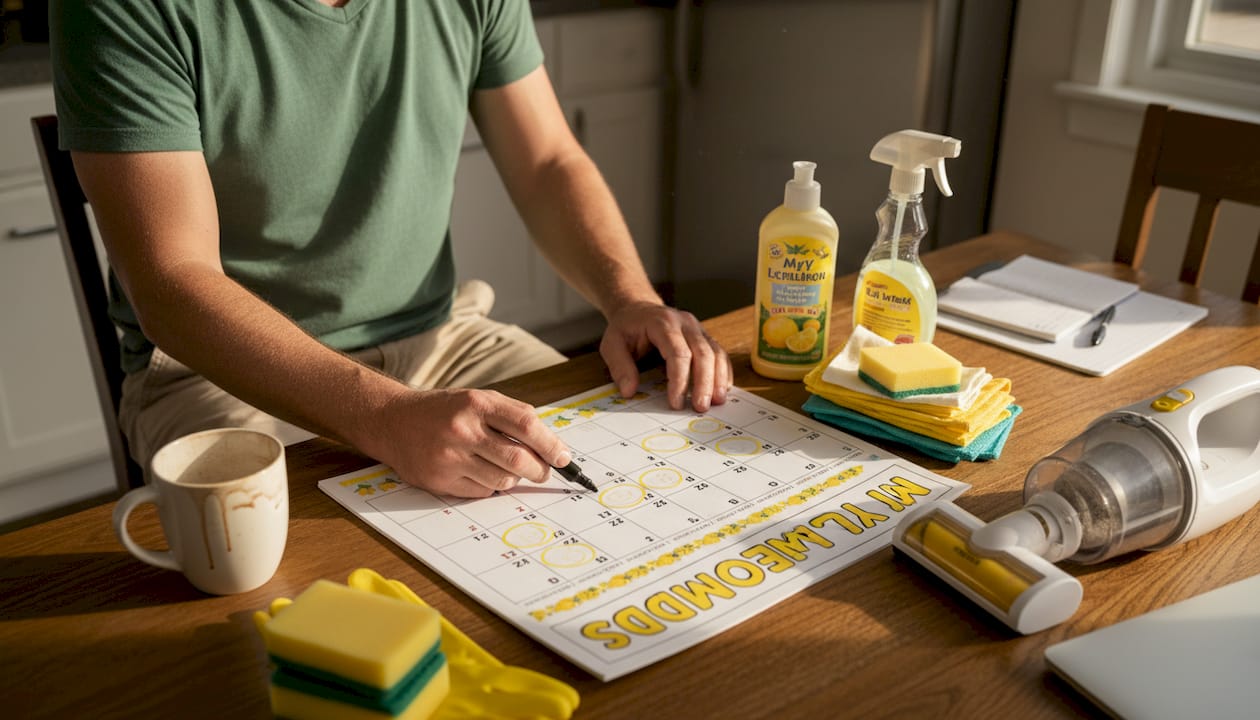
Categorize your tasks into four groups: routine, preventive, seasonal, and emergency. Building in flexibility for disruptions and incorporating resident or household feedback keeps your schedule realistic rather than aspirational.
The four categories explained:
Routine tasks are your daily and weekly non-negotiables: wiping kitchen counters, vacuuming main living areas, and sanitizing bathroom surfaces. These keep your home or rental guest-ready at all times.
Preventive tasks address maintenance before problems grow: descaling showerheads, cleaning dryer lint traps, degreasing the oven, and inspecting caulk around tubs. These typically happen monthly or quarterly.
Seasonal tasks align with weather and usage changes: pressure washing the driveway before summer, cleaning gutters in fall, and deep cleaning carpets after heavy-use months.
Emergency tasks are unplanned: a spill on a carpet, a mold spot in a bathroom, or a post-storm cleanup. Build a small buffer in your schedule for these so they do not derail everything else.
How to build and label your schedule in five steps:
List every task from your inventory.
Assign each task to one of the four categories above.
Set a frequency and due date for each task.
Assign responsibility, whether that is you, a family member, or a cleaning professional.
Order tasks within each session by room and logical flow to avoid backtracking.
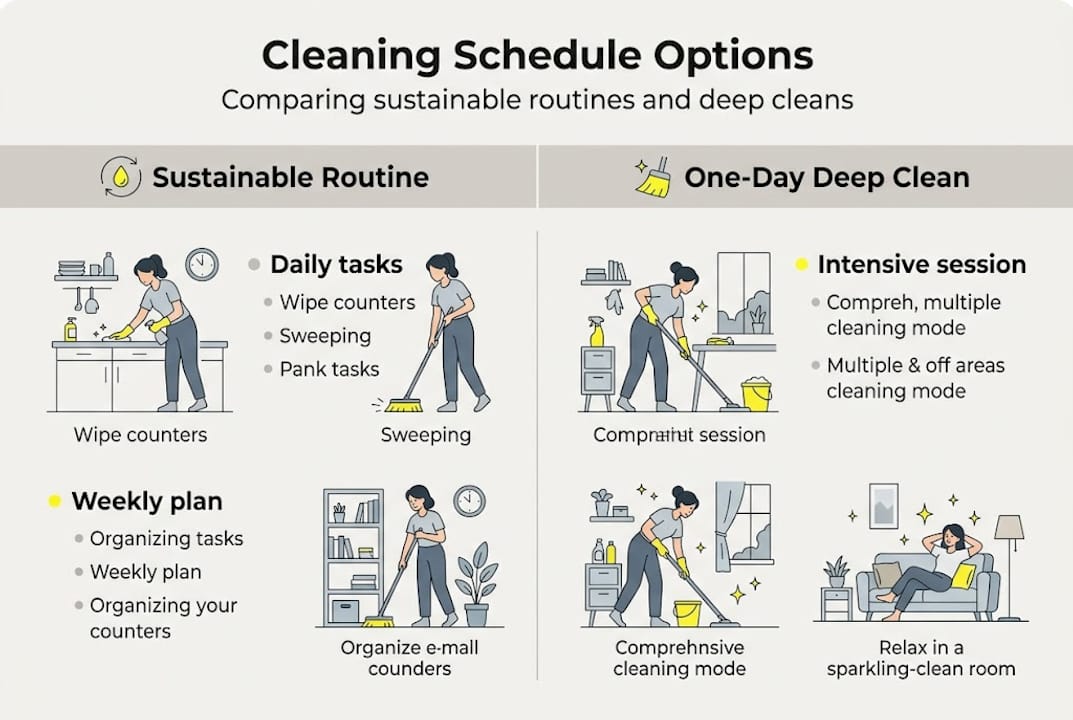
One of the most useful decisions you will make is choosing between concentrated deep cleans and distributed routine cleaning. Here is an honest comparison:
Approach | Pros | Cons |
Single-day deep clean | Thorough, satisfying, visible results | Time-intensive, causes fatigue, easier to miss details |
Distributed routine cleaning | Sustainable, consistent, lower effort per session | Requires discipline, needs a clear system |
Expert consensus consistently favors the distributed approach for long-term sustainability, and that aligns with what we see in practice among our clients managing types of home cleaning across different property sizes. For rental properties, a well-structured commercial cleaning checklist adds another layer of organization that scales well as your portfolio grows.
Choose the right tools and technology for scheduling
With a categorized schedule in hand, you next need tools that help you stick to it and improve over time. The right tool depends on the size of your property, how many people are involved in cleaning, and whether you manage the process remotely.
Your three main options:
Paper planners and printed checklists: Best for single-family homeowners who manage cleaning themselves. Easy to customize, zero learning curve, no subscription required. The downside is that paper does not send reminders or track completion automatically.
Mobile apps: Tools like Google Tasks, Tody, or OurHome work well for individuals or small households. You can set recurring reminders, check off tasks, and share lists with a partner or roommate. Most are free or low-cost.
Property management software: For rental property managers, platforms like Buildium or PropertyCEO offer digital checklists with photo documentation and KPI tracking. These prevent forgotten tasks and increase accountability across teams. They also allow you to automate cleaning assignments for every guest turnover.
Pro Tip: Even if you prefer paper checklists, add one digital step: a shared photo folder where whoever cleaned a room takes a quick photo of the finished space. This creates instant accountability and a record you can reference if a guest or tenant raises a concern.
What to look for in a scheduling tool:
Recurring task reminders so nothing slips through the cracks
Photo checklists for visual verification of completed work
Team assignment features for multi-person households or cleaning crews
KPI tracking: completion time, task quality ratings, guest or tenant feedback scores
Integration with your booking platform if you manage short-term rentals
When should you automate? If you are managing turnover cleaning for a rental, handling a property larger than 2,500 square feet, or managing the property from offsite, automation is no longer optional. Manually tracking turnovers across a calendar is where things go wrong most often. A residential cleaning checklist paired with scheduling software gives you both structure and a safety net.
For anyone managing office or commercial spaces in addition to residential properties, an office cleaning duties list organized by frequency and zone keeps larger spaces manageable. You can also use expert cleaning checklist tips to benchmark your current checklist against professional standards and identify any gaps.
Implement, monitor, and refine your cleaning routine
With your tools ready, it is time to put your plan into action and develop a routine that is both effective and adaptable. Many people design a great schedule and then execute it inconsistently. The reason is almost always a lack of monitoring and adjustment built into the process.
Step-by-step execution plan:
Execute: Assign each task to a specific person and time slot. Do not leave tasks “floating” without an owner.
Verify: After each cleaning session, confirm tasks are completed and document them in your checklist or app.
Inspect: Separate the inspection role from the cleaning role. The person who cleaned should not be the only one checking the work. A second walkthrough catches missed spots consistently.
Review: At the end of each week or month, look at your completion rate. Which tasks were skipped most often? Why?
Adjust: Modify frequencies, reassign tasks, or eliminate steps that are not adding value. Your schedule should evolve with your property and lifestyle.
“Implement an inspector role separate from the cleaner, use digital checklists with photos, track KPIs like completion time and guest scores, organize zone-based teams by geography, and automate via property management software for turnovers.” Cleaning Schedule Mastery: 2026 Blueprint
This inspector-versus-cleaner separation is one of the most underused strategies in residential cleaning. When the same person who cleans also approves their own work, small misses stay hidden until a guest or family member notices. A quick five-minute walkthrough by a second person, or even yourself an hour later with fresh eyes, catches the spots you missed.
Monitoring KPIs sounds more complicated than it is. Start with three numbers: average time to complete each room, a quality score from 1 to 5 you assign after inspection, and any guest or tenant feedback you receive. Track these over four weeks and you will see clear patterns. Maybe bathroom cleaning consistently takes longer than planned. Maybe the kitchen quality score drops when you rush. That data tells you exactly where to focus.
Understanding the difference between standard vs deep cleaning helps you decide when to escalate from your routine schedule to a more intensive session. And if you want to understand what a thorough clean actually accomplishes for your home’s surfaces and air quality, reading about deep cleaning benefits gives you a clearer picture of when the extra effort pays off.
Preventive routines deserve special emphasis. A small consistent effort, like running a squeegee across the shower glass twice a week, prevents the grout staining and mold growth that requires hours to fix later. Think of preventive cleaning as maintenance, not extra work. Skipping it is what turns a routine cleaning into an emergency session.
Our take: Why sustainable routines beat one-day cleaning blitzes
We have seen both approaches play out in homes and rental properties across St. Augustine, Ponte Vedra, and Nocatee. Homeowners who attempt a full-day cleaning marathon once or twice a month often end up exhausted, inconsistent, and frustrated when the house looks messy again two weeks later. It is not a willpower problem. It is a system problem.
All-at-once deep cleans versus distributed systems is not a close comparison. Experts consistently favor distribution for sustainability and consistency over intensity. A single-day marathon risks overload and incompleteness, especially in larger properties. Fatigue sets in after the second or third hour, and the last rooms cleaned are almost always done with less care than the first.
Distributed routines work because they keep the effort manageable. Twenty minutes of daily tidying plus a focused 90-minute session twice a week outperforms a chaotic five-hour clean every time. You also maintain a higher standard consistently, which matters enormously for rental properties where a guest arriving to a “recently deep cleaned” home still finds buildup in the corners. Understanding what deep cleaning actually does helps you appreciate when to schedule it as a supplement to your routine, not a replacement for it.
Get scheduling help from professional cleaners
If you are ready for a more hands-off approach or want expert input on optimizing your current routine, a professional cleaning team can assess your property, build a customized schedule, and execute it consistently.

At Lemon Maids, we serve homeowners and property managers across St. Augustine, Ponte Vedra, and Nocatee with deep cleaning services, standard recurring cleans, Airbnb turnover cleaning, post-construction cleaning, pressure washing, and window cleaning. We use expert-driven checklists tailored to local home styles and rental requirements, so nothing gets missed. For offices and multi-unit properties, our commercial cleaning team handles larger-scale scheduling with the same attention to detail. Whether you need us every week or just for a one-time deep clean, we can help you build a routine that actually holds. Get an instant quote and see how easy it is to take cleaning off your to-do list.
Frequently asked questions
How often should I update or adjust my cleaning schedule?
Review your schedule at least every three months, or any time repeated missed tasks or significant changes in property use appear. Building in flexibility for disruptions and incorporating resident feedback keeps your schedule realistic over time.
What’s the difference between routine and preventive cleaning tasks?
Routine tasks keep spaces clean day-to-day, like vacuuming and wiping surfaces. Preventive tasks address maintenance categories that avoid bigger problems later, such as descaling fixtures or cleaning dryer vents.
Should I use software for my home cleaning schedule or just a printed checklist?
For small homes, a printed checklist works well. For rental properties or larger homes, property management software prevents forgotten tasks and increases accountability across your cleaning team.
What is the most popular cleaning frequency in St. Augustine, Ponte Vedra, and Nocatee?
Bi-weekly cleaning is the most popular option for families and rental properties in these areas. It offers consistent cleanliness without the time commitment of weekly full cleans, and it aligns with local service demand for recurring residential cleaning.
Recommended


Comments