Essential step-by-step guide to commercial cleaning success
- Glenn Brosnick
- Apr 27
- 10 min read
TL;DR:
Proper commercial cleaning requires specific procedures, tools, and disinfection protocols for safety and compliance.
Strategies must be tailored by space type, prioritizing high-touch areas, and maintaining documentation for accountability.
Professional cleaning teams follow strict processes, especially in medical facilities, to prevent contamination and ensure regulatory standards.
A failed health inspection, a string of one-star reviews, or a patient complaint about visible grime can cost your Jacksonville business far more than a cleaning contract ever would. Commercial cleaning is not just about appearances. It is about following a precise process that protects people, meets regulatory standards, and keeps your space ready for the next guest, employee, or patient. Whether you manage an office building, a vacation rental, or a medical facility, skipping steps or using the wrong products creates real risks. This guide walks you through exactly what to do, room by room and space by space, so you never have to guess.
Table of Contents
What you need before you start: Tools, products, and safety essentials
Step-by-step cleaning for offices: Workflow and verification
Vacation rental turnovers: Room-by-room cleaning made simple
Medical facilities: Critical protocols for safe, compliant cleaning
What most guides overlook: Area priorities and scaling your cleaning strategy
Key Takeaways
Point | Details |
Right supplies matter | Prepare area-appropriate tools and disinfectants to prevent cross-contamination and clean effectively. |
Follow proper sequence | Tackle cleaning in the right order—from clean to dirty, top to bottom—to avoid spreading germs or missing steps. |
Adapt by facility type | Align your cleaning routine with the specific needs and flow of offices, rentals, or medical spaces. |
Verification ensures results | Always finish with a walkthrough and checklist to guarantee cleanliness before use or guest arrival. |
Consider expert help | Hiring professionals can save time and ensure compliance with health and safety standards. |
What you need before you start: Tools, products, and safety essentials
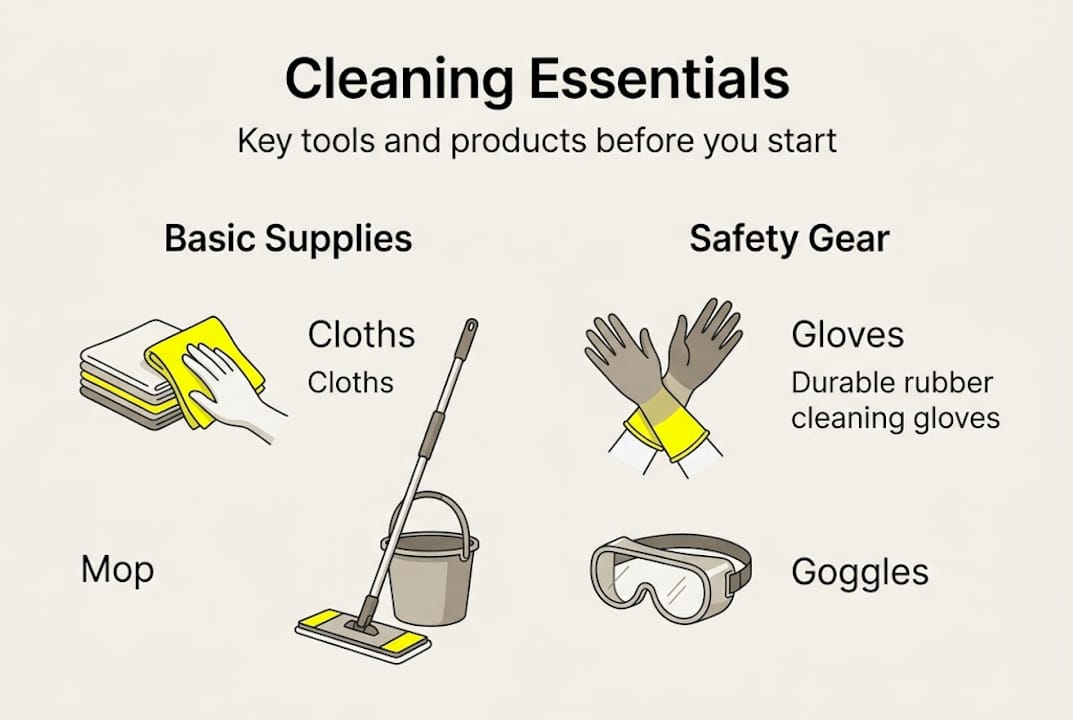
The first step to any successful commercial cleaning job is not picking up a mop. It is making sure you have the right supplies in hand before you walk through the door. Missing a product or substituting the wrong tool mid-job leads to cross-contamination, wasted time, and results that do not meet professional standards.
Core supply checklist by space type
Supply | Office | Vacation rental | Medical facility |
Microfiber cloths (color-coded) | Yes | Yes | Required |
HEPA vacuum | Yes | Yes | Required |
EPA-registered disinfectant | Yes | Yes | Hospital-grade required |
Mop system (flat mop) | Yes | Yes | Color-coded required |
PPE (gloves, mask, gown) | Gloves | Gloves | Full PPE set |
Biohazard waste bags | No | No | Required |
Restroom cleaning kit | Yes | Yes | Yes |
Glass cleaner | Yes | Yes | Yes |
Trash liners | Yes | Yes | Yes |
Medical facility cleaning requires full PPE, a strict top-to-bottom sequence from clean to dirty areas, EPA hospital-grade disinfectants with full contact time, and color-coded tools to prevent cross-contamination. You can also review our compliance and safety guide for a deeper look at what Jacksonville medical clients need to meet local standards.
For offices and vacation rentals, the essentials are simpler but still important. Always follow CDC cleaning and disinfection advice when selecting products, especially for high-touch surfaces like door handles, light switches, and elevator buttons.
Key safety considerations for every commercial space include:
Color-coded cloths to ensure bathroom rags never touch kitchen counters
Gloves for all tasks, upgraded to nitrile for chemical-heavy jobs
EPA-registered disinfectants that list the target pathogens on the label
MSDS sheets (product safety data) kept accessible during cleaning
Pro Tip: Assemble area-specific cleaning kits in labeled caddies before you arrive at any commercial property. A bathroom caddy, a kitchen caddy, and a general surfaces caddy reduce the chance of cross-contamination and cut setup time in half. This is especially valuable during tight vacation rental turnovers when every minute counts.
Using the right tool for each surface also protects your client’s property. Abrasive scrubbers on stainless steel appliances leave visible scratches. The wrong floor cleaner on hardwood causes long-term damage. Investing in quality, purpose-specific supplies is not optional. It is the foundation of professional commercial cleaning.
Step-by-step cleaning for offices: Workflow and verification
Once you have your supplies organized, the office cleaning process becomes predictable and efficient. A structured workflow reduces the chance of missed areas, protects your team from wasted backtracking, and gives your client a clear record that the work was done correctly.
Follow the office cleaning workflow below for a reliable, repeatable process.
Office cleaning step-by-step
Prepare the space. Walk through each room before starting. Remove visible trash, check for client-specific instructions, and identify any hazardous materials or spills that need special handling.
Declutter and organize. Clear surface clutter from desks and common areas. Stack papers neatly. Do not discard or move personal items without permission.
Dust from top to bottom. Start with ceiling fans, vents, and shelves. Work downward to desk surfaces, chair arms, and baseboards. This way, any falling dust gets picked up later when you clean floors.
Wipe down all surfaces. Use a microfiber cloth with a general-purpose cleaner on desks, tables, window sills, and counters. Do not skip the undersides of shelves or the tops of monitors.
Disinfect high-touch areas. Door handles, light switches, keyboard trays, phone receivers, printer touch screens, and shared equipment buttons all need disinfectant applied with proper dwell time. Do not wipe it off immediately. Let it sit for the time listed on the product label.
Clean restrooms thoroughly. Scrub toilets, sinks, and faucets. Disinfect all touch points including flush handles and paper towel dispensers. Restock paper products and soap.
Empty and reline trash cans. Check every room, not just the main office. Break rooms and private offices often have full trash cans that get overlooked.
Clean floors last. Vacuum carpets using overlapping passes. Mop hard floors using a clean mop head. Work from the far corner of the room toward the exit to avoid stepping on clean floors.
Final walkthrough and documentation. Walk through every room, check your task list, and log completed tasks with the time and date. Photo documentation protects both you and your client.
“Cleaning before disinfecting is essential. Dirt and organic matter shield germs from disinfectants. Use soap and water first, then apply an EPA-registered disinfectant with the required contact time. Focus especially on high-touch surfaces during flu season or when illness risk is elevated.” CDC guidelines on cleaning and disinfection.
You can find more detail on each of these steps in our office cleaning steps guide and our office cleaning process guide for 2026 standards.
Pro Tip: Cluster your tasks by zone rather than by type. Clean and disinfect one room completely before moving to the next, rather than dusting the entire building and then going back to wipe surfaces. Zone cleaning reduces the number of times you re-enter a room and keeps your workflow moving forward.
Vacation rental turnovers: Room-by-room cleaning made simple
Office cleaning runs on a daily or weekly schedule. Vacation rental turnovers are different. You often have a two to four hour window between a checkout and a new guest check-in, and everything must be perfect. A single missed detail, like a hair on a pillow or a sticky stovetop burner, shows up in the review within hours.
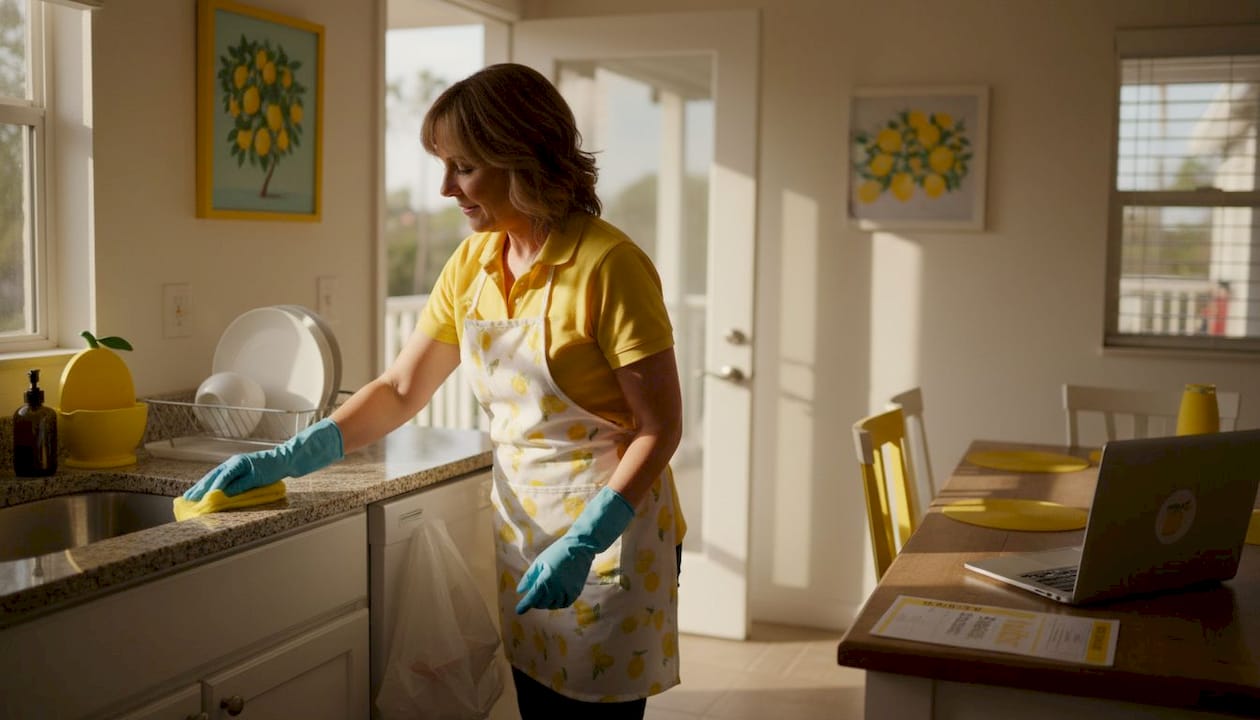
The key is following a consistent room-by-room sequence every single time. This vacation rental cleaning procedures approach eliminates the guesswork and keeps your team on time.
Room-by-room turnover sequence
Strip all linens and trash first. Start in every room by removing bedding, towels, and trash before touching anything else. This prevents redistributing debris as you clean.
Start with the kitchen. Clean and disinfect countertops, sinks, stovetop, and microwave interior. Check inside the refrigerator for leftover food. Wipe cabinet fronts and appliance surfaces. Reload the dishwasher if needed.
Move to bathrooms. Scrub toilets inside and out, clean sinks and mirrors, disinfect all fixtures, and replace towels and toiletries. Vacation rental turnover best practices include changing linens at temperatures of 160°F or above to eliminate bacteria and allergens.
Clean the living area. Dust all surfaces, clean glass tables and TV screens, vacuum furniture, and arrange pillows and decorative items to their original placement.
Finish with bedrooms. Make beds with fresh linens, dust nightstands and lamps, check under the bed for forgotten items, and vacuum floors.
Mop all hard floors. Always mop after everything else is done. This picks up any debris that fell during cleaning.
Restock all supplies. Check toilet paper, paper towels, soap, shampoo, coffee, and any other provided amenities. A missing item is one of the most common negative review triggers.
Final walkthrough and photos. Walk through every room with the property checklist. Take photos of each space as a record. This protects you against false damage claims and gives the owner peace of mind.
Room | Priority task | Time estimate |
Kitchen | Disinfect counters and appliances | 25 to 35 min |
Bathrooms | Scrub, disinfect, restock | 20 to 30 min |
Bedrooms | Change linens, dust, vacuum | 15 to 20 min each |
Living area | Dust, vacuum, arrange | 15 to 20 min |
Floors | Vacuum and mop all hard floors | 15 to 25 min |
Pro Tip: Guest satisfaction surveys consistently show that bathrooms and kitchens are the two spaces guests inspect most closely. Prioritize these rooms first while your energy is highest, and double-check them again during your final walkthrough before you leave.
Medical facilities: Critical protocols for safe, compliant cleaning
Medical environments are in a category of their own. A missed step here does not mean a bad review. It can mean an infection that spreads between patients, a regulatory citation, or a liability claim. Every member of your cleaning team needs to understand the why behind each step, not just the what.
The medical cleaning compliance standards required in Jacksonville align with national guidelines. Here is the exact process to follow.
Medical facility cleaning protocol
Don PPE before entering any clinical area. Put on gloves, a mask, a gown, and eye protection if splash risk is present. The order matters: gown first, then mask, then gloves.
Remove biohazard waste and soiled materials. Never handle biohazard bags with bare hands. Seal them according to facility protocol and place them in designated containers immediately.
Clean gross soil from all surfaces. Remove visible dirt, blood, or fluids using disposable cloths and a hospital-grade detergent before applying any disinfectant. Skipping this step reduces disinfectant effectiveness significantly.
Apply EPA hospital-grade disinfectant. Spray or wipe surfaces and allow the product to remain wet for the full contact time listed on the label. This can range from 30 seconds to 10 minutes depending on the product and the target pathogen.
Follow top-to-bottom, clean-to-dirty order. Start with overhead lights and vents, then walls, then countertops, then equipment, and finish with floors. Move from clean zones like waiting rooms to higher-risk areas like exam rooms.
Use color-coded mops and cloths. Assign specific colors to specific areas. Never use a bathroom mop in an exam room. Cross-contamination from mislabeled tools is one of the most common compliance failures inspectors find.
Clean and disinfect floors last. Use a dedicated flat mop for medical spaces. Change the mop head between rooms in high-risk areas.
Doff PPE correctly. Remove gloves first, then gown, then mask. Wash hands immediately after removing all PPE. This sequence prevents you from contaminating yourself during removal.
“Shortcutting contact time for disinfectants in medical settings effectively invalidates the product’s claims. If the label says two minutes and you wipe after 30 seconds, the surface is not disinfected. This is one of the most common mistakes in medical facility cleaning, and one of the most preventable.” Swept Works medical cleaning guide.
Use our doctor office cleaning checklist to keep your team on track and document every completed step for compliance records.
Key compliance documentation to maintain after each visit includes:
Date and time of each cleaning session
Products used with lot numbers
Staff names and PPE confirmation
Areas cleaned and any areas flagged for follow-up
What most guides overlook: Area priorities and scaling your cleaning strategy
Most cleaning guides treat all spaces the same. Follow the steps, use the right product, done. But real-world commercial cleaning is more dynamic than that.
In vacation rentals, bathrooms often account for up to 40% of the total turnover time due to the level of guest scrutiny and the number of surfaces requiring disinfection. Rushing through a bathroom to spend more time on a living room that guests barely notice is a backward strategy.
In medical facilities, the single most dangerous shortcut is not skipping a surface. It is cutting dwell time for disinfectants. A surface that looks clean but did not receive the full contact time is not protected. Facility managers need to verify this step, not just assume their team is doing it.
For offices, one-size-fits-all cleaning schedules ignore traffic patterns entirely. A conference room used three times a day needs different attention than a storage room used once a week. Scaling your step-by-step cleaning guidance to match actual occupancy patterns is what separates a reactive cleaning schedule from a proactive one.
We believe the most effective commercial cleaning strategy adapts to the space, not the other way around. That means building customized frequency maps, adjusting protocols after illness outbreaks or high-traffic events, and treating the process as something that evolves rather than stays fixed.
Your shortcut to spotless and safe commercial spaces
Following all of these steps consistently is genuinely demanding work, especially when you are also managing a business, keeping guests happy, or maintaining a regulated medical environment.
That is where our team comes in. Lemon Maids provides professional commercial cleaning solutions across Jacksonville for offices, vacation rentals, medical facilities, and more. Our office cleaning team arrives equipped with the right products, follows structured protocols, and documents every visit. We handle the details so you can focus on running your business. Scheduling is simple, service is consistent, and the results meet the standards your space demands. Contact us today to get a fast quote and set up your first visit.
Frequently asked questions
What is the difference between cleaning and disinfecting?
Cleaning removes visible dirt and debris from surfaces, while disinfecting uses EPA-registered chemicals to kill germs on surfaces that have already been cleaned. You must always clean before you disinfect for the process to work correctly.
How often should high-touch surfaces be disinfected in commercial spaces?
High-touch surfaces should be disinfected at least daily in most commercial settings and more frequently during illness outbreaks, high-traffic periods, or after any known contamination event.
What type of disinfectants should be used in healthcare facilities?
Healthcare settings require EPA hospital-grade disinfectants that list specific pathogens on the label and must be applied with full contact time as directed to be effective.
What are the top priorities during a vacation rental turnover?
The top priorities are removing trash and soiled linens, disinfecting kitchens and bathrooms, replacing all consumables, and completing a photo-verified final walkthrough before the next guest arrives.
How do I avoid cross-contamination when cleaning medical spaces?
Always use color-coded tools assigned to specific zones, work from clean areas to dirty areas, and never reuse cloths or mop heads between high-risk rooms without washing and disinfecting them first.
Recommended
Comments