Post construction cleaning checklist PDF St. Augustine 2026
- support760146
- 20 hours ago
- 10 min read
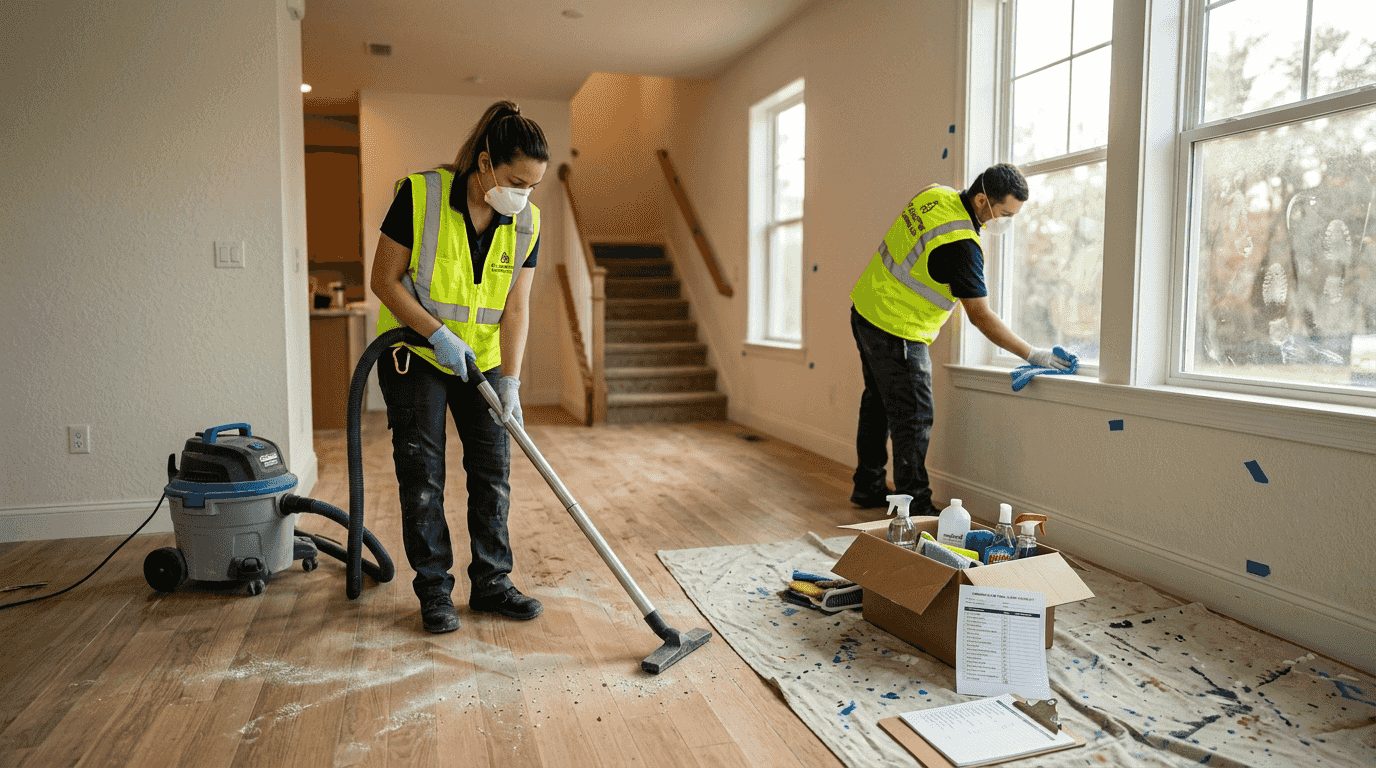
Construction projects leave behind a surprising amount of hidden debris. Research shows structured checklists reduce overlooked cleaning areas by up to 35%, protecting health and ensuring properties meet occupancy standards. Whether you manage residential builds in Ponte Vedra or oversee commercial sites in Nocatee, a comprehensive post construction cleaning checklist PDF streamlines your process, tracks progress, and addresses safety concerns specific to Florida’s coastal environment.
Table of Contents
How To Use And Customize A Post Construction Cleaning Checklist Pdf
Common Misconceptions And Mistakes In Post Construction Cleaning
Comparing Diy Cleaning And Professional Post Construction Cleaning Services
Applying The Checklist To Your Property In St. Augustine, Ponte Vedra, And Nocatee
Summary And Next Steps: Downloadable Post Construction Cleaning Checklist Pdf
Streamline Your Post Construction Cleaning With My Lemon Maids
Key takeaways
Point | Details |
Structured approach cuts missed areas | Using a detailed checklist reduces overlooked cleaning tasks by 35%, improving safety and readiness. |
Essential tasks span multiple phases | Core steps include debris removal, deep dusting, surface sanitization, and final inspection of hidden zones. |
PDF format enables team coordination | Digital checklists allow easy customization, offline access, and progress tracking across cleaning crews. |
Local Florida factors matter | Humidity, salt air, and regional waste disposal rules influence cleaning frequency and debris handling. |
Professional cleaning offers safety advantages | Trained teams use proper PPE, specialized equipment, and follow protocols for hazardous materials like silica dust. |
Understanding post construction cleaning: why it matters
Post construction cleaning removes all debris, dust, and pollutants left after building work. This process goes far beyond surface tidying. Construction sites generate fine particulate matter that settles on every surface, infiltrates HVAC systems, and poses serious respiratory risks.
Health hazards from construction dust demand attention. Silica dust is classified as carcinogenic by OSHA, making thorough removal essential for occupant safety. Fine particles linger in air for hours after work stops, requiring specialized filtration and cleaning methods to eliminate completely.
Common construction pollutants include:
Drywall dust containing gypsum and additives
Wood shavings and sawdust from framing
Metal scraps and shavings from fixtures
Silica dust from concrete cutting and sanding
Paint residue and chemical vapors
Adhesive compounds and sealant particles
Property readiness depends on complete pollutant removal. Occupants moving into spaces with residual construction dust face increased allergy symptoms, respiratory irritation, and potential long term health effects. Insurance requirements and building codes often mandate professional verification of cleanliness before final approval.

Key components of a post construction cleaning checklist
Comprehensive checklists organize work into distinct phases. This layered approach ensures nothing gets overlooked while maintaining safety throughout the process.
The four main cleaning phases:
Debris removal: Clear large items, dispose of construction waste, remove protective coverings, and bag smaller debris
Deep dusting and vacuuming: Use HEPA filtered vacuums on all surfaces, clean air vents, wipe down walls and ceilings
Surface cleaning and sanitization: Scrub floors, sanitize bathrooms and kitchens, clean windows inside and out
Final inspection and finishing touches: Check hidden areas, polish fixtures, verify all tasks completed
Commonly missed areas include air vent covers, window tracks and sills, tops of door frames, behind appliances, inside cabinets, and light fixture interiors. These zones accumulate fine dust that recirculates through living spaces if not addressed. Following essential post construction cleaning steps systematically prevents these oversights.
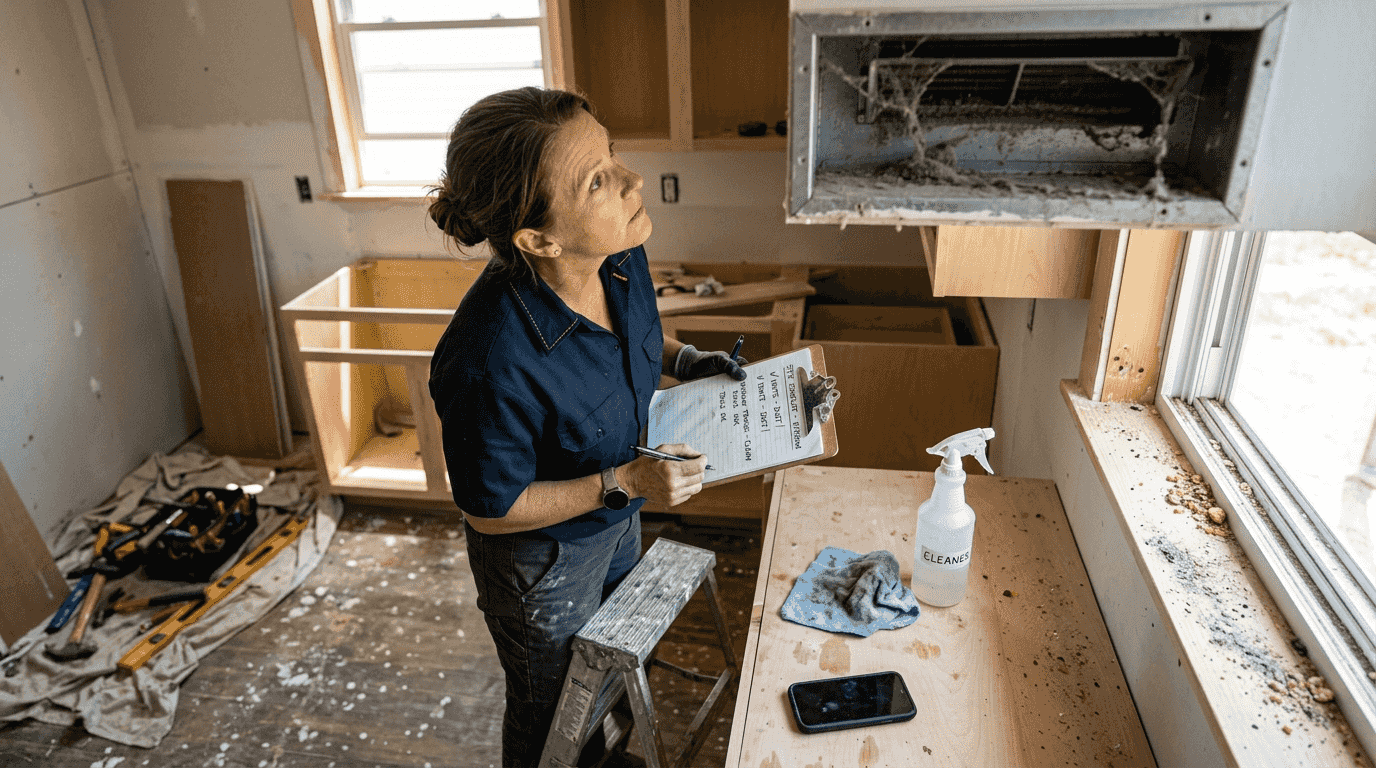
Safety measures belong in every checklist. Workers should wear N95 respirators, safety goggles, gloves, and protective clothing. Mark hazardous materials for special handling. Verify electrical systems are safe before wet cleaning. Proper ventilation during cleaning helps reduce construction dust exposure for everyone on site.
Pro Tip: Work from top to bottom in each room. Start with ceiling fixtures and upper walls, then move to mid level surfaces, and finish with floors. This prevents redistributing dust onto already cleaned areas.
Task Category | Primary Purpose | Typical Tools Required |
Debris removal | Clear large waste and protect surfaces | Heavy duty bags, scrapers, protective sheets |
Dusting | Eliminate fine particles from all surfaces | HEPA vacuum, microfiber cloths, extension poles |
Surface cleaning | Remove residue and prepare for use | Multi surface cleaners, mops, scrub brushes |
Sanitization | Kill bacteria and ensure hygiene | EPA registered disinfectants, spray bottles |
Window cleaning | Restore clarity and remove film | Glass cleaner, squeegees, lint free towels |
Final inspection | Verify completeness and quality | Checklist, flashlight, white glove |
How to use and customize a post construction cleaning checklist PDF
PDF checklists provide practical advantages over paper or digital apps. Teams can download the file once, access it offline at job sites without reliable internet, and easily share copies via email or cloud storage without requiring special software.
Customization adapts the checklist to specific property needs. Residential homes typically emphasize living areas, bedrooms, and kitchen details. Commercial properties require more focus on common areas, restrooms, and compliance with ADA accessibility standards. Scale your checklist sections based on square footage and complexity.
Task assignment improves accountability. Add columns for team member names, completion checkmarks, and time stamps. This tracking system helps managers verify progress without constant supervision and identifies areas where crews might need additional training or resources.
Pro Tip: Create separate PDF versions for different property categories. Save templates labeled “Single Family Home”, “Condo Unit”, “Office Space”, and “Retail Build Out”. This library saves time on future projects while maintaining consistency across jobs.
Team coordination becomes simpler with shared checklists. Print copies for crew leaders to mark completed tasks in real time. Scan finished checklists into project files for client records and quality assurance documentation. Digital annotation tools let remote managers review progress and add notes without reprinting.
Revise your checklist after gathering feedback. Ask cleaning crews which tasks took longer than expected or which areas frequently failed inspection. Update your residential cleaning checklist template based on these insights to improve future efficiency.
Common misconceptions and mistakes in post construction cleaning
Many believe surface sweeping adequately removes construction dust. This assumption creates serious health risks. Fine particulate matter invisible to the naked eye settles on every surface and becomes airborne with the slightest disturbance. Standard brooms simply redistribute these particles rather than capturing them.
The reality requires deep cleaning methods. HEPA filtered vacuums trap particles as small as 0.3 microns, preventing recirculation. Damp wiping captures dust that dry methods miss. Multiple passes over the same areas ensure thorough removal of layered contamination.
Neglecting hidden areas represents another frequent error:
Air vent covers trap substantial dust that blows into rooms when HVAC systems run
Window tracks accumulate debris that prevents proper sealing
Cabinet interiors harbor sawdust that contaminates stored items
Light fixtures collect particles that create fire hazards when bulbs heat up
Baseboard gaps hide construction residue that attracts pests
Relying solely on DIY cleaning overlooks critical safety protocols. Homeowners and untrained staff often lack proper respiratory protection, use inadequate equipment, and underestimate time requirements. Complex projects involving professional post construction cleaning services ensure compliance with safety standards and thorough contaminant removal.
Silica dust is classified as a human carcinogen by OSHA. Exposure to respirable crystalline silica dust can cause silicosis, lung cancer, and other serious respiratory diseases. Proper removal and protective equipment are essential for anyone cleaning construction sites.
Many underestimate dust hazards and silica risks, compromising both health outcomes and cleaning effectiveness. Professional teams recognize these dangers and implement appropriate containment and removal strategies that DIY efforts typically miss.
Comparing DIY cleaning and professional post construction cleaning services
Choosing between self cleaning and hiring professionals depends on project scope, budget constraints, safety requirements, and time availability. Each approach offers distinct advantages and limitations.
Factor | DIY Cleaning | Professional Service |
Cost | Lower upfront expense, equipment rental needed | Higher initial cost, includes all tools and expertise |
Thoroughness | Variable, depends on effort and knowledge | Consistently comprehensive, trained eye catches details |
Safety compliance | Often inadequate PPE and protocols | Full safety gear, OSHA compliant procedures |
Time investment | Significant hours over multiple days | Completed efficiently in single session |
Equipment quality | Consumer grade, less effective filtration | Professional grade HEPA systems, specialized tools |
Results guarantee | No recourse if issues arise | Insured, will return to address problems |
Scenarios favoring DIY approaches include small renovations like single bathroom updates, projects with flexible completion timelines, situations where budget absolutely prohibits professional help, and property owners with prior cleaning experience and proper equipment access.
Professional cleaning becomes advisable for whole house renovations, commercial build outs with strict deadlines, projects involving silica dust or other hazardous materials, properties requiring occupancy certification, and situations where owner time is better spent on other priorities.
Pro Tip: If attempting DIY for medium sized projects, rent commercial grade equipment rather than using household vacuums. A single day rental of a HEPA filtered shop vacuum dramatically improves dust capture effectiveness and protects your regular household vacuum from damage.
Safety differences between approaches prove substantial. Professionals receive training in hazardous material identification, proper disposal procedures, and PPE usage. They understand which cleaning chemicals can safely combine and which create dangerous reactions. This expertise prevents accidents that untrained individuals might not anticipate.
The benefits of professional cleaners extend beyond just faster completion. Insurance coverage protects property owners from liability if injuries occur during cleaning. Documented procedures provide verification for building inspectors and future buyers.
Applying the checklist to your property in St. Augustine, Ponte Vedra, and Nocatee
Local Florida conditions require specific checklist adaptations. Understanding regional factors helps optimize cleaning effectiveness and ensures compliance with area regulations.
Waste disposal rules in St. Augustine and surrounding areas mandate separate handling for different material types. Construction debris cannot go in regular trash collection. St. Johns County requires permits for roll off dumpsters in residential areas. Hazardous materials like paint, solvents, and treated wood need special disposal at county facilities. Verify current regulations before beginning cleanup to avoid fines.
Common property characteristics in these coastal communities:
Single family homes ranging from 1,800 to 4,500 square feet
Multi story designs with complex HVAC duct systems
Large windows and sliding glass doors requiring extensive cleaning
Outdoor living spaces with construction dust infiltration
High end finishes needing gentle, specialized cleaning methods
Open floor plans where dust travels easily between rooms
Environmental factors unique to coastal Florida impact cleaning needs. High humidity causes construction dust to clump and adhere more stubbornly to surfaces. Salt air from nearby beaches accelerates corrosion on metal fixtures if residue remains. Frequent afternoon storms during summer months can blow dust into partially open structures during construction.
Managing local vendor coordination improves project outcomes. Establish relationships with licensed waste haulers familiar with area regulations. Coordinate cleaning schedules with final inspections to avoid delays. Plan debris removal during allowed hours, as many neighborhoods restrict construction related activities on weekends.
Hazardous waste handling deserves special attention. Identify materials requiring special disposal before cleaning begins. Store these items separately in clearly labeled containers. Contact St. Johns County Solid Waste Management for pickup scheduling and approved drop off locations.
Summary and next steps: downloadable post construction cleaning checklist PDF
A structured checklist transforms overwhelming post construction cleanup into manageable steps. Benefits include comprehensive task coverage ensuring no areas get overlooked, built in safety focus protecting workers and future occupants, and local relevancy addressing Florida specific considerations like humidity and waste disposal requirements.
Downloading and customizing your PDF checklist takes just minutes. Save the file to your device for offline access at job sites. Add your company logo and contact information for professional presentation. Modify sections to match your typical property types and project sizes. Print copies for each crew member or share digitally through project management platforms.
Use the checklist as your final quality control tool before occupancy. Walk through each completed section with the list in hand. Verify every item has been addressed. Check hidden areas specifically, as these commonly fail final inspections. Document completion with photos for client records and future reference.
For complex projects or added assurance, professional services offer expertise and efficiency. Trained teams complete thorough cleaning faster while maintaining strict safety standards. Contact local cleaning specialists to discuss project scope, timeline, and pricing for properties requiring professional attention.
Supplemental best practices enhance checklist effectiveness:
Maintain adequate PPE supplies including N95 masks, safety glasses, and heavy duty gloves
Schedule mid project cleaning for renovations lasting over two weeks
Establish inspection checkpoints at 50% and 100% completion
Keep disposal receipts for waste management documentation
Review and update your checklist template quarterly based on lessons learned
Streamline your post construction cleaning with My Lemon Maids
Transforming construction sites into move in ready spaces requires expertise, proper equipment, and systematic thoroughness. My Lemon Maids brings experienced teams skilled in every aspect of post construction cleaning, from initial debris removal through final detail work.
Our specialized services complement your checklist efforts perfectly. Deep cleaning services tackle stubborn construction residue embedded in surfaces. Commercial cleaning expertise handles large scale projects with efficiency. Professional window washing restores crystal clear views throughout your property.
Serving St. Augustine, Ponte Vedra, and Nocatee, we understand local building practices and environmental factors affecting post construction cleanup. Our team uses professional grade HEPA filtration systems, follows strict safety protocols, and guarantees spotless results. Let us handle the demanding cleanup work while you focus on final project details and client satisfaction.
FAQ
What is included in a post construction cleaning checklist?
Comprehensive checklists cover four main phases: debris removal and waste disposal, deep dusting with HEPA vacuums on all surfaces including walls and ceilings, surface cleaning and sanitization of floors and fixtures, plus final inspection of commonly missed spots like air vents and window tracks.
How can the PDF checklist be customized for different property types?
Modify task priorities based on whether you’re cleaning residential or commercial spaces. Add sections for property specific features like retail display areas or home theater rooms. Remove tasks that don’t apply to smaller projects. Include columns for team member assignments and completion tracking to coordinate multiple crew workers effectively.
Why is silica dust a serious concern after construction?
Silica dust is classified as carcinogenic by OSHA and causes serious respiratory diseases including silicosis and lung cancer. Fine crystalline particles become airborne during concrete cutting, tile work, and masonry projects. These microscopic particles penetrate deep into lungs, making thorough removal with proper filtration essential for protecting everyone who enters the building.
When should I hire professional post construction cleaning services instead of doing it myself?
Professional services make sense for whole house renovations exceeding 2,000 square feet, commercial projects with strict completion deadlines, any work involving hazardous materials like silica dust, and situations where building inspectors require certified cleaning verification. Professionals complete work faster with superior equipment while maintaining full safety compliance and insurance coverage.
Recommended