
Boat window cleaning workflow: St. Augustine guide 2026
- Glenn Brosnick
- Mar 19
- 9 min read
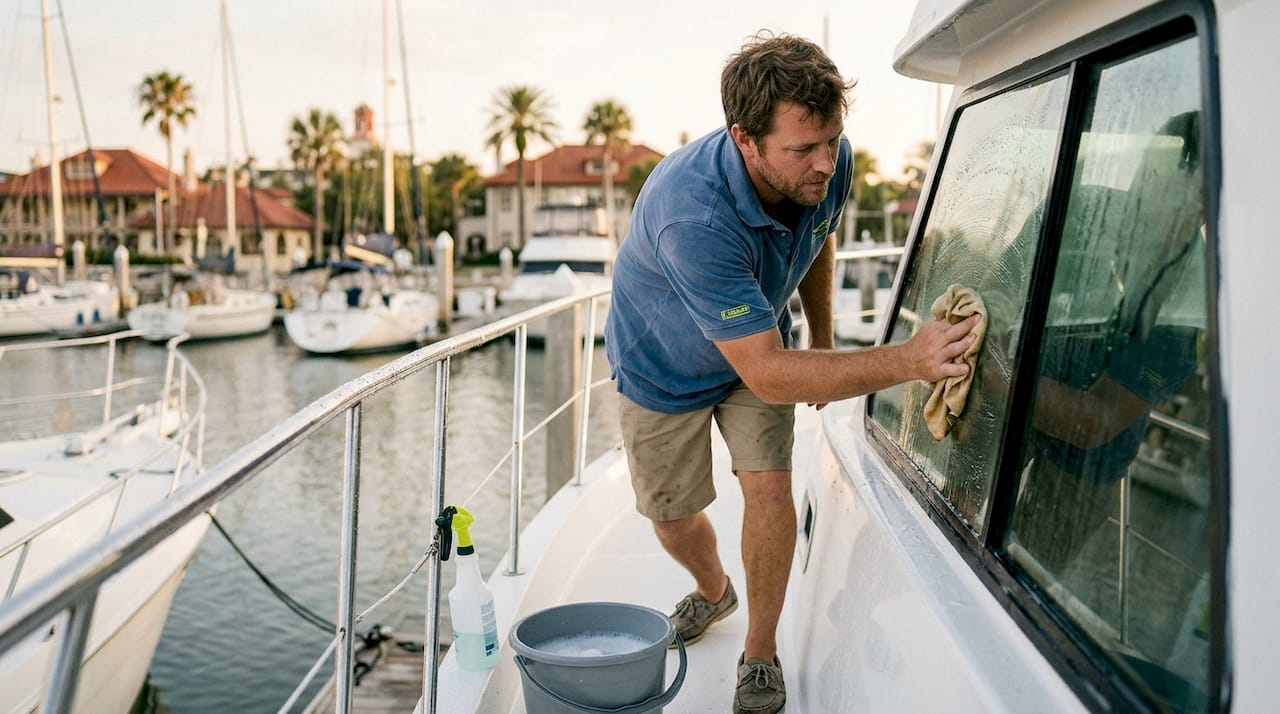
Keeping your boat windows spotless in St. Augustine’s salty coastal environment is trickier than you might think. Many boat owners unknowingly damage their vinyl and acrylic windows with harsh cleaners or abrasive techniques, causing hazing, scratching, and clouding that compromise both safety and appearance. This guide delivers a proven, material-specific workflow designed for Northeast Florida conditions, helping you protect your investment and maintain crystal-clear visibility. Following these steps can extend your window lifespan by 2 to 3 times and save you thousands in restoration costs.
Table of Contents
Key takeaways
Point | Details |
Material matters | Vinyl and acrylic windows need different cleaning approaches to prevent damage and maintain clarity. |
Fresh water is essential | Rinse your windows with fresh water after every outing to stop salt buildup and degradation. |
Follow the seven-step workflow | Pre-rinse, two-bucket wash, wipe in two passes, rinse, dry, and apply UV protectant for best results. |
Maintenance saves money | Regular care prevents costly restoration work and keeps windows clear for safer navigation. |
Professional help available | Local Northeast Florida services offer expert cleaning when DIY becomes too time-consuming. |
Understanding your boat windows: materials and why it matters
Boat windows in St. Augustine typically fall into two categories: vinyl (often called isinglass) used in canvas enclosures and acrylic used for windshields and portlights. Each material has distinct properties that determine how you should clean and maintain it.
Vinyl windows are flexible and popular for bimini tops and enclosures, but they’re vulnerable to UV degradation. Over time, exposure to Florida’s intense sun causes plasticizer loss, making the material brittle and prone to cracking. Acrylic windows are rigid and offer excellent optical clarity, but they scratch easily when exposed to abrasives or harsh cleaning methods. Using the wrong products or techniques on either material causes hazing, scratching, or clouding that diminishes visibility and detracts from your vessel’s appearance.
These material differences aren’t just academic. They directly impact your cleaning routine and the products you choose. Vinyl requires gentle handling and UV protection to prevent premature aging. Acrylic demands non-abrasive cleaners and soft cloths to maintain its smooth surface. Ignoring these distinctions leads to permanent damage that no amount of polishing can reverse.
Understanding what your windows are made of helps you avoid costly mistakes. Check your boat’s documentation or consult your manufacturer to identify window materials before starting any cleaning regimen. This knowledge guides every decision you make, from selecting cleaners to choosing application methods. Professional boat cleaning and detailing services can also assess your windows and recommend appropriate care strategies if you’re unsure.
Common boat window materials and their vulnerabilities:
Vinyl (isinglass): Flexible, UV-sensitive, prone to plasticizer loss and brittleness
Acrylic: Rigid, scratch-prone, susceptible to hazing from abrasives
Polycarbonate: Impact-resistant but easily scratched, requires specialized care
Tempered glass: Durable but heavy, mainly found on larger vessels
Preparing for cleaning: tools, supplies, and environment
Gathering the right materials before you start saves time and prevents damage. You’ll need mild marine soap or an ammonia-free cleaner specifically formulated for boat windows. Avoid household glass cleaners, which often contain ammonia that clouds acrylic and degrades vinyl. Stock up on soft microfiber mitts and cloths, two buckets, and a reliable fresh water supply.
Your tool kit should include a hose or spray bottle for pre-rinsing, chamois or microfiber towels for drying, and squeegees for larger flat surfaces. Don’t forget UV protectant products designed for marine use. The standard workflow includes fresh water pre-rinse, two-bucket method using mild marine soap, microfiber cloths, and UV protectants like Plexus or Collinite wax to shield windows from sun damage.
Environmental conditions matter as much as your supplies. Clean your windows in a shaded area whenever possible to prevent the cleaning solution from drying too quickly, which causes streaking. St. Augustine’s high humidity helps, but direct sunlight still works against you. Early morning or late afternoon sessions work best, giving you cooler temperatures and softer light.
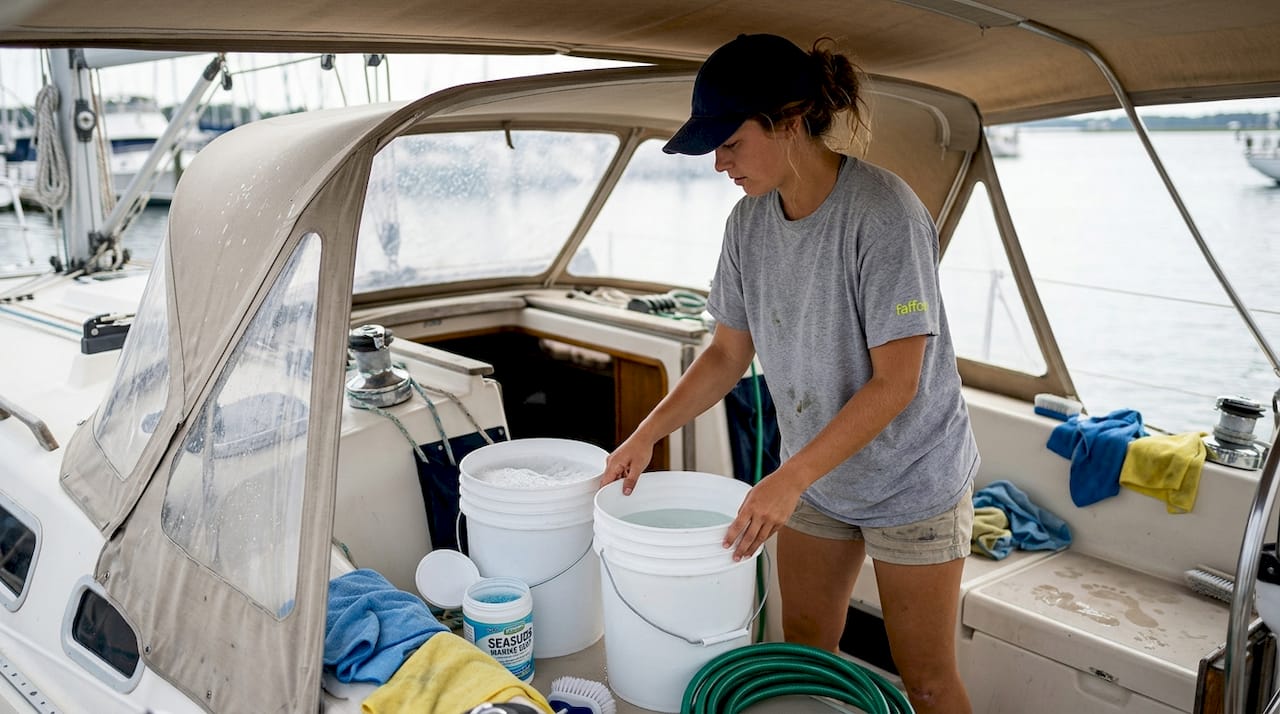
Northeast Florida’s coastal location means high salinity in the air and water. Salt crystals act like sandpaper on your windows if you don’t rinse them off promptly. A thorough fresh water rinse before you begin cleaning removes these abrasive particles and prevents scratching during the wash phase. This simple step-by-step cleaning process makes all the difference in protecting delicate surfaces.
Pro Tip: Use separate buckets for your rinse water and wash solution to avoid re-depositing salt and dirt onto clean windows. Label them clearly so you never mix them up during the cleaning process.
Supply Category | Recommended Items | Purpose |
Cleaners | Mild marine soap, ammonia-free window cleaner | Safely remove dirt without damaging materials |
Tools | Microfiber mitts, soft cloths, squeegees, chamois | Apply cleaners and dry without scratching |
Water supply | Hose with spray nozzle, spray bottles | Rinse salt and debris before and after washing |
Protection | UV protectants (Plexus, IMAR, Collinite wax) | Shield windows from sun degradation |
Buckets | Two 5-gallon buckets | Separate wash and rinse water to prevent contamination |
Executing the cleaning workflow step by step
Start by pre-rinsing your windows with fresh water to remove loose salt, sand, and debris. This first rinse is non-negotiable in coastal environments. Skipping it means you’ll be grinding abrasive particles into the window surface during washing, creating scratches you can’t undo.
Set up your two-bucket system: one bucket holds your mild soap solution, the other contains clean rinse water. Dip your microfiber mitt into the soap bucket, wring it out slightly, and wash small sections of the window at a time. Work from top to bottom to prevent dirty water from running over areas you’ve already cleaned. Avoid harsh scrubbing, which can damage both vinyl and acrylic. Let the cleaning solution do the work.
After washing a section, wipe it in horizontal passes first, then follow with vertical passes for a streak-free finish. This two-pass technique ensures complete coverage and removes any remaining film. Rinse your mitt in the clean water bucket frequently to prevent dirt buildup. The vinyl and acrylic windows cleaning workflow emphasizes this methodical approach to avoid re-depositing contaminants.
Once you’ve washed all windows, rinse them thoroughly with fresh water to remove any soap residue. Leftover soap attracts dirt and creates a hazy film as it dries. Use your hose or spray bottle to flood the surface, working from top to bottom again. Pay special attention to corners and edges where soap tends to accumulate.
Dry the windows immediately with a chamois or microfiber towel to prevent water spots. St. Augustine’s hard water leaves mineral deposits if allowed to air dry. Blot rather than wipe to minimize the risk of scratching. Work quickly but carefully, checking for any remaining streaks or spots.
Finish by applying a UV protectant or polish suited to your window material. For vinyl, products like Plexus or IMAR create a protective barrier against sun damage. For acrylic, Collinite wax provides scratch resistance and clarity enhancement. Follow the manufacturer’s instructions for application, typically using a clean microfiber cloth in circular motions. This final step is what extends your window lifespan and maintains that showroom shine.
Pro Tip: Avoid abrasive cleaners, brushes, or paper towels that can scratch or haze your windows. Stick with products specifically designed for marine vinyl and acrylic to protect your investment.
Numbered workflow summary:
Pre-rinse windows with fresh water to eliminate salt and debris
Prepare two-bucket system with soap solution and clean rinse water
Wash small sections using microfiber mitt with gentle pressure
Wipe in horizontal then vertical passes for streak-free results
Rinse thoroughly with fresh water to remove all soap residue
Dry immediately with chamois or microfiber towel to prevent spots
Apply UV protectant or polish appropriate for your window material
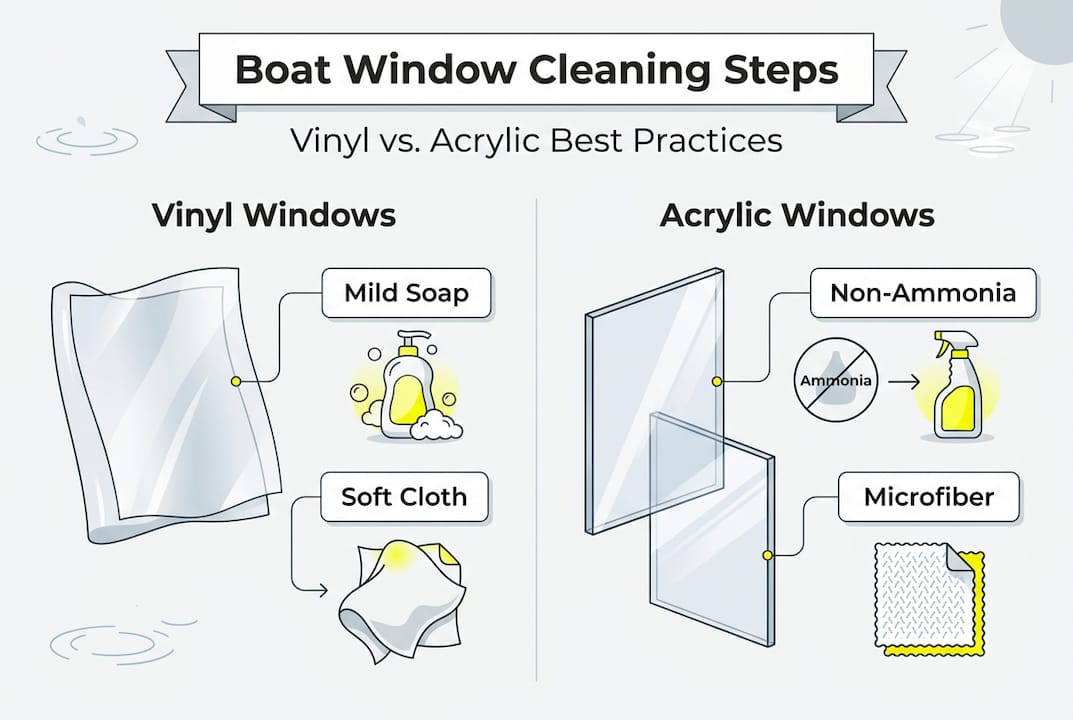
Step | Vinyl Windows | Acrylic Windows |
Cleaner | Mild marine soap, ammonia-free formulas | Mild marine soap, specialized acrylic cleaner |
Washing tool | Soft microfiber mitt | Soft microfiber mitt or cloth |
Drying method | Chamois or microfiber towel, blotting motion | Microfiber towel, gentle blotting |
Protectant | Plexus, IMAR for UV protection | Collinite wax, acrylic polish |
Frequency | Rinse after every trip, deep clean monthly | Rinse after every trip, deep clean monthly |
You can explore more window washing cleaning services if you want professional assistance with this workflow.
Troubleshooting and verifying results for lasting clarity
Even with careful execution, you might encounter issues like hazing, streaking, or lingering residue. Hazing often results from using abrasive cleaners or allowing sun damage to accumulate over time. If you notice a cloudy appearance after cleaning, you may have used a product with ammonia or another harsh chemical. Switch to a marine-specific cleaner and reapply UV protectant to restore clarity.
Streaking typically happens when cleaning solution dries too quickly or when you use dirty cloths. Clean in the shade and change your microfiber towels frequently during the drying phase. If streaks persist, try a vinegar and water solution (one part white vinegar to three parts water) as a final rinse for acrylic windows, then dry immediately. Never use vinegar on vinyl, as it can degrade the material.
Quick post-trip fresh water rinses make a massive difference in reducing salt buildup between deep cleaning sessions. Spend five minutes hosing down your windows after every outing, and you’ll cut your monthly cleaning time in half. This simple habit prevents the crusty salt deposits that require aggressive scrubbing and risk scratching.
Verify your results with both visual and tactile checks. Stand at different angles to inspect for streaks, spots, or haze. Run your hand gently across the surface to feel for residue or rough patches. Clear windows should feel smooth and look transparent from all viewing angles. Check for any cracks in acrylic or tears in vinyl while you’re at it, as these compromise safety and need immediate attention.
Regular maintenance isn’t just about aesthetics. It’s a financial decision that pays dividends over time.
Regular maintenance prevents visibility issues and saves thousands by avoiding costly restorations. Quick wipe-downs after each trip save hours of scrubbing later and can prevent damage that costs $3,200 or more annually to repair.
This investment in routine care protects your boat’s value and ensures safe navigation. You can find more expert window cleaning tips that apply to boat windows as well.
Quick fixes and preventive practices:
Address hazing immediately with marine-specific cleaners and UV protectants
Eliminate streaks by cleaning in shade and using fresh microfiber towels
Rinse with fresh water within 30 minutes of docking to prevent salt damage
Inspect windows monthly for cracks, tears, or degradation signs
Store cleaning supplies onboard for convenient post-trip maintenance
Consider protective covers during extended periods at dock
Professional boat window cleaning services in your area
Maintaining your boat windows takes time and attention to detail. If your schedule doesn’t allow for regular DIY cleaning, or if you’re dealing with stubborn stains and damage, professional services offer a convenient solution. Local Northeast Florida detailers specialize in boat cleaning and detailing, including expert care for vinyl and acrylic windows.

Professional cleaners bring specialized products, tools, and experience that tackle tough jobs efficiently. They’re ideal for seasonal deep cleaning sessions, pre-sale detailing, or addressing damage that DIY methods can’t fix. St. Augustine area services understand the unique challenges of coastal boat ownership and tailor their approach to local conditions. My Lemon Maids offers trusted window washing and deep cleaning packages that complement your maintenance routine, saving you time while delivering professional results. When DIY becomes overwhelming, delegating to experts lets you focus on enjoying your vessel rather than maintaining it.
Frequently asked questions
How often should I clean and protect my boat windows?
Rinse your windows with fresh water after every trip to remove salt and prevent buildup. Perform a thorough cleaning weekly during active boating season, and schedule a deep clean monthly. Apply UV protectants monthly or according to product instructions to maintain optimal protection and extend window lifespan.
What are the best products to use on vinyl vs. acrylic boat windows?
Use mild marine soaps and ammonia-free cleaners for both materials. Plexus or IMAR work well for vinyl (isinglass) to protect and polish without degrading the material. Collinite wax is recommended for acrylic windows to prevent scratches and maintain clarity. Always verify product compatibility with your specific window material before applying.
Can I buff out scratches or haze on my boat windows myself?
Small scratches on acrylic may be polished with fine polish kits designed for marine use, but proceed cautiously to avoid making the problem worse. Haze often requires specialized products and professional experience to address properly. Deep or extensive damage is best handled by professionals who have the tools and expertise to restore windows without causing further harm.
Why is fresh water rinsing so important for boat windows in St. Augustine?
St. Augustine’s coastal location means high salt concentration in air and water. Salt crystals act as abrasives that scratch windows during cleaning if not removed first. Fresh water rinsing dissolves and washes away these particles before they can cause damage, protecting your investment and maintaining clarity.
What should I do if my vinyl windows have turned yellow or cloudy?
Yellowing and cloudiness in vinyl windows indicate UV damage and plasticizer loss. Try a specialized vinyl restorer product designed for marine isinglass. If the damage is extensive, professional restoration or replacement may be necessary. Prevent future yellowing by applying UV protectants regularly and storing your boat with window covers when not in use.
Recommended
Comments